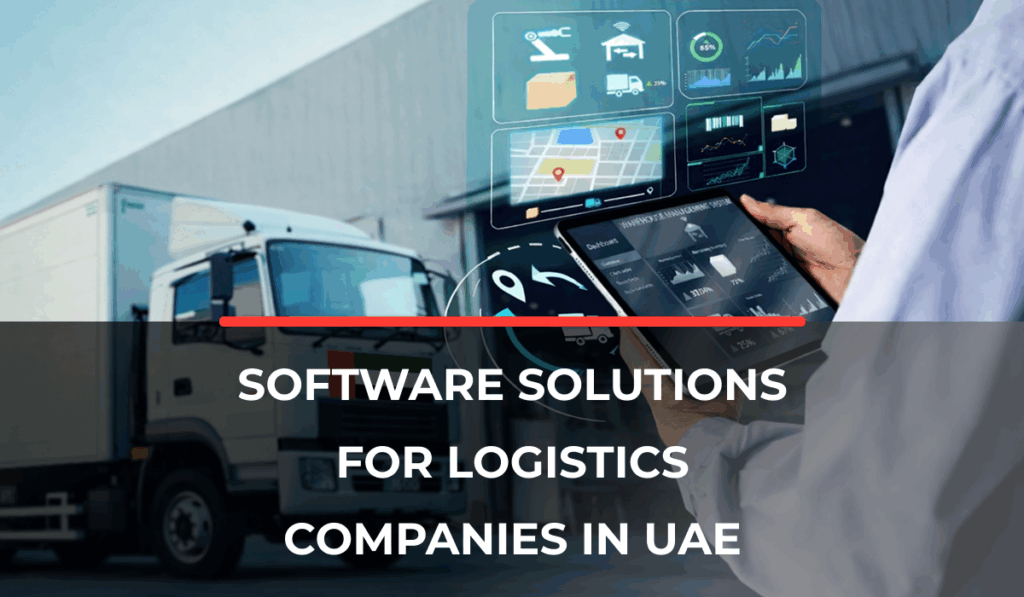
The logistics industry in the UAE is experiencing its best growth years ever and is expected to grow at a CAGR of 6.30% through 2030. With increasing trade, e-commerce, and international freight operations, companies are under constant pressure to manage deliveries efficiently and keep costs under control.
Traditional manual processes are clearly no longer enough to handle complex operations. Businesses face challenges such as inefficient route planning, difficulty tracking fleets in real time, and managing warehouses with accuracy and speed.
In response, many logistics companies are turning to digital solutions. Custom software development in the UAE is becoming a key approach for companies that want systems customized to their specific operations.
This guide provides a clear path for logistics companies in the UAE. It explains why software solutions are essential, outlines key features to consider, compares different types of software, and offers practical advice on choosing the right technology partner.
Why Logistics Companies Need Software Solutions
Logistics companies face constant pressure to manage large operations efficiently. Software solutions help in optimizing operations by automating routine tasks, coordinating fleet schedules, and tracking shipments in real time.
These systems also play an important role in reducing costs by minimizing fuel consumption, preventing delays, and lowering manual errors across warehouses and distribution centers.
Improving delivery times is another major benefit, which directly impacts customer satisfaction. Customers expect accurate, on-time deliveries, and software tools enable companies to consistently meet these expectations.
In addition, compliance with UAE regulations is essential for smooth operations, especially for customs, safety standards, and reporting requirements. Investing in custom software development in Dubai or other regions ensures that the system is customized to specific operational needs.
Key Features of Logistics Software
Effective logistics software is designed to address the unique challenges of transportation, warehousing, and supply chain operations. An ideal system would integrate multiple functions to ensure smooth workflows, accurate data, and actionable insights.
Below is a closer look at the key features that logistics companies in the UAE should consider.
Transport & Fleet Management
Transport and fleet management form the backbone of logistics operations. Route optimization ensures drivers follow the fastest, most fuel-efficient paths, directly reducing delivery times and operational costs.
Building on this, real-time tracking enables managers to monitor vehicle locations and delivery progress, improving transparency and enabling quick responses to delays and unexpected situations. To maintain reliability, software can schedule vehicle maintenance to prevent breakdowns and minimize downtime.
Warehouse Management
Once transportation is running efficiently, managing inventory becomes equally important. Inventory tracking provides accurate, up-to-date information on stock levels and locations, reducing errors and ensuring timely fulfillment.
This is complemented by automated picking and packing, which speeds up warehouse operations and lowers labor costs. Integration with ERP systems further ensures that warehouse activities are aligned with broader business processes.
Supply Chain Management
An efficient warehouse feeds directly into the larger supply chain, where coordination with suppliers, vendors, and customers is essential. Order processing modules manage incoming orders systematically.
Effective vendor management tracks supplier performance and compliance to help avoid disruptions. By adding forecasting and analytics, companies can predict demand patterns, optimize inventory levels, and make proactive operational decisions.
Reporting & Analytics
Proper reporting and analytics convert operational data into actionable insights. KPI dashboards offer a clear overview of performance metrics, while performance tracking identifies bottlenecks and areas for improvement.
Predictive insights allow managers to anticipate challenges before they impact operations, which enhances both efficiency and customer satisfaction. When combined with CRM automation solutions, reporting tools can integrate customer data with operational metrics.
Types of Logistics Software in the UAE
Logistics companies in the UAE can choose from several types of software solutions. The right type depends on business size, workflow complexity, and long-term goals. One should understand the differences between off-the-shelf, custom, cloud-based, on-premise, and mobile-enabled solutions to make an informed choice.
1. Custom vs. Off-the-Shelf Software
One of the first decisions logistics companies face is whether to use off-the-shelf software or opt for a custom solution. Custom solutions are developed specifically for a company’s needs and allow full control over features, integrations, and scalability.
Off-the-shelf software is ready-made and usually quicker to deploy, but it may not address the unique workflows of every business.
Choosing custom vs. off-the-shelf software involves weighing the benefits of personalization against the speed and cost of pre-built tools.
2. Cloud-based vs. On-premise
The next important consideration is deployment: cloud-based or on-premise. Cloud-based logistics software is hosted on remote servers, making it accessible from anywhere and often including automatic updates and lower upfront costs. It also supports collaboration between multiple teams and locations, which is ideal for businesses with dispersed operations.
On-premises software is installed on company servers and provides complete control over data and security. Companies that require strict compliance or have highly specialized workflows usually prefer on-premise solutions.
3. Mobile-enabled Apps for Field Operations
Mobile-enabled apps allow drivers, warehouse staff, and field operators to access key information in real time, from any location. Features such as delivery updates, route changes, and inventory scans can be managed directly on smartphones or tablets, reducing delays and errors.
Integrating these apps with central systems ensures seamless communication and accurate reporting across the organization.
Choosing the Right Software Partner for Logistics Companies
A capable partner delivers more than just software; it also offers a deep understanding of transportation, warehousing, and supply chain challenges. One wrong choice can lead to inefficiencies, delays, and higher custom software development costs, whereas the right partner ensures scalable, secure, and customized solutions that grow with the business.
1. Define Requirements Clearly
The first step is to define your requirements in detail. Every logistics operation is different; understanding the type of logistics operations, fleet size, warehouse scale, and daily volume of goods allows a software partner to design solutions that fit your workflow precisely.
2. Evaluate Technical Expertise
After defining requirements, evaluating a partner’s technical expertise is important. A reliable provider should have experience in logistics software development and be skilled with technologies such as IoT for fleet tracking, AI for route and inventory optimization, GPS for real-time monitoring, and APIs for system integration.
3. Check Portfolio & Case Studies
Reviewing a partner’s portfolio and case studies provides tangible evidence of their capabilities. Examining previous logistics clients and measurable improvements, such as faster delivery times, cost reduction, and optimized warehouse operations, helps assess whether the partner can deliver results in real-world scenarios.
4. Client Feedback & Testimonials
Client feedback and verified testimonials offer additional assurance. Insights from other UAE logistics companies show how the partner communicates, resolves issues, and supports projects after implementation.
5. Pricing & Engagement Models
Pricing and engagement models should be carefully considered. Some partners offer fixed prices or subscriptions, while others offer dedicated development models, each is suited to different project scopes. Factors affecting cost in the UAE include feature complexity, level of customization, integrations required, and ongoing support.
Cost of Logistics Software Development in the UAE
The cost of logistics software development in the UAE depends on the scope, features, and levels of customization required.
Usually, businesses underestimate this investment by comparing it with global averages, but UAE-specific factors such as compliance, integrations, and infrastructure make a noticeable difference. On average, logistics software in the UAE can range from AED 40,000 for a basic solution to AED 500,000+ for enterprise-level platforms, and mid-range systems fall between these values.
To make this easier to understand, here is a realistic breakdown of typical pricing ranges:
- Basic or MVP Software – AED 40,000 to AED 80,000
These are suitable for startups or small operators with essential features like tracking and order management.
- Mid-level Platforms—AED 80,000 to AED 200,000
They include fleet management, warehouse modules, and integrations.
- Enterprise Solutions – AED 200,000 to AED 500,000+
Covers advanced analytics, AI-based optimization, IoT integration, and multi-location operations.
However, the final cost is not really fixed and depends on several influencing factors. The most important factors include the following:
- More customized features increase development time and cost. This is where the benefits of custom software development become clear, as businesses receive solutions that are aligned exactly with their expectations.
- Connecting with ERP systems, customs platforms, or third-party APIs can add anywhere from AED 5,000 to AED 50,000+ per integration.
- A simple tracking system costs far less than a full supply chain platform with automation, analytics, and multi-user roles.
- UAE regulations, data protection laws, and local hosting requirements also increase overall investment.
Point to Remember:
When compared to global markets, logistics software development in the UAE can be slightly higher due to stricter compliance requirements and the need for localized integrations. However, this also ensures better reliability, security, and alignment with regional operations.
Red Flags to Avoid When Choosing Software Solutions Providers in the UAE
- Lack of proven experience in logistics or supply chain software.
- Generic solutions with no customization options.
- Poor or no post-implementation support.
- Delayed communication during early discussions.
- No clear project timeline or delivery milestones.
- Hidden fees or vague pricing structures.
- Limited understanding of the UAE regulations and compliance.
- No scalability for future business growth.
In-House vs. Outsourcing Logistics Software
While choosing between in-house development and outsourcing can be challenging, it all depends on your resources, timelines, and long-term goals. Both of these approaches have their advantages, and in some cases, a hybrid model can offer the best balance.
Future of Logistics Software Solutions in the UAE
The future of logistics in the UAE is strongly shaped by automation and artificial intelligence. Companies are already using AI to improve route planning, demand forecasting, and operational decision-making, and this trend is expected to grow further.
Studies show that automation in UAE logistics can improve operational efficiency by up to 30%, reduce reliance on manual labor, and lower overall costs.
At the same time, smart warehouses powered by robotics and predictive analytics are becoming more common. These systems can automate inventory management, reduce errors, and help businesses anticipate demand.
As a result, logistics operations are shifting from reactive processes to more data-driven, predictive models, improving both speed and accuracy across the supply chain.
Another major change is the rise of IoT and connected logistics systems. The UAE logistics sector is expected to see its IoT market reach around AED 5 billion, driven by demand for real-time tracking, fleet management, and connected supply chain networks.
Not to forget, strong government investment in smart cities and digital infrastructure is positioning the UAE as a global leader in technology-driven logistics, where automation, connectivity, and predictive intelligence will define future operations.
Final Checklist Before Implementation
Before implementing any logistics software, it is important to pause and ensure everything is properly planned. Many projects face delays and cost overruns due to unclear expectations, poor vendor selection, and a lack of long-term planning.
This well-defined checklist will help businesses avoid these problems and ensure that the chosen solution aligns with operational needs, budget, and future growth.
- Clear requirements defined and documented.
- Verified vendor portfolio with relevant logistics experience.
- Transparent pricing with no hidden costs.
- Ongoing support and maintenance included.
- Scalable and future-ready technology stack.
Final Verdict
Selecting the right logistics software solution is one of the most important decisions a company can make in the UAE. The right system improves fleet efficiency, warehouse management, supply chain coordination, and overall customer satisfaction.
A well-planned implementation with a trusted software partner ensures that businesses can maximize the benefits of custom software development, reduce costs, and remain competitive.
Making this informed decision requires careful evaluation of requirements, vendor expertise, technical capabilities, pricing, and future scalability. By following the strategies and checklists outlined in this guide, logistics companies can choose a solution that fits their unique operations, supports growth, and positions them for long-term success in the UAE’s technology sector.
Looking for Reliable Logistics Software Solutions in the UAE?
Partner with experts who understand supply chains, fleet management, and digital transformation.
FAQs
What is logistics software, and why do UAE companies need it?
Logistics software is a digital system that helps companies manage transportation, warehousing, inventory, and supply chain activities in one place. UAE companies need these systems to improve visibility, speed up deliveries, and handle complexities.
How does custom logistics software differ from off-the-shelf solutions?
Custom logistics software is built specifically for a company’s operations, workflows, and data needs, while off-the-shelf software is pre-built for general use. Custom systems provide flexibility, scalability, and full control over features, whereas standard products offer faster deployment but limited customization.
What are the key benefits of custom software development for logistics companies?
Custom logistics platforms align with real workflows, reduce manual workarounds, integrate seamlessly with existing systems, and scale as the business grows.
Can logistics software integrate with other systems like ERP or accounting?
Yes, modern logistics solutions are built to integrate with ERP, accounting, CRM, and warehouse management systems. Integration removes data silos, ensures consistency, and automates workflows.
How do I decide between off-the-shelf and custom solutions for my logistics business?
If you need quick deployment and basic tracking, off-the-shelf may suffice. But if your operations have unique workflows, require deep integration, or need future scalability, custom logistics software provides long-term value and flexibility.
What is niche software development, and how does it benefit logistics?
“Niche software development” means custom software built specifically for a particular industry or business model. For logistics, this means systems that understand fleet types, supply chain rules, compliance needs, and regional demands.
Why do businesses prefer custom software development in Abu Dhabi or Sharjah over generic solutions?
Many companies choose custom software development in Abu Dhabi or custom software development in Sharjah to meet these local requirements more effectively, rather than depending on generic solutions.