
Project Estimator
Get Instant Quote
Avoid budget disasters - get a clear fantasy sports app development estimate now!
Don’t leave your project budget to chance. Our intelligent project estimator asks the right questions to give you an accurate quote in minutes, not weeks.
Start Free Estimate
No commitment required

Get results instantly

100% confidential
Businesses That Benefit from Fantasy Sports App Development
Many sports businesses already have audiences. And they know that attention is the new currency. What they want is a fantasy ecosystem that helps them retain this attention between fixtures, off-seasons, and tournaments. A fantasy sports app that converts passive viewers into active participants who log in daily, analyze stats, and compete socially.
Executives we work with aren't asking whether to launch; they're asking how to structure contests, retention loops, and monetization models that actually sustain growth. They are looking for deeper fan relationships, predictable monetization, and long-term brand equity.
With over 18 years of fantasy sports app development industry experience, we've seen five distinct sports business groups gain measurable growth through structured fantasy ecosystems.
- Clubs: Clubs turning matchday fans into year-round participants
- Academies: Academies spotlighting players beyond matchday visibility
- Leagues: Leagues increasing season engagement beyond live fixtures
- Startups: Startups building scalable fan-first gaming platforms
- Enterprises: Enterprises monetizing large audiences through fantasy ecosystems
Common Business Challenges Solved by Our Fantasy Sports Apps
After outlining who benefits from our fantasy sports app development, here are the core technical problems fantasy sports platforms must solve to run reliably, fairly, and profitably. And exactly how we fix each one for matchday realities.
Real-Time Match Scoring Latency
 The Problem:
Real-time scoring latency disrupts contests and trust, as delayed feeds, mismatched events, or API outages cause incorrect leaderboards, user frustration, and contest disputes.
The Problem:
Real-time scoring latency disrupts contests and trust, as delayed feeds, mismatched events, or API outages cause incorrect leaderboards, user frustration, and contest disputes.
 Our Solution:
We implement event-driven pipelines, redundant live-data providers, WebSocket broadcasting, edge caching, and timestamp reconciliation to guarantee sub-second score updates and consistent leaderboards.
Our Solution:
We implement event-driven pipelines, redundant live-data providers, WebSocket broadcasting, edge caching, and timestamp reconciliation to guarantee sub-second score updates and consistent leaderboards.
Peak-Traffic Scalability & Downtime
The Problem:
Massive concurrent logins during high-profile matches overload systems, causing timeouts, failed joins, and lost transactions that impact user confidence and trust levels.
Our Solution:
We design auto-scaling microservices, load balancers, queuing, sharded databases, and CDN edge strategy so systems absorb spikes while keeping latency predictable.
Payments, Chargebacks & PSP Risk
The Problem:
Chargebacks, PSP onboarding limits, and payment fraud create revenue friction, account holds, and sudden settlement issues that threaten contest payouts and operations.
Our Solution:
We integrate PCI-compliant PSPs, multi-PSP routing, fraud-scoring engines, chargeback workflows, and reserve planning to ensure reliable collections and compliant prize payouts.
Jurisdictional Compliance & Geo-restrictions
The Problem:
Daily fantasy contests face varying regulations, age limits, and IP & licensing constraints that can block access or require market-specific controls.
Our Solution:
We enforce geo-fencing, KYC & age checks, IP & licensing management, and a rules engine to apply region-specific contest rules and stay legally compliant.
Contest Integrity & Anti-Cheat System
The Problem:
Player-limit race conditions, scripted entries, and collusion undermine fairness and invite disputes, demanding forensic evidence and deterministic contest closures.
Our Solution:
We use atomic join transactions, rate-limiting, anomaly detection, device fingerprinting, and immutable audit logs to prevent cheating and prove contest integrity.
Low Retention & Engagement Rates
The Problem:
Poor onboarding, generic contests, and slow live updates cause churn, because users need personalized, responsive experiences with rewards and social hooks to return daily.
Our Solution:
We design streamlined onboarding, segmented contest tiers, push notifications, social sharing, and AI-driven recommendations to increase retention and lifetime value.
Core Features of Our Fantasy Sports Apps
Irrespective of the service delivery model you choose, there is a set of essential features that make our fantasy sports apps get adopted by the masses, downloaded worldwide, and go viral without hardcore marketing. We group them into three subcategories.
Profile Management
Secure player accounts with JWT auth, avatar & media uploads, editable preferences, KYC hooks for cash contests, and profile history stored in PostgreSQL for reliable user identity and audit trails.
Fantasy Team Creation
Draft and team-build UX with credit budgets, position checks, RL-friendly optimization hints, client-side validation, and server-side scoring to prevent exploits during peak draft activity.
Live Score Updates
Sub-second leaderboard recalculation using WebSockets, event-driven pipelines, edge caching, and timestamp reconciliation so users see accurate, consistent scores during live matches.
Join Leagues
Simple public & private league flows with invite links, deep-link onboarding, clear rule previews, and atomic join transactions to avoid race conditions during rapid contest openings.
Refer & Earn
Built-in referral flows with trackable deep links, attribution, and reward credits. Integrates with third-party attribution providers for reliable payout triggers and fraud checks.
Payment Options
Multi-PSP routing, PCI-compliant card flows, wallets, and escrowed prize handling using reliable gateways like Stripe and Adyen with dispute and chargeback workflows.
Push Notifications
Event-triggered push alerts for match starts, score swings, and contest results via scalable services such as Firebase, segmented by behavior for higher re-engagement.
Social Media Integration
Shareable achievements, leaderboard embeds, and social sign-in using platform SDKs and OAuth flows, designed to drive organic installs and community growth through one-click social sharing.
League Management
Centralize seasons, fixtures, roster rules, promotion & relegation, match imports, and permissioned admin roles for automated contest orchestration and consistent season-long rule enforcement across tournaments.
Revenue Tracking
Real-time revenue dashboards, PSP reconciliation, escrowed prize handling, automated payouts, and chargeback workflows give finance teams clear settlement reports and audit trails.
User Data & Analytics
Event-stream analytics, cohort segmentation, retention funnels, live KPI dashboards, and predictive churn models to extract actionable insights to tune contests, offers, and monetization.
Game Rule Customization
A configurable rules engine for scoring, tie-breakers, eligibility, and regional formats with custom UI for non-technical edits, versioning, and immutable audit logs for regulatory needs.
Third-Party API Integration
Secure REST, push, & webhook connectors for data providers, odds, payments, and identity services with retry, rate-limit handling, normalization layers, and failover strategies.
Customer Support
Omnichannel ticketing, in-app chat, knowledge base, SLA monitoring, and AI-assisted triage are integrated into the admin console for fast dispute resolution and higher NPS.
Match Scheduling
Robust scheduling engine with recurring fixtures, conflict detection, timezone normalization, and import & export pipelines for automated contest starts and calendar sync across leagues and timezones.
Transaction Management
Real-time PSP reconciliation, escrowed prize handling, chargeback workflows, and settlement reports. Built to manage high volumes, reduce disputes, and keep finance audits clean.
Content Management
Headless CMS for hero baners, rule pages, and promotion scheduling with role permissions, versioning, and A/B content experiments to optimize engagement and conversions.
Announcements
Segmented, event-driven notifications, including in-app, push, and email, with scheduling, throttling, and analytics to re-engage users around contests, results, and commercial offers.
Legal Compliance
Built-in KYC, age verification, geo-fencing, AML hooks, and auditable logs to enforce jurisdictional rules and regulatory requirements for paid contests.
AI-Based Recommendations
Personalized lineup and contest suggestions using ML pipelines, real-time feature stores, and A/B experimentation to boost retention, LTV, and on-platform engagement.
Technical Architecture of Our Modern Fantasy Sports Apps Development
Modern fantasy sports platforms must be engineered for real-time accuracy, legal complexity, and sudden traffic spikes. Below are the six architectural pillars we use to make that happen reliably.
Multi-Tenant Data Isolation
Tenant isolation via row-level tenancy or per-tenant schemas, combined with sharding strategies, prevents data commingling while enabling centralized upgrades and cost-efficient ops.
Real-Time Scoring Pipeline
Event-driven ingestion, Kafka/stream processing, WebSocket broadcasting, and edge caching guarantee sub-second score updates, leaderboard reconciliation, and deterministic contest outcomes.
Payments & PSP Resilience
PCI-compliant gateways, multi-PSP routing, chargeback workflows, and merchant account strategies protect revenue flows and reduce settlement risk for high-volume contests.
Anti-Fraud & Contest Integrity
Device fingerprinting, rate limits, anomaly detection, atomic join transactions, and immutable audit logs prevent collusion and scripted entries and create forensically provable contest records.
Performance & Auto-Scaling Workflows
Kubernetes autoscaling, horizontal sharding, CDN edge strategy, and pre-warmed capacity models keep latency low during matchday peaks without constant over-provisioning.
Observability & Incident Response
Full-stack telemetry for metrics, traces & logs; Prometheus & Grafana dashboards; and alerting with runbooks let teams detect, diagnose, and resolve issues before leaderboards or payouts are affected.
Complete Fantasy Sports App Development Solutions
After the core platform-level work, we adapt scoring engines, data pipelines, and UX to each sport's rules and tempo so leaderboards stay accurate, contests stay fair, and users stay engaged across four major fantasy sports.
Cricket Fantasy App Development
Cricket-focused fantasy platforms integrating ball-by-ball APIs, dynamic captain/vice-captain multipliers, credit-based team selection logic, real-time leaderboard recalculation, rain-rule adjustments, and scalable cloud backends for global tournaments and multi-format contests.
Soccer Fantasy App Development
Football fantasy systems are powered by event-driven data feeds, live substitutions handling, transfer window logic, clean-sheet and assist scoring rules, salary cap enforcement, and WebSocket-based real-time updates across leagues and international competitions.
US Sports Fantasy App Development Services
Alongside game-specific platform work, we also deliver league-specific fantasy apps built to U.S. market expectations, including legal nuances, broadcast sync, high concurrency, and data provider integrations for reliable, real-time fantasy experiences.
White-Label Fantasy Sports App Development
Configurable, scalable fantasy sports platforms with modular systems for contests, scoring, payments, KYC, and localization, enabling rapid launches with secure transactions, real-time updates, and enterprise-grade control.
Fantasy Sports App Like Dream11
Fantasy sports app like Dream 11 featuring multi-match contest engines, real-time player stats integration, dynamic team creation, secure wallet systems, and scalable leaderboard management, ensuring fair play and low-latency updates.
Fantasy Sports Web App Development
Build immersive VR match simulations and AR drill overlays to rehearse break points, serve placement patterns, and match scenarios, integrating ball-machine APIs and real-time feedback dashboards.
Fantasy Sports Mobile App Development
Custom and native fantasy sports mobile app built with Swift, Kotlin, or Flutter, with persistent WebSocket connections, push notifications, secure in-app payments, and offline caching for reliable on-the-go contest joins.
Fantasy Sports App Design Services
User-first UI/UX for drafts, live scoreboards, and leaderboards. Includes Figma prototypes, interaction design, gamification, accessibility, and usability testing. Built for fast decisions under pressure, cross-device consistency, and immersive experiences.
Fantasy Sports Prediction App Development
End-to-end ML pipelines, including feature engineering on historical/player data, TensorFlow & PyTorch models, real-time inference APIs, A/B testing, and explainability. Designed for accurate lineup suggestions and personalized predictions.
IoT-Based Fantasy Sports App Development
Wearable and sensor integration using MQTT or REST, time-series ingestion, and edge processing to feed real-time biometrics and tracking metrics into fantasy scoring and analytics.
AI-Powered Fantasy Sports App Development
Predictive models, lineup suggestions, and personalization using ML pipelines implemented via TensorFlow & PyTorch, feature stores, and A/B experimentation to increase retention and contest competitiveness.
Custom Fantasy Sports Software Development
Bespoke fantasy sports systems combining microservices, Kubernetes, PostgreSQL & WebSocket-driven real-time feeds, and modular scoring engines. Everything is specific to your contest rules, monetization, and scale requirements.
Why Choose Our Fantasy Sports App Development?
You've seen how serious fantasy platforms demand strong architecture and real-time stability. What sets us apart is how consistently we deliver those standards with commercial clarity, user focus, and long-term product thinking.
18+ Years of Industry Experience
Eighteen years building sports platforms means we've seen score-feed failures, scaling mistakes, and monetization traps. That experience helps us prioritize reliability, matchday SRE, and product decisions that avoid common pitfalls and accelerate time-to-value.
Best-in-Class UI / UX
We design interfaces where users make fast, confident choices and draft rooms, live scoreboards, and checkout flows with minimal friction. Our prototypes and usability tests reduce drop-offs during drafts and match days, improving retention and conversion for time-sensitive features.
Top 1% Technical Talent
We staff only seasoned fantasy sports app developers who know real-time pipelines, WebSockets, payment compliance, and SRE for high concurrency. That seniority reduces technical debt, speeds up releases, and keeps your platform stable when user activity spikes.
Proven Fantasy SaaS Delivery
We have delivered scalable fantasy sports platforms serving thousands of concurrent users across multiple regions. From onboarding to payouts, we design systems that handle real traffic, real money, and real-time competition without disrupting user experience during high-stakes tournaments.
Growth-Driven Product Mindset
Fantasy sports apps evolve with leagues, player trends, and regulatory updates. We build with expansion in mind, so you can add new sports, contest types, regional formats,
Ethical & Transparent Engagement
Clear scope. Clear pricing. Clear timelines. We communicate progress consistently and avoid hidden clauses or surprise costs. You always know what is being built, why it matters, and how it supports your fantasy sports business objectives long after launch.
Our Flexible Engagement Models for Fantasy Sports App Development
Our delivery models adapt to your growth plan. Pick an approach now and switch later as you scale.
Full-Cycle Development
We own product strategy, design, and delivery end-to-end. From data-provider integrations and real-time scoring pipelines to draft engines, PSP & KYC setup, SRE, and post-launch ops, everything is included. Best when you want a production-grade fantasy sports app delivered with minimal internal lift.
Dedicated Teams
A long-term team that embeds with your product group. Offers frontend, real-time backend, data engineers, QA, and product POs focused on iterative feature delivery, game-day readiness, and continuous performance tuning. Ideal for mid-sized operators expanding features quickly.
Team Augmentation
Plug in our fantasy sports app development specialists into your team for short windows. Get SREs for matchday scaling, Kafka & WebSocket experts for low-latency feeds, mobile devs for native fixes, or security & compliance contractors for PSP and KYC work. Offers fast onboarding and hands-on support with no hiring overhead.
Our Fantasy Sports App Development Success Stories
Rather than telling you what we can do, we let our work speak. Explore fantasy sports app development solutions we've delivered for national and international-level organizations with real users and real demands.

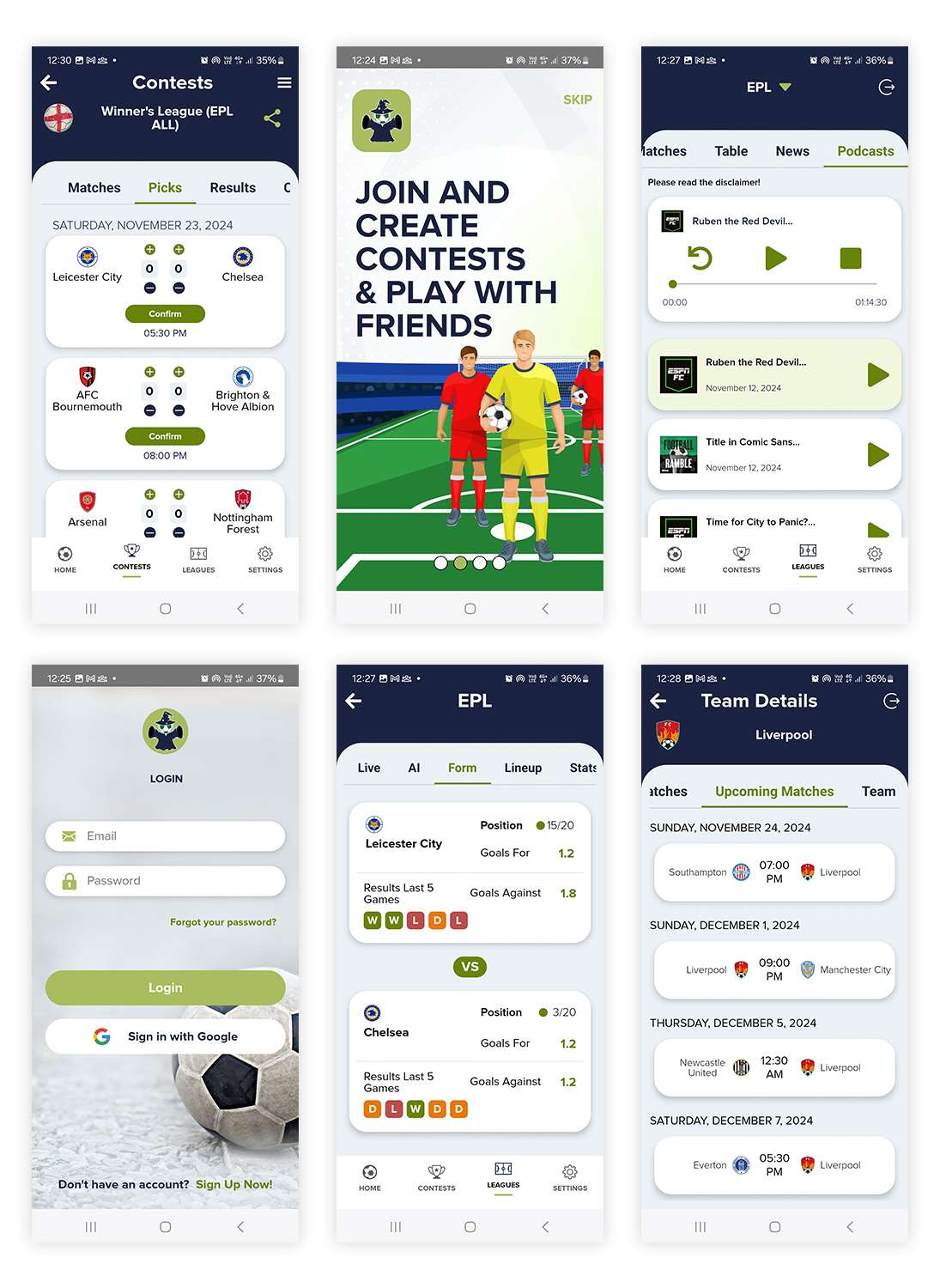
What Our Clients Say About Our Fantasy Sports App Development Services
Our clients trust us to deliver high-performance, scalable, and engaging fantasy sports platforms tailored to their business goals. From seamless user experiences to real-time scoring engines and secure payment integrations, our solutions consistently help clients launch successful fantasy sports apps across cricket, football, NFL, and other major leagues. Their feedback reflects our commitment to quality, innovation, and long-term partnership.


The guys from DynamoLogic did a good job for me. Pleased overall.
Hubert
Philippines

Great all-around development team. The team member we communicated with was great and went above and beyond. We both gained from this experience. I will hire these guys again for my future projects. The team has perseverance and will make your project great.
Lamar C.
United States
Looking to Build a Fantasy Sports App? We Provide Expert App Development Solutions Across the UAE
We develop engaging fantasy sports apps with real-time scoring, user-friendly design, and scalable architecture. Our solutions are built to handle high traffic and deliver seamless user experiences. Launch a platform that keeps users coming back.

FAQs About Fantasy Sports App Development
If you're considering partnering with us, questions are natural. We've answered the most common ones clients ask before starting a custom fantasy sports app development project. For anything else, just get in touch.
A fantasy sports app is a digital platform where users create virtual teams made up of real-world athletes and earn points based on those players' actual match performances. It connects live data feeds, scoring engines, contest logic, and payment systems into one adaptive, cross-device experience. So instead of just watching sports, fans become participants, strategists, and competitors inside your fantasy platform.
Custom development gives you complete control over how your fantasy sports platform behaves, looks, scales, and earns revenue. You define scoring rules, contest formats, bonus logic, and user journeys instead of adjusting to a template. It also means better scalability, stronger data ownership, deeper analytics, and long-term flexibility as your fantasy sports business grows across regions or sports.
It depends on your stage and ambition. White-label solutions are faster to launch and useful if you want to validate the market quickly. But they come with limitations in flexibility, differentiation, and intellectual property. On the contrary, custom development takes longer but gives you total control over branding, features, scalability, and monetization. If you are looking for long-term growth, you should go for a custom build.
Timelines vary a lot and are based on complexity. A lean MVP with core features like team creation, contests, scoring, and payments may take around 3–4 months. A multi-sport, real-time, AI-enabled platform with advanced analytics and heavy user concurrency could take 6 months or more. This is why we usually recommend phased releases to launch faster and evolve based on real user behavior.
Cost depends on scope, features, platform (iOS, Android, or web), real-time data integrations, payment systems, and scalability requirements. A basic single-sport fantasy app costs significantly less than a multi-sport enterprise platform with AI and blockchain features. Instead of fixed numbers, we provide estimates aligned with your priorities, so you don't overspend on features you don't need early on. Feel free to get in touch with our sales reps for a better initial estimate.
Yes, we provide end-to-end app development services in the UAE, including Dubai, Abu Dhabi, Sharjah, and other regions. We build custom mobile and web applications tailored to startups, enterprises, and industry-specific needs.
Look beyond portfolio visuals. You need a team that understands real-time scoring engines, third-party sports data APIs, payment security, regulatory considerations, and high-concurrency backend systems. The right partner will challenge your assumptions, help prioritize features, explain trade-offs clearly, and focus on building something sustainable, not just something flashy for launch day.
Yes, and it's often smarter that way. We can architect a centralized backend that supports multiple fantasy sports with separate scoring logic layers, league rules, and contest formats. This allows you to manage cricket, football, basketball, hockey, or US leagues under one ecosystem without building entirely separate systems for each.
Yes, almost always. Unless a client specifically requests a white-label solution, and even then, meaningful customization is unavoidable. Real, industry-grade fantasy sports apps are built around a defined ICP, not generic templates. Every platform has distinct scoring logic, engagement mechanics, reward models, and growth strategies. So we design around your business model and real user behavior, not assumptions. And we don't overload your first release with features you don't actually need. This saves you both time and budget.
Not at all. You don't need server diagrams, API documentation, or database schemas before we begin. What you need is clarity on your goals, audience, and monetization direction. We take ownership of the technical architecture and roadmap, while you retain final decision-making authority. We shape the system progressively, preventing overengineering and ensuring every technical decision supports practical usage and business outcomes.
Honestly? Trying to build everything in version one. Overloading the first release with advanced features often delays launch and complicates user onboarding. Successful fantasy platforms focus first on smooth team creation, reliable scoring, secure payments, and performance stability. Once adoption begins, then you expand intelligently based on real engagement data.
Of course, and we do it most of the time. We start with a technical audit of your current platform, reviewing code structure, performance bottlenecks, user flows, and data handling. In many cases, optimization, UI refinement, or backend restructuring can dramatically improve user experience and scalability without scrapping the entire system. So
Turn Fans into Founders & Passion into Profit
Let's Build Your Custom Fantasy Sports App.
© 2026 Dynamologic Solutions All rights reserved.
Another excellent job. I have used DynamoLogic on several projects, and they continue to impress each and every time.
Ford C.
United States