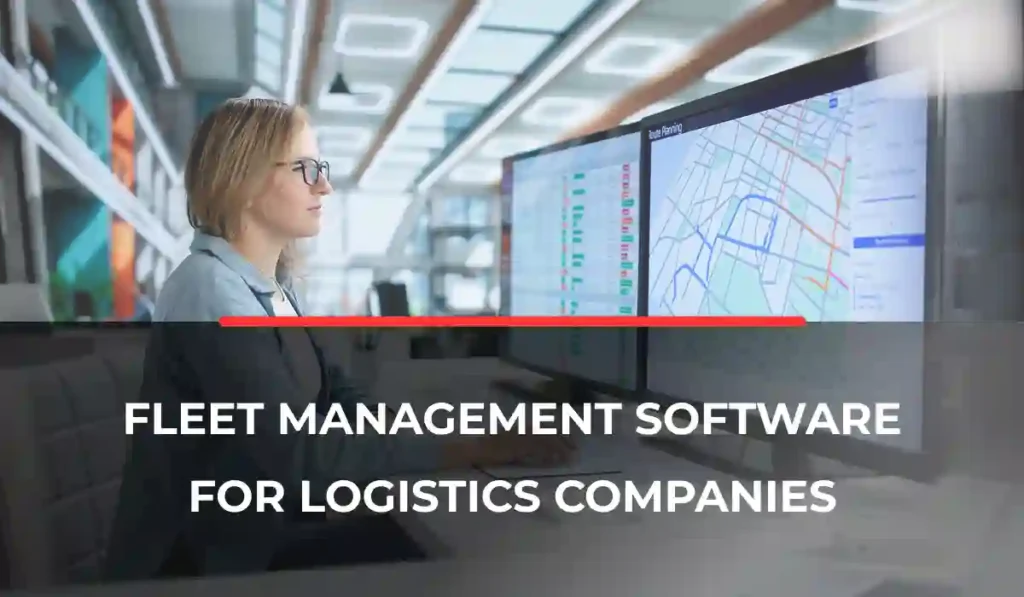
Managing a logistics business is becoming more difficult every year. Companies need to deliver goods faster, keep fuel costs under control, manage drivers, reduce vehicle downtime, and give customers accurate delivery updates. Doing all of this manually or with different systems leads to delays, higher costs, and poor visibility across daily operations.
Fleet management software helps logistics companies manage everything from one platform. It allows businesses to track vehicles in real-time, plan better routes, monitor driver performance, schedule maintenance, and make smarter business decisions using live data.
In this guide, you will learn what fleet management software is, how it works, the features every logistics company should look for, the benefits it offers, and whether a custom solution is the right investment for your business.
What Is Fleet Management Software?
Fleet management software is a digital system that helps businesses manage all their vehicles and daily fleet operations from one place. It gives companies a clear view of their vehicles, drivers, deliveries, fuel usage, maintenance schedules, and other important information.
Logistics companies manage many vehicles that travel to different locations every day. Keeping track of everything using spreadsheets, phone calls, or paper records can be slow and confusing. Important information can be missed.
Fleet management software brings all this information together in one dashboard. Managers can see where every vehicle is, assign new jobs, check delivery progress, monitor driver activity, and review reports without switching between different systems.
The main purpose of fleet management software is to help businesses improve daily operations. It helps companies reduce unnecessary costs, improve driver productivity, keep vehicles in good condition, and make better business decisions using real-time data.
Many businesses also use fleet management software to automate logistics operations with custom software. Automation reduces manual work, improves accuracy, and allows employees to spend more time on important tasks instead of updating spreadsheets or making repeated phone calls.
Although many people think fleet management software is only for large transportation companies, it is useful for businesses of all sizes. Even companies with a small fleet can improve efficiency, lower operating costs, and provide better customer service by using the right software.
Fleet Tracking vs Fleet Management
Many people think fleet tracking and fleet management mean the same thing, but they are different.
Fleet tracking mainly focuses on showing the live location of vehicles using GPS. It helps businesses know where their vehicles are and where they have traveled. Fleet management is much broader. It includes GPS tracking, but it also helps manage almost every part of fleet operations, such as:
- Vehicle maintenance
- Route planning and optimization
- Driver performance
- Fuel management
- Dispatch and scheduling
- Vehicle inspections
- Compliance and safety
- Reports and business analytics
In simple words, fleet tracking tells you where your vehicles are, while fleet management helps you run your entire fleet more efficiently.
For logistics companies that want better control over operations, lower costs, and long-term growth, a complete fleet management solution offers much more value than a basic tracking system.
As business needs become more complex, many companies choose custom platforms instead of generic software. Businesses comparing custom fleet management software vs SaaS find that custom software offers greater flexibility, easier integrations, and features that match their exact workflows.
Why Logistics Companies Need Fleet Management Software
Running a logistics business has become much more challenging than it was a few years ago. Companies are expected to deliver faster, control costs, and provide better customer service at the same time.
Fleet management software helps businesses organize their daily operations and make better decisions using real-time information. Here are some of the biggest reasons why logistics companies invest in fleet management software.
1. Rising Operational Costs
Every logistics company wants to reduce operating costs without affecting service quality. However, daily expenses continue to increase every year. Without proper monitoring, these costs can quickly become difficult to control.
Some of the biggest operating costs include:
- Fuel
- Vehicle maintenance
- Driver salaries
- Insurance
- Repairs
- Administrative work
For Example:
A vehicle taking longer routes every day may consume much more fuel than necessary. Drivers may leave engines running while waiting for deliveries, increasing fuel expenses even more. Small problems like these can cost thousands over time. Fleet management software helps businesses monitor these costs by showing detailed reports on fuel usage, vehicle performance, idle time, and route efficiency.
2. Increasing Customer Expectations
Customers expect much more than simple delivery services today. Many customers also expect live tracking similar to what they experience with large eCommerce companies.
They want to know:
- Where their shipment is
- When will it arrive
- If there is any delay
- When the delivery has been completed
Without fleet management software, providing these updates becomes difficult. Customer service teams may need to call drivers repeatedly just to check delivery status.
Fleet management software provides real-time visibility into every delivery. Customer support teams can quickly answer customer questions without contacting the driver every time.
That leads to:
- Better communication
- More accurate delivery estimates
- Fewer customer complaints
- Higher customer satisfaction
- Greater trust in the business
3. Complex Fleet Operations
As logistics businesses grow, their operations become more complex. Managing all of this using phone calls, spreadsheets, or separate software systems becomes very difficult.
A growing company may have:
- Hundreds of vehicles
- Multiple warehouses
- Different delivery regions
- Several dispatch teams
- Large numbers of drivers
- Thousands of deliveries every week
Fleet management software brings everything together into one platform. Managers can easily monitor:
- Vehicle locations
- Driver availability
- Delivery schedules
- Route performance
- Maintenance status
- Fleet utilization
Instead of searching through different systems, all important information is available in one place. Many companies also combine their fleet platform with a Logistics web application so dispatchers, warehouse teams, and managers can work together using shared real-time information.
4. Compliance & Safety Requirements
Logistics companies must follow many transportation and safety regulations. These requirements help keep drivers, vehicles, customers, and cargo safe.
Depending on the business, companies may need to monitor:
- Driver working hours
- Vehicle inspections
- Maintenance records
- Safety checks
- License renewals
- Insurance documents
- Regulatory compliance reports
Fleet management software stores this information in one system and automatically sends reminders before inspections, maintenance, or document renewals are due.
The software also tracks driver behavior, such as speeding, harsh braking, rapid acceleration, and excessive idling. Managers can use this information to coach drivers and improve overall road safety.
5. Better Decision Making with Real-Time Data
Many businesses make decisions based on experience or assumptions. While experience is valuable, having real data leads to much better decisions. Fleet management software collects information every day and turns it into easy-to-read reports.
Managers can quickly answer questions like:
- Which vehicles consume the most fuel?
- Which drivers complete deliveries on time?
- Which routes create the most delays?
- Which vehicles need frequent repairs?
- Which areas generate the highest operating costs?
Having this information helps businesses improve operations continuously instead of guessing where problems exist. Over time, these small improvements lead to lower costs, better productivity, and higher profits.
As companies continue expanding, many choose to build a complete digital ecosystem through custom software development in Dubai, Abu Dhabi, or Sharjah, where fleet management is connected with CRM, ERP, warehouse management, accounting, and reporting systems to support long-term business growth.
Key Features of Fleet Management Software
Fleet management software includes several features that help logistics companies manage their daily operations more efficiently. These features work together to improve vehicle tracking, driver management, route planning, maintenance, fuel usage, and reporting.
1. GPS Fleet Tracking
GPS fleet tracking is one of the most important features of fleet management software. It allows businesses to know where every vehicle is at any time. A GPS device installed in the vehicle sends its location to the software.
Without GPS tracking, dispatchers have to call drivers to ask where they are or when they will reach the delivery location.
With GPS fleet tracking, logistics companies can:
- See the live location of every vehicle.
- Monitor completed and active trips.
- Check route history.
- Find the nearest vehicle for a new delivery.
- Respond quickly to delays or emergencies.
- Share accurate delivery updates with customers.
2. Route History
Fleet management software stores the complete travel history of every vehicle. Managers can review where a vehicle traveled, when it stopped, and how long each trip took. Over time, this data helps companies make smarter decisions that improve efficiency and reduce operating costs.
Route history helps businesses:
- Verify completed deliveries.
- Investigate customer complaints.
- Improve future route planning.
- Identify unnecessary travel.
- Monitor vehicle usage.
3. Geofencing
Geofencing allows businesses to create virtual boundaries around specific locations such as warehouses, customer sites, fuel stations, or service centers. When a vehicle enters or leaves one of these locations, the software automatically sends a notification.
For example, businesses can receive alerts when:
- A delivery vehicle arrives at a customer’s location.
- A truck leaves the warehouse.
- A vehicle enters a restricted area.
- A driver leaves the assigned delivery zone.
4. Live Fleet Visibility
One of the biggest advantages of GPS tracking is complete fleet visibility.
Fleet managers can monitor all vehicles from a single dashboard instead of contacting drivers individually. They can instantly identify:
- Delayed deliveries.
- Vehicles stuck in traffic.
- Idle vehicles.
- Unexpected route changes.
- Available drivers for new jobs.
It allows dispatchers to make faster decisions and keep deliveries running smoothly.
For businesses planning long-term growth, GPS tracking becomes the foundation of a complete Fleet management web application, where tracking, dispatching, reporting, customer management, and fleet operations work together in one centralized platform.
5. Route Optimization
Planning the shortest route is no longer enough. Logistics companies also need to consider traffic, road closures, delivery priorities, fuel costs, and driver schedules. Route optimization helps businesses find the most efficient route before a vehicle starts its journey.
6. Traffic-Aware Routing
Traffic conditions change throughout the day. Accidents, road construction, and congestion can cause major delivery delays. Fleet management software uses live traffic information to recommend better routes. If traffic conditions change during a trip, the software can suggest an alternative path.
This helps businesses:
- Avoid traffic delays.
- Improve delivery times.
- Reduce fuel consumption.
- Increase driver productivity.
7. Fuel-Efficient Routes
Fuel is one of the highest operating expenses for logistics companies.
Route optimization helps reduce fuel costs by selecting routes that require less driving and fewer unnecessary stops. Even small improvements in daily routes can lead to significant savings over months and years. The software also helps reduce excessive idling and unnecessary detours, further improving fuel efficiency.
8. Multi-Stop Planning
Many logistics companies make several deliveries during a single trip. Instead of planning each stop manually, fleet management software automatically creates the best sequence for multiple deliveries.
This helps businesses:
- Complete more deliveries each day.
- Reduce travel distance.
- Save fuel.
- Improve delivery schedules.
- Reduce driver workload.
9. Delivery Sequencing
Delivery sequencing determines the best order for completing deliveries based on location, delivery priority, customer time windows, and traffic conditions.
A well-planned delivery sequence helps drivers spend less time on the road while ensuring customers receive their orders on time.
As businesses grow, advanced route optimization becomes even more valuable. Many companies choose AI-powered fleet management software because artificial intelligence can continuously analyze traffic patterns, delivery data, and driver behavior to recommend smarter routes that improve efficiency over time.
Benefits of Fleet Management Software for Logistics Companies
Fleet management software is more than just a tool for tracking vehicles. It helps logistics companies improve almost every part of their daily operations. From reducing fuel expenses to improving customer service, the right software helps businesses work more efficiently and increase profitability over time.
Here are some of the biggest benefits of using fleet management software.
1. Lower Fuel Costs
Fuel is one of the largest expenses for any logistics company. Even a small increase in fuel consumption can have a big impact on monthly operating costs.
Fleet management software helps businesses reduce fuel costs in several ways. It identifies the shortest and most efficient routes, reduces unnecessary driving, and helps drivers avoid traffic whenever possible.
The software also monitors:
- Excessive idling
- Harsh acceleration
- Speeding
- Unnecessary detours
- Poor driving habits
2. Reduced Vehicle Downtime
A vehicle that is waiting for repairs cannot complete deliveries, which leads to delays, unhappy customers, and lost revenue. Fleet management software helps prevent unexpected breakdowns by tracking vehicle health and maintenance schedules.
The system can automatically remind managers when a vehicle is due for:
- Oil changes
- Tire replacement
- Brake inspections
- Engine servicing
- Regular maintenance
3. Improved Route Efficiency
Choosing better routes helps logistics companies complete more deliveries in less time. Fleet management software analyzes different factors before recommending the best route, including:
- Traffic conditions
- Distance
- Road closures
- Delivery priorities
- Multiple delivery stops
4. Better Driver Productivity
Drivers play an important role in every logistics business. Helping them work more efficiently improves overall business performance. Fleet management software gives drivers everything they need in one place.
Drivers can:
- Receive delivery assignments
- Follow optimized routes
- Update delivery status
- Report completed jobs
- Communicate with dispatch teams
Managers can also monitor driver performance using reports that show:
- On-time deliveries
- Driving behavior
- Idle time
- Travel time
- Completed deliveries
5. Increased Fleet Visibility
One of the biggest advantages of fleet management software is complete visibility across the entire fleet. Managers can see what is happening at any moment, including:
- Vehicle locations
- Delivery progress
- Driver availability
- Vehicle status
- Active routes
- Delayed shipments
Having all this information on one dashboard helps businesses respond quickly when problems occur.
6. Higher Customer Satisfaction
Customers expect fast deliveries and accurate information. Fleet management software helps businesses meet these expectations by providing better delivery planning and real-time shipment updates.
When businesses know exactly where their vehicles are, they can give customers more accurate delivery estimates. If delays happen, customers can be informed immediately instead of waiting without any updates.
This leads to:
- Better communication
- More reliable deliveries
- Fewer customer complaints
- Increased customer trust
- Higher customer satisfaction
7. Improved Regulatory Compliance
Logistics companies must follow different transportation and safety regulations. Managing these requirements manually increases the risk of missing inspections or important deadlines.
Fleet management software keeps important records organized and automatically reminds managers about upcoming maintenance, inspections, and document renewals.
The software also stores information related to:
- Vehicle inspections
- Driver records
- Service history
- License renewals
- Safety reports
8. Reduced Operational Costs
One of the biggest goals of fleet management software is to reduce overall operating costs. Instead of saving money in only one area, the software improves efficiency across the entire business.
It helps reduce costs by:
- Lowering fuel consumption
- Reducing vehicle breakdowns
- Improving route planning
- Reducing manual work
- Increasing driver productivity
- Improving vehicle utilization
- Preventing unnecessary repairs
Need a Fleet Management Solution Built for Your Logistics Business?
Off-the-shelf software doesn’t always fit the way your business operates. We develop custom fleet management software with GPS tracking, route optimization, maintenance management, reporting, and seamless integrations to help you improve efficiency and scale with confidence.
Essential Modules in a Fleet Management System
A fleet management system is made up of different modules. Each module is responsible for a specific part of fleet operations. Together, these modules help logistics companies manage vehicles, drivers, deliveries, maintenance, and business performance from one platform.
1. Vehicle Management
The vehicle management module keeps complete information about every vehicle in the fleet. Rather than storing records in different files or spreadsheets, all vehicle information is available in one place.
This module usually stores:
- Vehicle registration details
- Vehicle type
- Purchase information
- Insurance records
- Service history
- Mileage
- Fuel usage
- Inspection records
- Vehicle availability
2. Driver Management
Drivers are one of the most important parts of any logistics operation. The driver management module helps businesses organize driver information and monitor performance.
It usually includes:
- Driver profiles
- License information
- Contact details
- Assigned vehicles
- Work schedules
- Attendance
- Delivery history
- Performance reports
Many companies also connect this module with fleet management mobile app solutions so drivers can receive assignments, update deliveries, and communicate with dispatch teams directly from their smartphones.
3. Dispatch & Scheduling
The dispatch module helps assign delivery jobs to the right drivers at the right time. Rather than manually calling drivers for every assignment, dispatchers can send jobs directly through the software.
This module helps businesses:
- Assign deliveries
- Schedule pickups
- Manage delivery priorities
- Monitor active jobs
- Track delivery progress
- Reassign deliveries when needed
4. Maintenance Management
Regular maintenance keeps vehicles running safely and reduces unexpected breakdowns. The maintenance module tracks the condition of every vehicle and reminds managers when servicing is due.
It can schedule:
- Oil changes
- Tire replacement
- Brake inspections
- Engine servicing
- Routine maintenance
- Vehicle inspections
5. Fuel Management
Fuel is one of the biggest operating expenses for logistics companies. The fuel management module helps businesses understand exactly how fuel is being used.
It tracks information such as:
- Fuel purchases
- Fuel consumption
- Average fuel efficiency
- Idle time
- Fuel costs
- Fuel theft indicators
6. Inventory & Spare Parts
Fleet maintenance depends on having the right spare parts available when needed. Managers always know what parts are available and when new inventory should be ordered.
The inventory module keeps track of:
- Spare parts
- Tires
- Batteries
- Engine components
- Maintenance supplies
- Replacement stock
7. Compliance Management
Logistics companies must meet different legal and safety requirements. The compliance module helps businesses manage important records and deadlines.
It can monitor:
- Vehicle inspections
- Driver licenses
- Insurance renewals
- Safety certificates
- Regulatory documents
- Maintenance compliance
Automatic reminders reduce the risk of missed deadlines and help businesses stay compliant with transportation regulations.
8. Analytics Dashboard
The analytics dashboard brings together information from every module and turns it into useful business reports.
Managers can quickly monitor important KPIs such as:
- Fuel costs
- Delivery performance
- Vehicle utilization
- Fleet availability
- Driver productivity
- Maintenance expenses
- Route efficiency
- On-time deliveries
Fleet Management Software Integrations
Fleet management software becomes even more powerful when it connects with the other systems a business already uses.
It reduces manual work, improves accuracy, and helps teams make faster decisions. Employees do not need to enter the same information multiple times because data moves automatically between connected platforms.
1. GPS Tracking Systems
GPS devices are one of the most common integrations in fleet management software. They continuously send location data from each vehicle to the system.
This allows managers to:
- Track vehicles in real-time.
- Monitor completed routes.
- View estimated arrival times.
- Identify delays.
- Respond quickly to emergencies.
2. ERP Software
Enterprise Resource Planning (ERP) software manages many important business functions such as finance, inventory, purchasing, and operations. When fleet management software is connected with an ERP system, information flows automatically between departments.
For example:
- Delivery information updates inventory records.
- Vehicle expenses are shared with the finance team.
- Purchase orders are linked with deliveries.
- Operational reports become more accurate.
3. CRM Systems
Customer Relationship Management (CRM) software stores customer information, sales activities, and communication history. Connecting CRM with fleet management software allows customer service teams to see delivery progress without contacting drivers.
This integration helps businesses:
- Provide accurate delivery updates.
- Respond to customer questions faster.
- Improve communication.
- Track delivery history.
- Build stronger customer relationships.
Many logistics businesses also invest in CRM app development (web & mobile) so both office staff and field teams can access customer information from anywhere.
4. Warehouse Management Systems (WMS)
Warehouse Management Systems help businesses manage inventory, storage, packing, and order processing. When fleet software integrates with WMS, warehouse teams know exactly when vehicles will arrive for loading or unloading.
This improves:
- Loading schedules.
- Inventory planning.
- Order preparation.
- Delivery coordination.
- Warehouse productivity.
5. Transportation Management Systems (TMS)
Although fleet management software and Transportation Management Systems work closely together, they focus on different areas. A TMS mainly manages transportation planning, freight movement, carrier selection, and shipment planning.
Fleet management software focuses on managing vehicles, drivers, maintenance, and daily fleet operations. When both systems are connected, businesses gain complete visibility across the entire transportation process, from shipment planning to final delivery.
6. Accounting Software
Every delivery creates financial information such as fuel expenses, maintenance costs, toll charges, driver payments, and invoices. Connecting fleet management software with accounting software helps businesses automatically record these expenses.
Managers can also generate more accurate reports showing:
- Fleet operating costs.
- Vehicle expenses.
- Fuel spending.
- Maintenance costs.
- Overall profitability.
7. Fuel Card Providers
Many logistics companies use fuel cards instead of cash for purchasing fuel. Fleet management software can integrate directly with fuel card providers to automatically record every fuel transaction.
Managers can easily compare:
- Fuel purchases.
- Fuel consumption.
- Vehicle mileage.
- Fuel efficiency.
8. IoT Sensors & Telematics
Modern fleet management software integrates with IoT devices and telematics systems installed inside vehicles.
These devices collect valuable information, including:
- Engine health.
- Fuel consumption.
- Tire pressure.
- Battery condition.
- Vehicle speed.
- Engine temperature.
- Driver behavior.
Common Challenges Logistics Companies Face Without Fleet Management Software
Many logistics companies still depend on spreadsheets, paper records, phone calls, or different software that do not work together. While these methods may work for a small business, they become difficult to manage as the fleet grows.
Here are some of the most common challenges logistics companies face without a proper fleet management system.
1. Manual Dispatching
Many businesses still assign delivery jobs through phone calls, text messages, or handwritten schedules. This process takes time and increases the chance of mistakes.
For example, a dispatcher may accidentally assign two drivers to the same delivery or forget to update a driver’s schedule after a last-minute change. Manual dispatching also makes it difficult to respond quickly when traffic, weather, or vehicle breakdowns affect deliveries.
Fleet management software automates dispatching by allowing managers to assign jobs directly through the system. Drivers receive updates instantly, reducing delays and improving communication.
2. Poor Route Planning
Choosing the wrong delivery route wastes both time and money. These problems increase fuel costs and reduce the number of deliveries completed each day.
Without fleet management software, drivers may:
- Take longer routes.
- Drive through heavy traffic.
- Travel unnecessary distances.
- Make deliveries in an inefficient order.
3. Lack of Real-Time Visibility
Without live tracking, managers often do not know where their vehicles are until drivers provide an update.
This creates several problems:
- Delayed responses to customer questions.
- Difficulty finding available vehicles.
- Poor communication between dispatchers and drivers.
- Limited control over daily operations.
Fleet management software provides real-time visibility across the entire fleet. Managers can monitor vehicle locations, delivery progress, and driver availability from one dashboard.
4. High Fuel Consumption
Fuel is one of the highest operating expenses for logistics companies. Without proper monitoring, businesses may not know why fuel costs continue to increase.
Common reasons include:
- Excessive idling.
- Poor route planning.
- Aggressive driving.
- Unauthorized vehicle usage.
- Unnecessary trips.
5. Missed Maintenance Schedules
Keeping vehicles on the road requires regular maintenance. Without an organized maintenance system, businesses may forget important servicing dates or delay repairs until a serious problem occurs.
This can result in:
- Unexpected vehicle breakdowns.
- Higher repair costs.
- Delivery delays.
- Shorter vehicle lifespan.
6. Poor Driver Accountability
When businesses cannot monitor driver activity, it becomes difficult to understand how vehicles are being used.
Managers may not know if drivers are:
- Following assigned routes.
- Driving safely.
- Spending too much time idling.
- Making unnecessary stops.
- Completing deliveries on time.
7. Inefficient Reporting
Many businesses spend hours collecting information from different spreadsheets before creating reports. This specific process is slow and often leads to outdated or inaccurate information. Without reliable reports, managers struggle to answer important questions such as:
- Which vehicles cost the most to maintain?
- Which routes are the most efficient?
- Which drivers complete deliveries on time?
- Where is the business losing money?
Custom Fleet Management Software vs Off-the-Shelf Solutions
One of the biggest decisions a logistics company must make is whether to buy an existing fleet management solution or build a custom one.
Both options can help manage fleet operations, but they are designed for different business needs. The right choice depends on your company size, budget, future plans, and the level of customization you require.
| Features | Custom Fleet Management Software | Off-the-Shelf Fleet Management Software |
|---|---|---|
| Customization | Built specifically for your business | Limited customization |
| Deployment Time | Longer development time | Ready to use quickly |
| Upfront Cost | Higher initial investment | Lower upfront cost |
| Monthly Fees | Usually, no recurring license fees | Monthly or yearly subscription |
| Scalability | Easily grows with your business | May become limiting as your business expands |
| Integrations | Can integrate with any required system | Limited to supported integrations |
| Ownership | You own the software | Software is owned by the vendor |
| Flexibility | Features can be added anytime | Dependent on vendor updates |
Which Option Is Right for Logistics Companies?
There is no single answer that works for every business.
An off-the-shelf solution may be the right choice if you:
- Have a small fleet.
- Need software quickly.
- Have a limited budget.
- Only requires basic fleet management features.
A custom solution is often the better choice if you:
- Manage a growing fleet.
- Have unique operational workflows.
- Need custom reports and dashboards.
- Want to integrate with ERP, CRM, WMS, or accounting software.
- Plan to scale your business over the coming years.
- Want complete ownership of your software.
Although custom software requires a higher initial investment, it often provides better long-term value because it grows with your business instead of limiting it.
If budget is one of your biggest concerns, it is also worth understanding the overall fleet management software development cost before making a decision. Looking at long-term value, maintenance, scalability, and ownership costs can help you choose the solution that best supports your business goals.
Not Sure Which Fleet Management Solution Is Right for Your Business?
Choosing between custom and off-the-shelf software depends on your fleet size, operational workflows, integration needs, and long-term growth plans. Our experts can evaluate your requirements and recommend the solution that delivers the best value for your business.
AI & Emerging Technologies in Fleet Management
Fleet management is changing quickly as new technologies become more advanced. Today, businesses are not only using software to track vehicles but also using artificial intelligence (AI), IoT devices, and connected systems to improve decision-making and reduce operating costs.
These technologies help logistics companies predict problems before they happen, improve delivery planning, and make better use of their vehicles and drivers.
Here are some of the biggest technology trends shaping the future of fleet management.
AI Route Optimization
Traditional route planning usually focuses on finding the shortest distance between two locations. AI takes this much further.
AI can analyze large amounts of data, including:
- Live traffic conditions
- Delivery schedules
- Road closures
- Weather conditions
- Driver availability
- Previous delivery patterns
Predictive Vehicle Maintenance
Most vehicle repairs happen after something has already gone wrong, which leads to unexpected breakdowns, expensive repairs, and delayed deliveries.
Predictive maintenance works differently.
The software monitors information such as:
- Engine performance
- Oil condition
- Battery health
- Tire pressure
- Engine temperature
- Vehicle mileage
This helps businesses:
- Reduce unexpected breakdowns.
- Lower repair costs.
- Increase vehicle lifespan.
- Keep more vehicles on the road.
Driver Behavior Analytics
Safe and efficient driving has a direct impact on operating costs. AI can monitor driver behavior and identify habits that reduce efficiency or increase safety risks.
The software can detect:
- Speeding
- Harsh braking
- Rapid acceleration
- Sharp cornering
- Excessive idling
- Distracted driving (when supported by cameras)
Managers receive detailed reports that help them coach drivers and improve overall driving performance. Better driving habits reduce fuel costs, improve vehicle health, and lower the risk of accidents.
Fuel Consumption Prediction
Fuel prices change regularly, making fuel management more difficult for logistics companies. AI can study historical fuel data and identify patterns that affect fuel usage.
It considers factors such as:
- Route length
- Traffic conditions
- Vehicle type
- Driver behavior
- Load weight
- Weather conditions
IoT & Connected Vehicles
The Internet of Things (IoT) allows vehicles to communicate with fleet management software through smart sensors installed inside the vehicle.
These sensors collect real-time information, including:
- Vehicle location
- Engine condition
- Fuel level
- Tire pressure
- Battery status
- Temperature
- Vehicle speed
Dash Cameras & Computer Vision
Many logistics companies now install smart dash cameras inside their vehicles. Unlike traditional cameras that only record video, AI-powered cameras can analyze what is happening while the vehicle is moving.
They can identify situations such as:
- Driver distraction
- Mobile phone use
- Tailgating
- Unsafe following distance
- Lane departure
- Sudden braking
Predictive Demand Planning
AI can also help businesses prepare for future demand. Instead of only looking at current deliveries, AI analyzes previous business data to predict future workload.
It considers information such as:
- Seasonal demand
- Customer buying patterns
- Delivery history
- Regional demand
- Fleet availability
How to Choose the Right Fleet Management Software
Choosing the right fleet management software is an important decision because it affects your daily operations, customer service, and long-term business growth. The best solution should solve your current challenges while also supporting your future needs.
- Clearly identify your business needs before comparing different software solutions.
- Choose software that can support both your current fleet size and future business growth.
- Make sure the system can integrate with your ERP, CRM, warehouse management, accounting, and other business software.
- Look for an easy-to-use interface so drivers, dispatchers, and managers can learn the system quickly.
- Ensure the software offers web and mobile access so your team can manage fleet operations from anywhere.
- Compare the total cost instead of only the purchase price. Consider implementation, training, maintenance, upgrades, and the overall fleet management software development cost if you are planning a custom solution.
- Check whether the software provides detailed reports, dashboards, and analytics to help you make better business decisions.
- Ask about customization options if your business has unique workflows or operational requirements.
- Choose a solution that offers strong security features to protect your business and customer data.
- Review the software provider’s experience, customer support, and maintenance services before making a decision.
- Request a live demo or free trial to see how the software works in real business situations.
Fleet Management Software Implementation Best Practices
Implementing fleet management software is not just about installing a new system. A successful implementation requires proper planning, clean data, employee training, and regular monitoring. Taking the right steps from the beginning helps businesses avoid common problems, improve user adoption, and get the best return on their investment.
- Define clear business goals before implementation so everyone understands what the software should achieve.
- Review and clean your existing fleet data before moving it into the new system to avoid incorrect or duplicate records.
- Integrate the software with your existing ERP, CRM, warehouse management, accounting, and other business systems whenever possible.
- Train drivers, dispatchers, fleet managers, and office staff so they can confidently use the new system in their daily work.
- Start with the most important features first and add advanced modules as your team becomes familiar with the software.
- Monitor key performance indicators (KPIs) such as fuel costs, vehicle utilization, maintenance expenses, delivery times, and driver productivity after implementation.
- Collect feedback from employees regularly and make improvements where needed to increase efficiency and user satisfaction.
- Schedule regular software updates and maintenance to keep the system secure, reliable, and compatible with new technologies.
- Work with an experienced software development partner that provides ongoing technical support, future enhancements, and system maintenance after deployment.
- Treat implementation as an ongoing improvement process rather than a one-time project. Regularly reviewing reports and optimizing workflows will help your fleet management software continue delivering value as your business grows.
Measuring ROI from Fleet Management Software
Investing in fleet management software is not only about improving daily operations. It is also about generating measurable business value over time. Businesses can track their return on investment (ROI) by comparing operational performance before and after implementing the software.
1. Fuel Savings
Fuel is one of the biggest operating expenses for logistics companies, so even small improvements can lead to significant savings.
Fleet management software helps reduce fuel costs by:
- Optimizing delivery routes.
- Reducing unnecessary idling.
- Monitoring driver behavior.
- Identifying fuel waste.
- Tracking fuel consumption across the fleet.
2. Lower Maintenance Costs
Unexpected vehicle repairs are often more expensive than regular maintenance. Fleet management software helps businesses schedule preventive maintenance before serious problems occur.
Tracking maintenance history also helps businesses make better decisions about repairing or replacing vehicles.
3. Increased Vehicle Utilization
Vehicles that spend too much time parked or waiting for assignments reduce business efficiency. Fleet management software helps managers monitor how each vehicle is being used and identify underutilized assets.
Better vehicle utilization allows businesses to complete more deliveries without purchasing additional vehicles.
4. Reduced Delivery Delays
Late deliveries can lead to unhappy customers, missed business opportunities, and additional operating costs.
Fleet management software improves delivery performance by:
- Planning better routes.
- Monitoring live traffic.
- Dispatching vehicles more efficiently.
- Providing real-time delivery updates.
5. Improved Driver Productivity
Drivers can complete more work when they receive optimized routes, digital job assignments, and real-time updates. Fleet management software reduces paperwork and manual communication, allowing drivers to spend more time making deliveries.
Higher productivity means businesses can handle more deliveries without increasing their workforce.
6. Lower Administrative Costs
Many administrative tasks become automated after implementing fleet management software.
The system automatically generates reports, tracks maintenance schedules, records fuel usage, and stores important fleet information. This reduces manual data entry, minimizes errors, and allows office staff to focus on more valuable work instead of repetitive administrative tasks.
7. Better Customer Retention
Providing reliable deliveries and accurate updates helps build customer trust.
Fleet management software improves communication by giving customers better delivery estimates and faster responses when delays occur. Satisfied customers are more likely to continue doing business with the company, leading to higher customer retention and long-term revenue growth.
8. Fleet KPIs to Monitor
To measure the return on investment accurately, logistics companies should regularly monitor important fleet performance indicators.
Some of the most useful KPIs include:
- Fuel consumption per vehicle.
- Fuel cost per delivery.
- Vehicle utilization rate.
- Fleet availability.
- Preventive maintenance compliance.
- Vehicle downtime.
- Average delivery time.
- On-time delivery rate.
- Driver productivity.
- Driver safety score.
- Cost per kilometer or mile.
- Customer satisfaction.
- Fleet operating cost.
- Overall fleet profitability.
Optimize Your Logistics Operations with Custom Fleet Management Software
Build a fleet management solution tailored to your logistics operations with GPS tracking, route optimization, predictive maintenance, and seamless integrations, all designed to improve efficiency and reduce costs.
Frequently Asked Questions
What is fleet management software for logistics companies?
Fleet management software is a system that helps logistics companies manage their vehicles, drivers, routes, fuel usage, maintenance, and deliveries from one platform. It improves efficiency, reduces costs, and gives businesses real-time visibility into their fleet operations.
How does fleet management software improve logistics operations?
Fleet management software improves logistics operations by tracking vehicles in real-time, optimizing delivery routes, reducing fuel consumption, scheduling preventive maintenance, monitoring driver performance, and automating many daily tasks.
What features should logistics companies look for in fleet management software?
A good fleet management system should include GPS tracking, route optimization, driver management, vehicle maintenance scheduling, fuel management, dispatch management, reporting, analytics, mobile access, and integration with other business systems such as ERP and CRM software.
What is the difference between fleet management software and a transportation management system (TMS)?
Fleet management software focuses on managing vehicles, drivers, maintenance, fuel, and fleet performance. A Transportation Management System (TMS) focuses on shipment planning, freight movement, carrier management, and transportation scheduling. Many logistics companies use both systems together to manage their operations more efficiently.
Should I choose custom or off-the-shelf fleet management software?
If your business has simple fleet management needs and a limited budget, an off-the-shelf solution may be enough. If you need custom workflows, advanced integrations, better scalability, and complete ownership of the software, a custom fleet management solution is usually the better long-term investment.
Can fleet management software integrate with ERP and warehouse management systems?
Yes. Most modern fleet management software can integrate with ERP systems, warehouse management systems (WMS), CRM software, accounting software, GPS devices, fuel card providers, and other business applications. These integrations improve data sharing and reduce manual work.
How does AI improve fleet management?
AI helps fleet management software optimize routes, predict vehicle maintenance, analyze driver behavior, forecast fuel usage, automate dispatching, and improve delivery planning. These features help businesses reduce costs, improve efficiency, and make better decisions using real-time data.
What KPIs should logistics companies track using fleet management software?
Important KPIs include fuel consumption, fuel cost per delivery, vehicle utilization, maintenance costs, vehicle downtime, on-time delivery rate, driver productivity, driver safety score, fleet operating costs, and customer satisfaction. Tracking these KPIs helps businesses measure performance and identify areas for improvement.