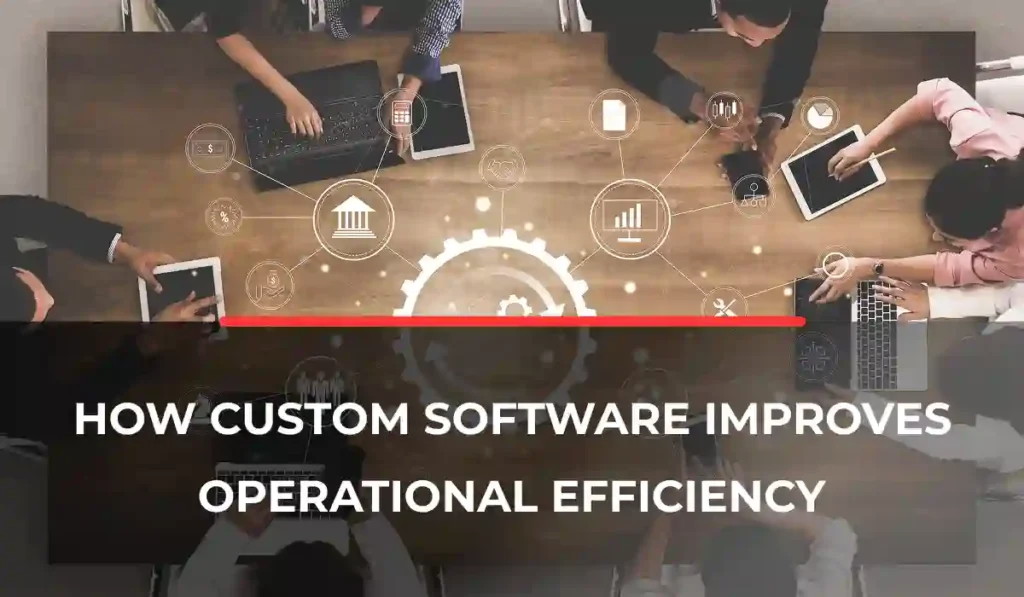
Every business wants to reduce costs, improve productivity, and operate more efficiently. However, manual processes, disconnected systems, and outdated software slow down operations and make everyday tasks more difficult.
Custom software is built around your business needs to help automate repetitive tasks, connect systems, centralize data, and streamline workflows. It lets teams work faster, reduce errors, and improve overall efficiency.
This guide explains how custom software improves operational efficiency, the business areas it benefits, and how it helps organizations save time, reduce costs, and support long-term growth.
What Is Operational Efficiency?
Operational efficiency means completing business tasks in the most effective way while using fewer resources, reducing unnecessary costs, and maintaining quality. It focuses on improving productivity, eliminating waste, and helping businesses deliver products or services faster.
Defining Operational Efficiency
Operational efficiency is the ability to get more work done with less time, effort, and cost. It involves improving workflows, reducing unnecessary steps, and making better use of people, technology, and resources. The goal is to balance cost, quality, and speed so the business can operate more effectively.
Common Signs of Operational Inefficiency
Many businesses experience operational inefficiencies without realizing how much they affect productivity.
Common signs include:
- Manual data entry and repetitive tasks.
- Duplicate work across teams.
- Communication gaps between departments.
- Slow approval processes.
- Data is stored in multiple disconnected systems.
- Frequent human errors.
- Delayed reporting and limited visibility.
- Poor customer experience due to slow service.
Why Operational Efficiency Matters
Improving operational efficiency helps businesses reduce costs, increase productivity, and make better use of their resources. It also enables faster decision-making, improves customer satisfaction, supports business growth, and gives organizations a stronger competitive advantage in the market.
What Is Custom Software?
Custom software is a software solution designed and developed specifically for the needs of a single business. Unlike off-the-shelf software that serves a broad audience, custom software is built around your workflows, business goals, and operational requirements.
Understanding Custom Software Development
Custom software development is the process of creating software customized to a company’s unique operations. It includes personalized features, customized workflows, and integrations with existing business systems, which ensures the software fits the business instead of requiring the business to adapt to the software.
Custom Software vs. Off-the-Shelf Software
While off-the-shelf software is designed for general business needs, custom software is built to solve specific operational challenges. The right choice depends on your business goals, processes, and long-term growth plans.
| Features | Custom Software | Off-the-Shelf Software |
|---|---|---|
| Flexibility | Fully customized to business needs | Limited customization |
| Scalability | Grows with your business | May have scalability limits |
| Initial Cost | Higher upfront investment | Lower upfront cost |
| Maintenance | Managed based on business needs | Controlled by the software vendor |
| Ownership | The business owns the software | Vendor owns the software |
| Integration | Easily integrates with existing systems | Integration options may be limited |
| Long-Term Value | High long-term ROI and flexibility | Ongoing subscription costs and limitations |
Types of Custom Business Software
Custom software can be developed for almost any business function. Common examples include:
- Customer Relationship Management (CRM) systems
- Enterprise Resource Planning (ERP) systems
- Inventory Management Software
- Human Resources (HR) Management Systems
- Project Management Software
- Customer Portals
- Mobile Applications
- Workflow Automation Platforms
How Custom Software Improves Operational Efficiency
Custom software improves operational efficiency by automating routine work, simplifying business processes, and giving teams access to the tools and information they need to work more effectively.
Here are some of the biggest ways it helps businesses operate more efficiently.
Automates Repetitive Tasks
Many daily business tasks are repetitive and time-consuming. Custom software can automate processes such as data entry, invoice generation, employee onboarding, report creation, notifications, and approval workflows. It reduces manual work, minimizes human errors, saves time, and allows employees to focus on higher-value tasks.
Streamlines Business Processes
Custom software is designed around your existing workflows, which makes it easier to standardize processes and remove unnecessary steps. It helps reduce bottlenecks, speed up approvals, and ensure tasks are completed consistently across different teams and departments.
Centralizes Business Data
Rather than storing information across multiple systems or spreadsheets, custom software brings business data into one centralized platform. This creates a single source of truth, eliminates duplicate records, simplifies reporting, and makes it easier for teams to access accurate information when they need it.
Improves Team Collaboration
Custom software helps employees work together more efficiently by providing shared dashboards, task management tools, real-time updates, document sharing, and better communication across departments. Everyone has access to the same information, reducing delays and improving coordination.
Enables Faster Decision-Making
Access to accurate, real-time data helps businesses make better decisions. Custom software can provide custom dashboards, business intelligence tools, KPI tracking, and executive reports that give managers clear insights into operations.
Build Custom Software That Works for Your Business
Every business has unique processes, and your software should support them. DynamoLogic Solutions develops custom software that automates workflows, improves efficiency, and helps businesses scale with confidence.
Business Areas That Benefit Most from Custom Software
Custom software can improve efficiency across every department by automating routine tasks, connecting systems, and simplifying daily operations.
Here are some of the business functions that benefit the most.
Sales Operations
Custom CRM solutions help sales teams manage leads, track customer interactions, monitor sales performance, and organize the sales pipeline. It improves productivity, shortens sales cycles, and helps teams close more deals.
Customer Service
Custom software can streamline customer support with ticketing systems, self-service portals, live chat integration, and centralized customer records, which enables faster response times and delivers a better customer experience.
Human Resources
HR teams can automate recruitment, attendance tracking, payroll integration, performance management, and employee self-service. It reduces administrative work and allows HR professionals to focus on employee development and engagement.
Finance & Accounting
Custom finance software simplifies billing, expense management, financial reporting, and budget tracking. By automating repetitive financial tasks, businesses improve accuracy and gain better visibility into their financial performance.
Inventory & Supply Chain
Custom inventory and supply chain solutions help businesses manage stock levels, monitor warehouse operations, automate procurement, and track order fulfillment. This reduces delays, minimizes inventory errors, and improves overall operational efficiency.
Project Management
Custom project management software helps teams plan resources, assign tasks, collaborate more effectively, and monitor project progress through real-time reporting, which keeps projects organized and improves on-time delivery.
Key Features That Drive Operational Efficiency
The right features can make a significant difference in how efficiently a business operates. Custom software includes tools designed to automate work, improve collaboration, and reduce operational overhead across departments.
Workflow Automation
Workflow automation eliminates repetitive manual tasks by automatically handling approvals, notifications, data entry, and routine processes. It saves time, reduces errors, and allows employees to focus on more valuable work.
Role-Based Access Control
Role-based access ensures employees only see the information and features relevant to their responsibilities, which improves data security, simplifies workflows, and reduces the risk of unauthorized access or accidental changes.
Custom Dashboards
Custom dashboards provide real-time access to important business data in one place. Teams and managers can monitor performance, track KPIs, and identify issues quickly without searching through multiple systems.
Automated Reporting
Rather than creating reports manually, custom software can generate accurate reports automatically using real-time data. This saves time, improves accuracy, and helps businesses make faster decisions.
API Integrations
Custom software can connect with existing business systems through APIs, which create a seamless flow of information across the organization. These software API integrations eliminate duplicate data entry, reduce manual work, and improve overall operational efficiency.
Common integrations include:
- ERP systems
- CRM platforms
- Payment gateways
- Accounting software
- Email platforms
Mobile Accessibility
Mobile access allows employees to complete tasks, view reports, approve requests, and access business information from anywhere, which increases productivity, supports remote work, and helps businesses respond more quickly to changing operational needs.
Real-World Examples of Custom Software Improving Efficiency
Businesses across different industries use custom software to automate operations, reduce manual work, and improve overall performance.
Here are some common examples.
Manufacturing
Manufacturers use custom software to automate production scheduling, monitor equipment performance, and optimize inventory levels, which helps reduce downtime, improve production efficiency, and keep operations running smoothly.
Healthcare
Custom healthcare software simplifies electronic medical records, appointment scheduling, and patient management. Software automation for healthcare clinics improves access to patient information, reduces administrative tasks, and enhances the overall patient experience.
Retail & E-commerce
Retail and e-commerce businesses use custom software to synchronize inventory across sales channels, automate order processing, and manage customer loyalty programs. It improves order accuracy, reduces stock issues, and delivers a better shopping experience.
Logistics
Custom logistics solutions help businesses track fleets, optimize delivery routes, and manage deliveries in real time. This reduces transportation costs, improves delivery times, and increases operational efficiency.
Financial Services
Financial institutions use custom software to automate loan processing, simplify compliance checks, detect fraudulent activities, and streamline customer onboarding. These solutions improve accuracy, strengthen security, and speed up financial operations.
Measurable Benefits of Custom Software
Custom software delivers measurable improvements by automating processes, reducing inefficiencies, and helping teams work more effectively. As operations become more streamlined, businesses can lower costs, improve productivity, and provide better customer experiences.
Reduced Operational Costs
By automating repetitive tasks and eliminating unnecessary manual work, custom software helps reduce labor costs, operational expenses, and process inefficiencies.
Increased Employee Productivity
Employees spend less time on routine tasks and more time on high-value work. This improves productivity and allows teams to complete more work in less time.
Faster Process Completion
Automated workflows and standardized processes speed up approvals, reporting, and daily operations, which helps businesses respond more quickly to customers and changing business needs.
Lower Error Rates
Reducing manual data entry and repetitive processes minimizes human errors, improves data accuracy, and reduces the time spent correcting mistakes.
Improved Customer Satisfaction
Faster response times, more accurate information, and smoother business processes lead to better customer experiences and stronger customer relationships.
Better Compliance
Custom software can automate record keeping, access controls, and audit trails, helping businesses meet regulatory and internal compliance requirements more effectively.
Higher Revenue Opportunities
Improved operational efficiency allows businesses to serve more customers, complete work faster, and identify new growth opportunities without significantly increasing operating costs.
Common Business Challenges Solved by Custom Software
As businesses grow, outdated systems and manual processes create inefficiencies that slow operations. Custom software helps solve these challenges by streamlining workflows, connecting systems, and improving access to accurate business data.
- Connect disconnected business applications into one platform.
- Automate manual workflows through repetitive tasks and approval automation.
- Poor visibility into operations with real-time dashboards and reporting.
- Eliminate data inconsistencies by centralizing information in a single system.
- Resolve scalability issues with software that grows alongside the business.
- Overcome limited reporting through automated reports and real-time insights.
- Legacy software limitations can be addressed by replacing outdated systems with modern, flexible solutions.
Still Relying on Manual Processes and Disconnected Systems?
Our custom software development experts build tailored solutions that automate workflows, improve collaboration, and help businesses operate more efficiently.
Technologies That Enhance Operational Efficiency
Modern technologies make custom software more intelligent, automated, and scalable. When integrated into business applications, they help streamline operations, improve decision-making, and increase overall efficiency.
- AI automates routine tasks, predicts trends, and supports faster decision-making.
- Machine learning improves forecasting by learning from business data over time.
- Cloud computing enables secure access to systems from anywhere and supports business growth.
- IoT connects devices to monitor equipment, assets, and operations in real time.
- Business intelligence transforms data into actionable insights through dashboards and reports.
- Robotic process automation (RPA) automates repetitive, rule-based tasks to reduce manual effort and errors.
Best Practices for Successful Custom Software Implementation
A successful custom software project requires careful planning and a clear understanding of your business needs. Following these best practices helps ensure smooth implementation, higher user adoption, and better long-term results.
1. Analyze Existing Workflows
Review your current processes to understand how work is completed and identify areas that can be improved before development begins.
2. Identify Process Bottlenecks
Find tasks that cause delays, repetitive work, or inefficiencies so the software can be designed to solve these challenges.
3. Prioritize High-Impact Automation
Focus first on automating processes that save the most time, reduce errors, and improve overall productivity.
4. Involve End Users Early
Include employees who will use the software during planning and testing to ensure it meets their daily needs and encourages adoption.
5. Ensure Seamless System Integration
Connect the new software with your existing business systems to eliminate data silos and improve workflow efficiency.
6. Provide Employee Training
Train employees on how to use the new system effectively so they can take full advantage of its features from day one.
7. Continuously Measure Performance
Track key performance indicators (KPIs) after implementation to measure results, identify improvement opportunities, and maximize ROI.
How to Measure the ROI of Custom Software
Measuring the return on investment (ROI) helps determine whether your custom software is delivering real business value. By tracking the right key performance indicators (KPIs), businesses can measure improvements in efficiency, productivity, costs, and overall performance.
- Measure the time saved by automating repetitive tasks and workflows.
- Track reductions in operational and labor costs.
- Monitor improvements in employee productivity and task completion.
- Evaluate the reduction in manual errors and data inconsistencies.
- Measure customer satisfaction through response times and feedback.
- Review employee adoption and usage of the new software.
- Monitor business growth through revenue, customer acquisition, and scalability.
ROI Measurement Checklist
Use the following KPIs to evaluate the success of your custom software implementation:
- Hours saved through workflow automation.
- Reduction in operational and labor costs.
- Increase in employee productivity.
- Decrease in manual errors and rework.
- Faster process completion times.
- Improved customer satisfaction and response times.
- Higher employee adoption and software usage.
- Revenue growth and improved business scalability.
Is Custom Software the Right Choice for Your Business?
Custom software offers the greatest value for businesses with unique processes, growing operational needs, or complex workflows that standard software cannot fully support. Here are the types of organizations that benefit the most.
Growing Startups
Custom software helps startups build scalable solutions that support growth without being limited by off-the-shelf software.
Small & Medium Businesses
SMBs can automate routine tasks, improve efficiency, and streamline operations with software designed around their specific business needs.
Enterprise Organizations
Large organizations benefit from custom software that integrates multiple systems, supports complex workflows, and manages high volumes of data.
Manufacturing Companies
Manufacturers can improve production planning, inventory management, equipment monitoring, and supply chain operations.
Healthcare Providers
Healthcare organizations can streamline patient management, appointment scheduling, electronic medical records, and compliance processes.
Financial Institutions
Banks and financial service providers can automate loan processing, strengthen security, improve compliance, and reduce manual work.
Logistics Companies
Custom software helps logistics businesses optimize fleet management, route planning, shipment tracking, and delivery operations.
E-commerce Businesses
Online retailers can improve inventory management, automate order processing, personalize customer experiences, and scale as demand grows.
Choosing the Right Custom Software Development Partner
The success of your custom software depends not only on the technology but also on the development partner you choose. An experienced partner can build a solution that aligns with your business goals, encourages user adoption, and delivers long-term operational improvements.
Industry Experience
Choose a custom software development partner with experience building software for businesses in your industry. They will better understand your operational challenges, compliance requirements, and best practices, reducing development risks and improving project outcomes.
Business Process Understanding
A reliable partner takes time to understand your workflows, pain points, and business objectives before writing any code. It ensures the software is designed to improve your operations rather than simply adding new technology.
Technical Expertise
Look for a team with strong expertise in custom software development, cloud technologies, API integrations, security, and modern development frameworks. Technical knowledge is essential for building reliable, high-performing, and future-ready software.
Agile Development Approach
An agile development process allows the project to progress in manageable stages with regular feedback and testing, which makes it easier to adapt to changing business requirements and ensures the final solution meets your expectations.
Transparent Communication
Choose a partner that communicates clearly throughout the project with regular progress updates, realistic timelines, and open discussions. Transparent communication helps prevent misunderstandings and keeps development aligned with your business goals.
Ongoing Support & Maintenance
Custom software requires continuous updates, performance monitoring, security improvements, and bug fixes after launch. A dependable development partner provides long-term support to keep your software secure and running efficiently.
Scalable Architecture
Your software should be built on a scalable architecture that can support future growth, additional users, new features, and system integrations. It helps protect your investment and reduces the need for costly redevelopment as your business expands.
Transform Your Business Operations with Custom Software
Our team designs and develops tailored software solutions that align with your unique workflows and business goals, helping you unlock greater efficiency and sustainable growth.
FAQs
How does custom software improve operational efficiency?
Custom software improves operational efficiency by automating repetitive tasks, streamlining workflows, centralizing data, and connecting business systems.
What is the difference between custom software and off-the-shelf software?
Custom software is built specifically for one business, while off-the-shelf software is designed for general use. Custom software offers greater flexibility, scalability, and integration options.
What business processes can custom software automate?
Custom software can automate data entry, approvals, invoicing, payroll, reporting, inventory management, customer support, and many other routine business processes.
Is custom software worth the investment?
Yes. While it requires a higher upfront investment, custom software can improve efficiency, reduce costs, and deliver long-term business value.
Can custom software integrate with existing business systems?
Yes. Custom software can integrate with systems such as ERP, CRM, accounting software, payment gateways, and other business applications.
What industries benefit most from custom software?
Industries such as manufacturing, healthcare, finance, logistics, retail, and e-commerce benefit the most, but any business with unique workflows can benefit.
How do you measure the ROI of custom software?
Measure ROI by tracking time savings, cost reductions, productivity improvements, lower error rates, customer satisfaction, and business growth.
What are the biggest operational challenges custom software solves?
Custom software solves challenges such as manual workflows, disconnected systems, data inconsistencies, limited reporting, and scalability issues.