
A custom software project can become a valuable business asset or an expensive mistake. Many companies invest significant time and money into software development, only to face missed deadlines, budget overruns, communication problems, or solutions that fail to meet their business goals.
Demand for custom software development in the UAE continues to grow, giving businesses access to a wide range of software companies and development partners. More options are available than ever before, but that also makes the selection process more challenging. The goal is not simply to find a software development company. The goal is to find the right one.
A structured evaluation process makes that decision much easier. This guide explains the key factors to assess, the questions to ask, and the red flags to watch for when comparing vendors. By the end, you’ll have a clear framework for choosing a software development partner that can deliver long-term value for your business.
Why Choosing the Right Software Development Vendor Matters
Software development projects require a significant investment of time and resources. A successful outcome depends not only on the idea itself but also on the team responsible for building it. Understanding why vendor selection matters can help businesses avoid costly mistakes and improve the chances of long-term success.
Software Projects Are Long-Term Investments
Custom software is not a short-term purchase. Many businesses rely on their software every day to manage operations, serve customers, handle data, and support growth. A well-built solution can continue delivering value for years, making vendor selection one of the most important decisions in the development process.
The Wrong Vendor Can Create Significant Risks
A poor vendor choice can create problems that affect the entire project. Budget overruns, missed deadlines, poor communication, security issues, and low user adoption can quickly reduce the return on your investment. In some cases, businesses are forced to rebuild the software entirely, resulting in additional costs and delays.
The Right Vendor Becomes a Strategic Partner
A strong software development vendor does more than just write code. The right partner helps you make better technical decisions, identify opportunities for improvement, and build software that can grow with your business. Faster development, higher-quality products, ongoing innovation, and long-term scalability are often the result of a successful vendor relationship.
What Is a Custom Software Development Vendor?
A custom software development vendor is a company or team that designs, develops, tests, and supports software built for a client’s unique requirements. The goal is to create a solution that matches business processes, solves specific challenges, and supports long-term growth.
Most custom software development vendors offer a range of services depending on the needs of the project.
Common services include:
- Web application development
- Mobile app development
- Enterprise software development
- SaaS development
- CRM and ERP solutions
- Software modernization and upgrades
- Ongoing maintenance and technical support
Some vendors also provide business analysis, UI/UX design, cloud consulting, and system integration services.
Types of Development Vendors
Software development vendors can operate in different ways, and each model has its own advantages depending on your budget, location, and project requirements.
- Local software agencies: Companies located in the same country or region as your business.
- Offshore development companies: Teams based in a different country, often offering lower development costs.
- Nearshore development teams: Vendors located in nearby countries with similar time zones.
- Enterprise consulting firms: Large organizations that provide software development alongside business and technology consulting.
- Dedicated development partners: Teams that work as an extension of your internal staff and provide long-term development support.
Define Your Requirements Before Evaluating Vendors
Many businesses start comparing software vendors before clearly defining what they want to build. That often leads to inaccurate proposals, unrealistic expectations, and difficulty comparing vendors fairly. A clear understanding of your goals, project scope, budget, and timeline makes the evaluation process much more effective.
Clarify Business Goals
Every software project should start with a clear business objective. Vendors can only recommend the right solution when they understand the problem you are trying to solve and the results you expect to achieve.
Questions to consider include:
- What problem are you trying to solve?
- What outcomes do you expect from the software?
- Which KPIs will be used to measure success?
Determine Project Scope
The scope defines what needs to be built and how complex the project will be. Vendors need this information to estimate timelines, resources, and costs accurately.
Common project types include:
- MVP development
- Full-scale enterprise software
- Legacy system modernization
- System integration projects
Establish Budget & Timeline Expectations
Budget and timeline expectations should be discussed early in the process. Vendors can recommend the most suitable approach when they understand your financial constraints and target launch dates.
Clear requirements also make it easier to compare proposals from multiple vendors. Instead of comparing different assumptions, you can evaluate vendors based on the same project goals, scope, and expectations.
Dig Deeper: How to Choose a Software Development Company in Dubai
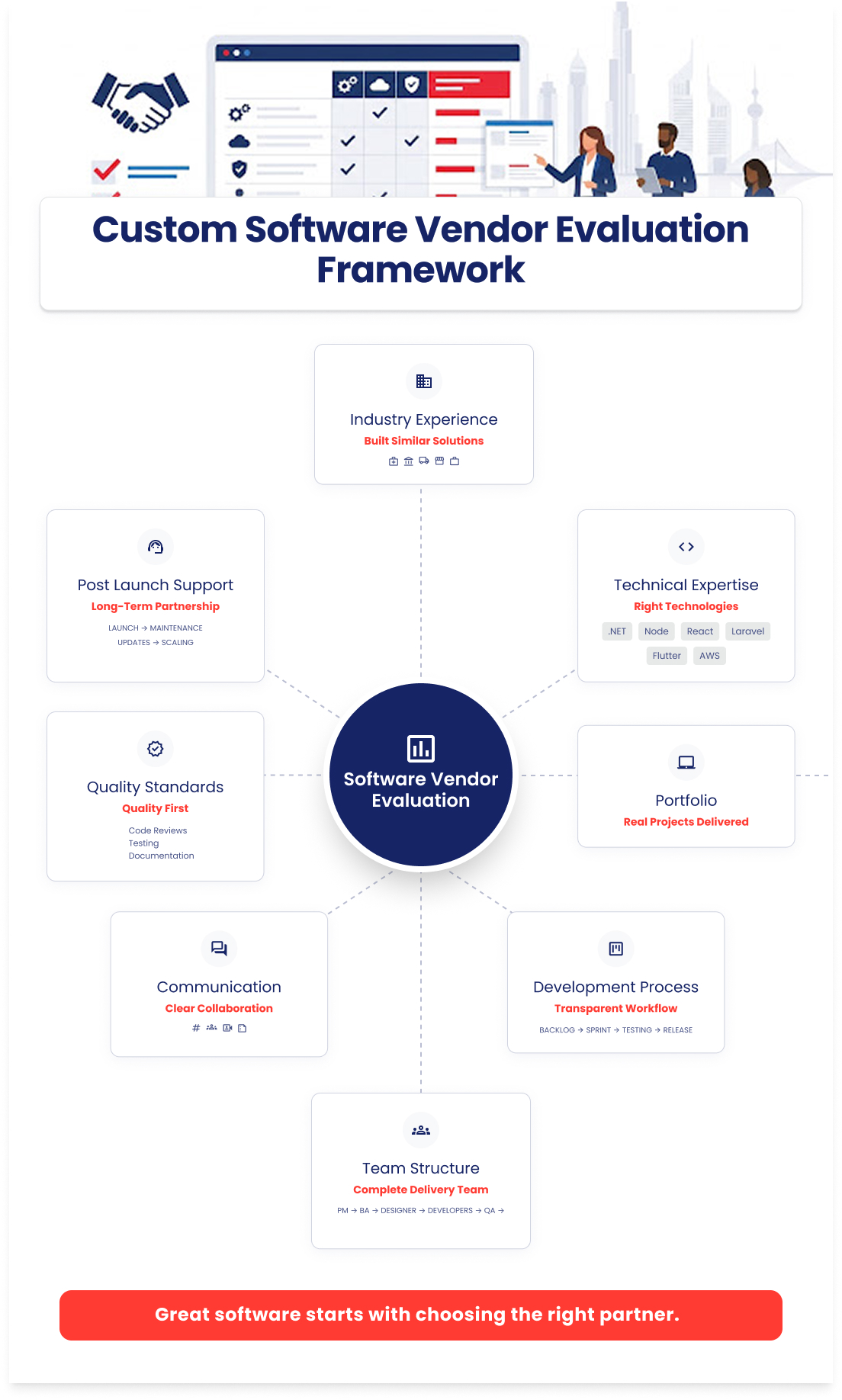
Key Factors to Evaluate in a Custom Software Development Vendor
Not all software development vendors offer the same level of expertise, processes, or support. Looking at a few key evaluation criteria can help you identify vendors that are capable of delivering a successful project and building a long-term partnership.
1. Industry Experience
Experience in your industry can significantly reduce project risk. A vendor that has worked with businesses in sectors such as healthcare, real estate, recruitment, fintech, retail, or logistics will already understand common challenges, workflows, and compliance requirements.
2. Technical Expertise
Technical capabilities should align with your project requirements. Evaluate the vendor’s experience with relevant programming languages, frameworks, cloud platforms, databases, and security practices. Reviewing similar projects can help confirm that the team has the skills needed to deliver your solution.
3. Portfolio Quality
A vendor’s portfolio provides valuable insight into the type of work they have delivered in the past. Review case studies, live products, and project examples to understand the complexity of their work and the business results achieved. Focus on functionality and performance rather than design alone.
4. Development Methodology
The development process plays a major role in project success. Vendors that follow Agile, Scrum, or Kanban methodologies typically provide greater transparency, faster feedback cycles, and better collaboration throughout the development process.
5. Team Structure
Understanding who will be involved in your project helps set expectations from the start. A strong team may include a project manager, business analyst, UI/UX designer, developers, QA engineers, and DevOps specialists. Clear roles and responsibilities often lead to smoother project execution and better communication.
Questions to Ask a Software Development Vendor
A vendor’s website and portfolio can provide useful information, but direct conversations often reveal much more. Asking the right questions helps you understand the vendor’s experience, processes, quality standards, and ability to support your project over the long term.
About Experience
Past experience can indicate how well a vendor understands your requirements. Ask whether they have built similar solutions before, request relevant case studies, and find out which industries they specialize in. Relevant experience often reduces risk and shortens the learning curve.
About the Development Process
Project success depends heavily on how work is managed and communicated. Ask how the vendor manages projects, how frequently updates are shared, and which tools are used for communication and collaboration. Clear processes usually lead to better transparency and fewer misunderstandings.
About Quality Assurance
Software quality should never be assumed. Ask how testing is handled throughout the development lifecycle, what quality assurance processes are followed, and how bugs are identified, prioritized, and resolved. Strong QA practices help ensure a stable and reliable product.
About Support
Development does not end when the software goes live. Ask what post-launch support is available, whether maintenance plans are offered, and how quickly the team responds to issues or critical incidents. Ongoing support is essential for keeping software secure, updated, and fully functional.
Looking for a Reliable Custom Software Development Company in the UAE?
Building the right software starts with choosing the right development partner.
Our team helps businesses across the UAE plan, design, and develop custom software solutions that are scalable, secure, and aligned with their business goals.
How to Assess Technical Capabilities
Technical expertise plays a major role in the success of any software project. A vendor may have an impressive portfolio, but it’s equally important to evaluate whether their technical skills, architecture decisions, and integration experience match your project requirements.
Review Technology Stack Expertise
A strong development vendor should have experience with the technologies required for your project. This may include frameworks, programming languages, cloud platforms, and development tools such as .NET, Laravel, Node.js, React, Angular, Flutter, AWS, or Azure. Reviewing similar projects can help confirm their level of expertise.
Evaluate Architecture Approach
Software architecture affects how well your solution performs both today and in the future. Look for vendors that prioritize scalability, security, performance, and maintainability when designing applications. A well-planned architecture reduces technical debt and supports future growth.
Assess Integration Experience
Many software solutions need to connect with existing systems and third-party platforms. Experience integrating ERP systems, CRM platforms, payment gateways, APIs, and other business software can help ensure a smoother implementation process and reduce integration-related risks.
How to Evaluate Communication & Collaboration
Technical skills are important, but strong communication is often what determines whether a project runs smoothly. Clear collaboration helps prevent misunderstandings, keeps stakeholders informed, and allows issues to be resolved before they become major problems.
Responsiveness
Response times can reveal a lot about how a vendor operates. Pay attention to how quickly they reply to emails, answer questions, and provide information during the evaluation process. Consistent communication early on often reflects how they will manage the project later.
Transparency
Reliable vendors communicate openly about progress, risks, challenges, and project changes. Honest discussions help build trust and ensure there are no surprises during development.
Reporting Process
Regular reporting keeps everyone aligned throughout the project. Ask how progress is shared and whether the vendor conducts weekly meetings, sprint reviews, progress reports, or other structured updates.
Cultural & Business Alignment
Successful projects often depend on more than technical expertise alone. Vendors that understand your business goals, work style, and expectations are usually better positioned to build a productive long-term partnership.
How to Evaluate Software Quality Standards
Software quality has a direct impact on performance, security, maintainability, and long-term costs. A reliable software development vendor should follow established quality standards throughout the development lifecycle rather than treating quality assurance as a final step before launch.
- Code Quality Practices: Ask whether the vendor follows coding standards, conducts regular code reviews, and uses version control systems to maintain clean, consistent, and reliable code.
- Testing Procedures: Evaluate how testing is handled throughout the project. Strong vendors typically perform functional testing, regression testing, security testing, and performance testing to ensure software quality.
- Documentation Standards: Review the type of documentation provided. Good vendors deliver technical documentation, user guides, and API documentation to support future maintenance, updates, and integrations.
Understanding Pricing Models
Software development vendors typically offer different pricing models depending on the project type, scope, and level of flexibility required. Understanding how each model works can help you choose the option that best fits your business needs.
- Fixed-Price Model: Best for projects with clearly defined requirements. It provides predictable costs, but changes during development may require additional time and budget.
- Time & Materials Model: Suitable for projects with evolving requirements. It offers flexibility, with costs based on the actual time and resources used.
- Dedicated Team Model: Ideal for long-term development needs. Businesses gain access to a dedicated team that can support ongoing development, enhancements, and maintenance.
- How to Compare Vendor Pricing Fairly: Focus on overall value, experience, quality, and support rather than choosing a vendor solely based on the lowest price.
Red Flags to Watch Out For
Not all software development vendors operate with the same level of professionalism or transparency. Some warning signs may indicate future problems with delivery, quality, or long-term support. Identifying these red flags early can help you avoid costly mistakes.
- Unrealistically Low Pricing: Extremely low quotes can be a sign of hidden costs, rushed development, or low-quality output that may require expensive fixes later.
- Lack of Relevant Experience: If a vendor cannot show examples of similar projects, it may indicate limited domain knowledge or higher project risk.
- Poor Communication: Slow replies, unclear answers, or a lack of transparency during early discussions often lead to bigger communication issues during development.
- No Defined Development Process: Without a clear workflow, projects can become unstructured, leading to delays, scope creep, and inconsistent results.
- No Support or Maintenance Offering: A lack of post-launch support can create long-term risks, especially when issues, updates, or scaling needs arise.
- Ownership and IP Concerns: Ensure contracts clearly state that you retain full ownership of the software, code, and intellectual property after delivery.
How Reviews & References Help Vendor Evaluation
Reviews and client feedback give a clearer picture of how a software development vendor performs in real projects. They help you move beyond marketing claims and understand actual delivery quality, communication style, and reliability.
- Review Independent Platforms: Check trusted platforms like Clutch, GoodFirms, and Google Reviews to see unbiased feedback from past clients and overall reputation.
- Request Client References: Speak directly with previous clients to understand their experience with delivery quality, communication, timelines, and ongoing support.
- Evaluate Long-Term Client Relationships: Vendors with repeat clients usually demonstrate consistent performance, trust, and the ability to build long-term partnerships.
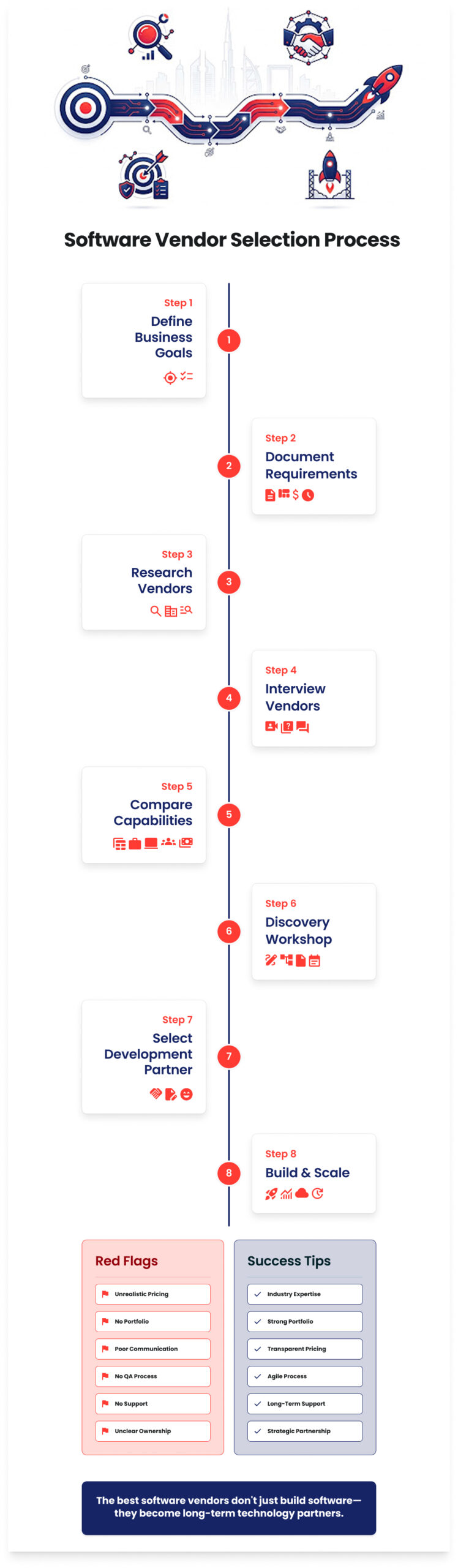
Comparing Multiple Software Development Vendors
Comparing different vendors is one of the most important steps in selecting the right partner. A structured approach helps you evaluate each option fairly and avoid decisions based on price or presentation alone. This is especially useful when shortlisting a software development company in Dubai, where many providers may offer similar services on the surface.
- Create a Vendor Evaluation Scorecard: Compare vendors using clear criteria such as technical expertise, industry experience, pricing, communication, support, and security to make objective decisions.
- Conduct Vendor Interviews: Assess how well the team understands your requirements, their problem-solving approach, and their ability to think strategically about your project.
- Request a Discovery Workshop: A discovery session helps you evaluate how deeply the vendor understands your business goals and whether they can translate them into a practical technical solution.
Why Long-Term Partnership Matters More Than Project Delivery
A software project does not end at launch. Most businesses continue to improve, scale, and update their systems over time. For this reason, the relationship with your vendor is often more important than the initial delivery itself.
- Future Enhancements: Software is not static. It needs regular updates and new features as business needs evolve over time.
- Ongoing Maintenance: Bug fixes, performance improvements, and security updates are essential to keep the system stable and reliable.
- Scalability Support: As the business grows, the software often needs to handle more users, data, and functionality without performance issues.
- Strategic Technology Guidance: Experienced vendors can guide future decisions and help shape the long-term technology direction of the business.
How to Plan a Successful Software Development Project
A clear plan is the foundation of every successful software project. Without proper planning, even well-funded projects can face delays, budget issues, and misaligned outcomes. A structured approach helps teams stay focused and ensures the final product meets business goals.
Planning a Successful Software Development Project starts with defining clear objectives, understanding user needs, and setting realistic expectations. It also involves selecting the right technology, estimating resources, and aligning all stakeholders before development begins.
A strong plan reduces uncertainty, improves communication between teams, and increases the chances of delivering software that is scalable, efficient, and aligned with long-term business growth.
Need Help Planning Your Software Project?
A clear plan reduces risk, saves cost, and improves outcomes. Our team helps businesses build the right software strategy from the start. If you need a trusted software development partner, get a free quote for your project.
FAQs
How do I evaluate a custom software development vendor?
A custom software development vendor should be evaluated based on industry experience, technical expertise, portfolio quality, communication process, security practices, pricing model, and post-launch support. A structured comparison helps identify the most reliable long-term partner.
What questions should I ask a software development company?
Ask about their experience with similar projects, development process, communication frequency, QA practices, post-launch support, and ownership of source code and intellectual property.
How can I verify a software vendor’s technical expertise?
Check their technology stack, review case studies, examine live products, and assess their experience with scalable architecture, integrations, and security standards.
What are the biggest red flags when hiring a development vendor?
Key red flags include unrealistically low pricing, lack of relevant experience, poor communication, no defined development process, weak support options, and unclear ownership or IP terms.
Should I choose the cheapest software development company?
No, the cheapest option often leads to higher long-term costs due to poor quality, delays, or rework. Focus on overall value, experience, and reliability instead of price alone.
How important are client reviews and references?
Client reviews and references are very important because they show real-world performance, including delivery quality, communication, timelines, and long-term reliability of the vendor.
What pricing model is best for custom software development?
The best pricing model depends on the project. Fixed-price works for a clearly defined scope. Time & Materials suits evolving projects, and dedicated teams are ideal for long-term development needs.