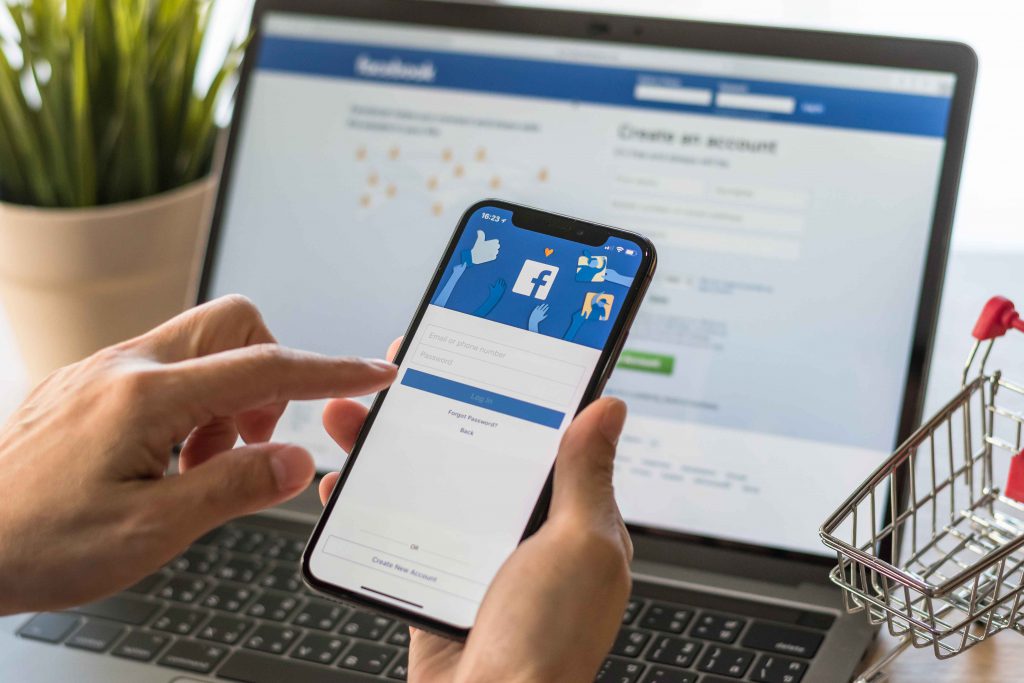
Facebook is a giant among social media platforms. With over 2.6 billion daily active users, it towers among its peers. According to research, more than 60% of internet users are active on Facebook. Therefore, it’s no surprise that it’s a popular choice for marketers.
Apart from its impressive reach, Facebook offers one of the most advanced advertising platforms, with detailed audience targeting based on demographics, interests, behaviors, and custom audiences. Businesses can utilize their ad targeting options to send their advertisements to consumers who are most likely to purchase their products.
Facebook’s algorithm not only helps businesses achieve their marketing objectives, but it is also friendly for their bottom line! By ensuring that the right audience receives your ads, it reduces the cost of acquiring a customer for the business.
However, that doesn’t mean that any old ad will do well on Facebook. Since hundreds of homogenous companies are vying for the attention of the same set of consumers, it is essential for brands to develop quality ads optimized for their audience. Companies must utilize the most recent research on what works for their brand and apply it to their ad content and graphics.
Hubspot and AdEspresso analyzed over 100,000 Facebook advertisements from a thousand different companies to find out what works and what doesn’t. If you are looking to make a Facebook ad, take 3 mins out of your time to read this post. It is well worth your time.
Facebook is still a powerful social media platform, especially for advertising. But there’s no doubt how the landscape has significantly evolved. The modern Facebook operates under Meta’s ecosystem, which includes Instagram, Messenger, and Audience Network. This gives advertisers the power to promote their products and services across several social media platforms and reach a large audience with one campaign.
Moreover, other noticeable changes, such as privacy updates, AI-driven targeting, and automation tools have completely shifted how ads are curated, personalised, and delivered to target audiences. Businesses that understand and thus make efforts to implement these changes into their digital marketing strategies can drastically increase return on ad spend.
Here is what the Hubspot and AdEspresso report found out:
1. The Type of Ad
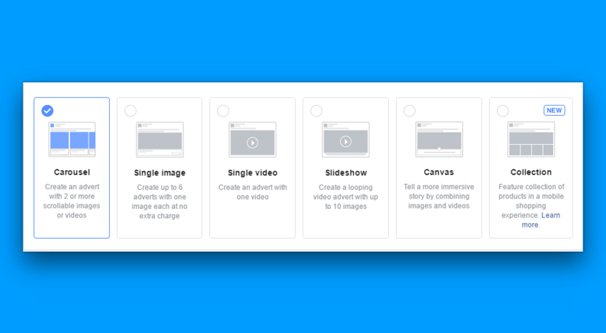
The research revealed that out of the 100,000 Facebook ads that were analyzed, the majority were Paid Post Link Click Ads. You must have come across advertisements on Facebook that hook you with appealing visuals or content and then prompt you to View More, Signup, Subscribe, or Download. When you click on the link, it takes you to the desired web page.
Not only do these ads promote the brand and its products, but it also stimulates an immediate reaction from your target audience. Other benefits of Facebook’s link ads include:
● Promotes the main marketing message
● Promotes the external website
● You can use the same ad to reach a large audience as you can use the link ad with several placements
● They generate high post engagement and customer response which leads to conversion
● They can also increase likes for your Facebook page
Most marketers use Facebook ads to drive traffic to their websites. Therefore, link click ads are the most preferable ad format. Not only do they drive traffic to the intended web page, but they also prompt user engagement.
Rise of Conversion-Focused & AI-Optimized Ad Formats
Link clicks ads are still popular. However, in the last few years, Facebook’s advertising ecosystem has also shifted towards conversion-focused formats such as Advantage+ shopping campaigns, lead generation ads, and in-app checkout experiences. These formats work efficiently because users don’t have to leave the app or platform to complete actions like sign-ups or checkouts. This added convenience enables you to increase conversion rates and reduce drop-offs.
Plus, AI has also brought forth change to how ads are delivered to your target audiences. Meta’s machine learning algorithms test different creatives, placements, and audiences to pinpoint what resonates best with the audience automatically. So, no manual checks are required and you can leverage algorithms and save time and effort to scale which campaigns are a hit among consumers and identify which need to be dropped.
What is more, you can make different types of Link click ads. For instance, your link click ad can be a photo ad, a video ad, a carousel ad, and so on to reap the benefits of both formats.
The Takeaway? If you want to boost post engagement and drive traffic to your website, paid post link click ads are your safest bet!
2. The Length of the Ad
Do you know that our average attention span is just 8 seconds? For teenagers, it is probably even less. I less time than it takes us to finish a glass of water, marketers need to entice their audience to keep reading their ad. If a marketer can convince you to read your ad for more than 8 seconds, they must be doing something right!
An analysis of these successful ad posts shows that advertisements with short headings and precise content are likely to grab user attention. 4-word headings and 15 – word descriptions are common in successful Facebook adverts.
Short Attention Spans Meet Scroll Culture
Short-form content, such as Tik Tok and Reels dramatically altered the type of content people want to consume. Attention spans have significantly reduced and social media users prefer to fast scroll content, which is why it’s essential to generate the kind of ads that capture and retain attention within the first 2-3 seconds. Whether the hook of your ad is visual or textual: it has the power to make or break your ad.
Short-copy content is still common. However, “micro-content” is still the way to go. Where brands communicate value quickly while still maintaining clarity. Headlines, captions, and visuals must work together instantly to convey the message without asking for much effort from the user. While this can be challenging, it’s not impossible as long as you’re willing to put in effort and creativity
However, you can add more words if you believe more information is necessary to inform your target audience. The KISS (keep it simple, stupid) formula is applicable here; instead of jam-packing a single advert with diversified information, it is best to provide to the point and relevant information.
Since you are using link click ads, the viewer will get more information once they land on the desired webpage.
Keep the following specs in mind when developing your ad copy:
● Heading length should not exceed 25 characters
● The content should compromise of 90 characters at max
● Link description length should be no more than 30 characters
Similarly, if you are making a video ad, make it short. 15 – 30-second video ads perform the best on Facebook.
The Takeaway? Keep your Facebook adverts simple, short, and precise.
3. The Emotions behind the Ad

It has long been established that pathos or emotional content influences consumer behavior the most. Therefore, emotional marketing is your best bet to a successful Facebook ad. Most marketers use emotional content along with rational arguments to win over their potential buyers.
From Emotional Appeal to Authentic Connection
Emotional marketing can be appealing but nothing beats authenticity. Today, with overwhelming amount of information surrounding us, modern users are well-aware of modern marketing tactics and strategies. This means they want to connect with content that’s relatable, natural, and genuine rather than overly scripted. In fact, overly exaggerated claims or salesy language can reduce trust and even go as far as to lower engagement.
So, don’t rely on emotional or dramatic content. Instead, mix subtle emotional cues with practical, real-life examples, customer testimonials, and user-generated content. This can form a bond of trust and loyalty with customers which is obviously more likely to impact purchasing decisions.
Surprisingly, research shows that an overwhelming quantity of Facebook ads uses emotionally neutral words instead of strong words. Here is what we found:
● Figures and statistics are replacing strong words (whether positive or negative). Consumer behavior research shows that numbers are like candy for our brain; our brain instantly focuses on any number in between the words. Therefore, marketers are using numbers more and more in their headlines and content.
● Specific Instead of Sugar Coated
Research found that the trend for vague sugar-coated promises is declining in Facebook adverts. Instead, marketers are focusing on presenting content that is of value to the viewer. Not only does it hold your customers’ attention, but it also makes your ad stand out from the crowd.
● Keep it Casual
A conversational storytelling tone to the ads makes it more personable; the target audience is more likely to believe your claim if it is in a story format.
● Positivity is Key
Finally, the ratio of positive words outnumbered words with negative connotations by a large margin.
The Takeaway? The popularity of emotionally charged words, whether positive or negative, is waning every year. If you want to make an effective Facebook ad, it’s better to invest in neutral sentiment words, use figures and statistics, highlight specific consumer benefits, and keep it positive.
4. The Essential Components of the Ad
A lot of things go into making a successful Facebook advertising campaign, but at the end of the day, there are only 2 things that matter the most: An Outstanding Copy and Laser-Focused Targeting.
Creative + Data = Winning Formula
Creative plans supported by data-driven decisions produce results. Creativity solely isn’t enough to generate high-performance ads. Ads that yield results have to continuously monitored and improved by the use of analytics, performance KPIs, and audience feedback.
Privacy changes such as reduced third-party tracking is another noticeable change as they’ve changed how target audiences are reached and communication with which means businesses are likely to use first-party data lookalike audiences, and AI-driven targeting to reach the right consumer-base. This has made it more important than ever to collect and use customer data with caution and ethics.
Additionally, testing is now also essential. Rather than depending on a single ad to do all the work necessary, successful marketing strategies choose to create several variations and let algorithms to identify and track the best performing ones. This method of testing can make it ease and low-cost to continuously monitor audience response.
The Takeaway? Make sure that your ad copy is customer-centric (think micro marketing), creative, and unique.
New Factors Driving Facebook Ad Success
Some of the biggest changes in social media advertisement is the increased focus on privacy and user trust. With increasingly strict data protection regulations and changes in tracking (such as Apple’s App Tracking Transparency), the access to user-level data has reduced for marketers to use and analyse. So, it’s become essential to focus on broader targeting strategies and rely on platform algorithms to personalise campaigns and reach the right audience.
Omnichannel marketing is another crucial trend. Facebook ads aren’t the only ones you should be putting out, especially if you’re targeting a wider audience. Think of Facebook ads as a component of a wider strategy. Along with Facebook advertisements, you must also consider email marketing, influencer collaborations, and other digital channels. Consistency across these channels helps reinforce brand messaging and improves overall campaign reach.
Video-first content is equally as trendy. Static ads are still used. However, video ads are more popular and also tend to outperform them in terms of engagement and conversions. Short, engaging, and visually appealing videos are now a must-have for any successful campaign.
Wrapping it Up
A successful Facebook ad? It’s not as hard as you would think! This year, Facebook earned 17.44 billion US dollars in revenue in just the first quarter. This goes to show the confidence marketers have in the ability of the platform to turn ads into leads.
However, the environment today is also extremely competitive and requires more than just basic principles and strategies that have been incorporated for decades. Businesses must learn and implement new trends such as AI-driven optimization, mobile-first behaviour, privacy changes, and the growing importance of authentic content to keep up and reach the desired audience.
Brands that continuously test, analyze, and refine their strategies will outperform competitors and achieve sustainable growth through Facebook advertising.