Replace disconnected spreadsheets and the limitations of generic CRM systems with a custom platform built for Dubai real estate teams. Manage properties, leads, agents, and day-to-day brokerage operations more efficiently from a single platform.
Avoid budget disasters - get a clear real estate CRM development estimate now!
Don’t leave your project budget to chance. Our intelligent project estimator asks the right questions to give you an accurate quote in minutes, not weeks.
Trusted Real Estate CRM Development Agency in Dubai
Property data, portal leads, agent activities, viewing schedules, and compliance records often end up spread across multiple systems within growing real estate businesses. As teams expand, keeping everything organized becomes increasingly difficult, particularly when generic CRM platforms fail to account for how Dubai brokerages actually operate. Our real estate CRM development services help agencies, property developers, and property management companies bring these processes together within a single platform built around their day-to-day workflows.
As a trusted real estate CRM development company in Dubai, we create custom CRM solutions for businesses ranging from boutique brokerages to large multi-branch organizations. Every platform is designed around specific operational requirements, whether that involves managing off-plan inventory, tracking secondary market transactions, handling agent performance, organizing property data, or integrating with major listing portals. Rather than relying on workarounds and spreadsheets, teams gain access to a centralized system that reflects how their business already functions.
From planning and system architecture to development, deployment, and ongoing enhancements, our team manages the complete process. Whether the objective is improving visibility across operations, automating repetitive tasks, supporting RERA-related workflows, or consolidating multiple tools into a single platform, we develop CRM solutions that give businesses greater flexibility, control, and ownership over their data.
From brokerage operations and portal integrations to compliance workflows and CRM modernization, our services are designed around the realities of Dubai real estate. Explore the solutions below to find the approach that best fits your business.
We develop custom CRM platforms personalized to the way real estate businesses operate. From property inventories and lead tracking to agent management and reporting, every feature is built around your processes.
Built specifically for brokerage teams, these CRM solutions bring listings, inquiries, viewings, agent performance, lead allocation, and sales activities into a single operational platform designed for day-to-day agency management.
Integrate your CRM with Bayut, Dubizzle, Property Finder, and other property portals to keep property information, listing updates, and incoming leads synchronized across the systems your team uses.
Manage Form A, Form B, and Form F documentation through structured workflows built directly into your CRM. Additional capabilities include approval processes, document management, compliance tracking, and audit records.
Designed for agents working between viewings, meetings, and site visits, mobile-first CRM platforms provide convenient access to properties, leads, schedules, client records, and operational updates from any location.
Replace spreadsheets, outdated software, or generic CRM platforms with a system built around your real estate operations. We migrate existing data, preserve critical records, and modernize workflows without disrupting business continuity.
DynamoLogic vs. US & EU Firms More Agile, Less Expensive
High-quality, scalable, and reliable real estate CRM development services at 70% lower cost than US & EU agencies. See how we compare against our US & EU competitors in quality and value.
DynamoLogic
US Agencies
EU Agencies
Hourly Rates
$30–$70/hr
$100–$150/hr
$80–$120/hr
MVP Project Cost
$15K–$35K
$60K–$100K
$40K–$70K
Support & Maintenance
Free (3–6 months)
Extra Cost
Extra Cost
Communication
Direct with Devs + PM
Often via Manager
Often via Manager
Flexibility
Agile & Scalable Teams
Rigid Contracts
Rigid Contracts
Ready to Experience the Difference?
Join hundreds of satisfied clients who chose superior value and service.
5 Signs Your Real Estate Agency Has Outgrown Its CRM
Many real estate businesses continue using CRM platforms that no longer match the way their teams operate. As agencies grow, small inefficiencies often become larger operational challenges that affect visibility, coordination, and day-to-day management. Your agency may have outgrown its current CRM if you recognize any of the signs below:
Property information is still maintained across spreadsheets and multiple systems
Agents manually update listings on property portals
Off-plan and secondary market sales follow the same workflow
RERA-related documents are managed outside the CRM
Teams struggle to access information while working in the field
Get Your Free Guide
Enter your details to download easily
No spam. Unsubscribe anytime.
Common Real Estate CRM Challenges We Help Businesses Overcome in Dubai
Real estate businesses frequently encounter operational challenges that generic CRM platforms were never designed to address. As agencies grow, managing properties, agents, listings, leads, and compliance activities becomes increasingly complex, particularly when information is spread across multiple tools and processes. A well-designed real estate CRM should support the way a business operates rather than requiring teams to adapt their workflows around software limitations. Below are some of the common challenges faced by Dubai real estate businesses and the approaches we use to address them.
Disconnected Property Data
Our Solution:
Property information often ends up distributed across spreadsheets, property portals, and internal systems, making updates difficult to manage consistently. Our approach connects these sources within a centralized CRM environment, helping teams work from a single, reliable source of information.
Inefficient Brokerage Workflows
Our Solution:
Many CRM platforms are built according to generic sales processes rather than the realities of brokerage operations. We develop workflows that reflect how real estate teams manage listings, inquiries, viewings, agent activities, and property transactions on a daily basis.
Manual Compliance Processes
Our Solution:
Managing RERA-related documentation through emails, spreadsheets, and separate systems can create unnecessary administrative work. We build CRM workflows that incorporate Form A, Form B, and Form F management, approval tracking, document storage, and audit records within a single platform.
Limited Agent Accessibility
Our Solution:
Real estate professionals spend much of their time away from the office, meeting clients and attending property viewings. We design mobile-first CRM experiences that provide convenient access to listings, leads, schedules, and operational information from any location.
Why Choose Our Real Estate CRM Software Development Company in Dubai?
Choosing a partner for a real estate CRM project is not only limited to comparing features and functionality. The success of the platform ultimately depends on the team’s ability to understand industry requirements, plan for future growth, and develop a CRM solution that aligns with day-to-day business operations. At DynamoLogic Solutions, we combine technical expertise with experience building custom business applications personalized to specific operational needs. Below are some of the qualities that clients value when partnering with our team.
Real Estate CRM Expertise
With more than 18 years of experience, we have worked on CRM solutions for real estate businesses, supporting brokerage operations, property management workflows, lead tracking, portal integrations, and agent management requirements.
Transparent Project Pricing
We believe clients should have a clear understanding of project costs from day one. Our pricing structure is focused on transparency, helping businesses plan confidently without unexpected charges appearing during the development process.
Dubai Specific Real Estate Knowledge
Our team understands the operational and regulatory requirements that shape Dubai’s real estate sector, allowing us to develop CRM platforms that support brokerage activities, property transactions, and compliance processes.
Complete Data Ownership
Unlike subscription-based software platforms that keep businesses tied to recurring licensing models, custom CRM development gives you full ownership of your platform, data, and future development decisions from the beginning.
Scalable CRM Architecture
Whether you manage a boutique brokerage with a small team or a multi-branch operation with hundreds of agents, we develop CRM platforms capable of supporting growth without requiring a complete system replacement.
Dedicated Post Launch Support
Launching a CRM is only one stage of the journey. Our team remains available to provide technical assistance, system enhancements, maintenance, and ongoing support as business requirements continue to evolve.
Industries We Serve in Dubai with Real Estate CRM Solutions
The Dubai real estate sector is made up of businesses with distinct priorities, workflows, and operational challenges. What works for a mortgage brokerage may not suit a property management company, and the needs of a luxury real estate agency can differ significantly from those of a commercial property firm. Through our real estate CRM software development services in Dubai, we aim to help organizations across multiple real estate verticals implement platforms specific to the way they manage properties, clients, transactions, and internal operations. Explore the sectors we support down below.
Brokerage Firms
Manage property listings, lead allocation, agent performance, viewing schedules, and sales pipelines through a centralized CRM designed for brokerage operations.
Property Development
Track project inventories, unit availability, buyer inquiries, reservations, sales progress, and customer interactions across multiple developments from one platform.
Property Management
Monitor tenant records, lease agreements, maintenance requests, rent schedules, and property-related communications while maintaining visibility across managed assets.
Off-Plan Sales
Support off-plan sales processes with inventory management, lead tracking, reservation workflows, payment milestones, and developer-specific sales activities.
Luxury Real Estate
Handle high-value client relationships, exclusive property portfolios, private viewings, and personalized follow-ups while maintaining detailed records throughout the sales cycle.
Commercial Real Estate
Oversee commercial property listings, tenant requirements, lease negotiations, investor inquiries, and transaction pipelines through structured workflow management.
Holiday Homes
Coordinate bookings, guest records, property availability, occupancy schedules, and operational activities across short-term rental portfolios within a unified system.
Mortgage Brokers
Maintain borrower information, lender communications, application progress, document collection, and financing workflows while tracking every stage of the mortgage process.
Valuation Firms
Organize property assessments, valuation requests, site inspections, supporting documentation, and reporting activities while maintaining accurate records for every assignment.
Conveyancing Service Providers
Manage transaction documentation, legal processes, stakeholder communications, approvals, and property transfer milestones throughout the conveyancing journey.
Facilities Management
Track maintenance activities, service requests, inspections, contractor coordination, and asset-related information while improving oversight across managed properties.
Investment Advisory
Monitor investor portfolios, property opportunities, transaction histories, client communications, and performance reporting through a CRM personalized for investment-focused operations.
Our Portfolio of Real Estate CRM Software Development Projects
The best way to evaluate a real estate CRM development agency is by reviewing the type of work they have delivered. Our portfolio includes CRM projects developed for organizations operating across different areas of the real estate sector, each with its own processes, priorities, and operational requirements. These projects have helped strengthen our understanding of how real estate businesses manage information, coordinate teams, and support growth through technology. Below are some of the recent real estate CRM development projects we have delivered.
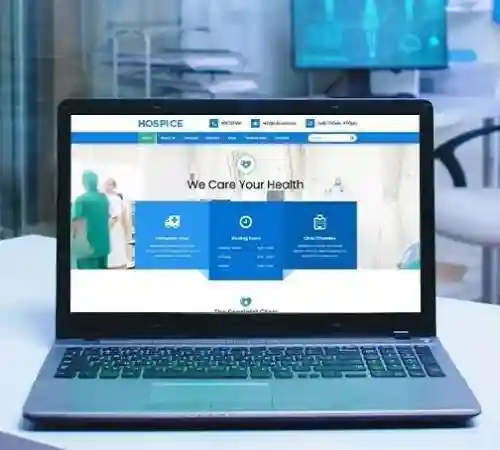
We joined hands with Hospice Tools to create a Custom CRM for a leading North American hospice and palliative care organization featuring dynamic patient management, referral tracking, CRR scheduling, performance analytics, multi-office access, and a clean, accessible UI for faster staff onboarding.
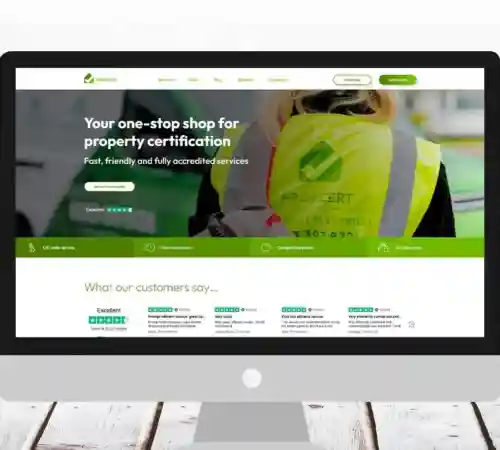
Developed a Bespoke Smart CRM Solution for the UK’s leading property certification provider, featuring automated order management, advanced search, real-time reporting, invoicing, lead tracking, and secure role-based access control.
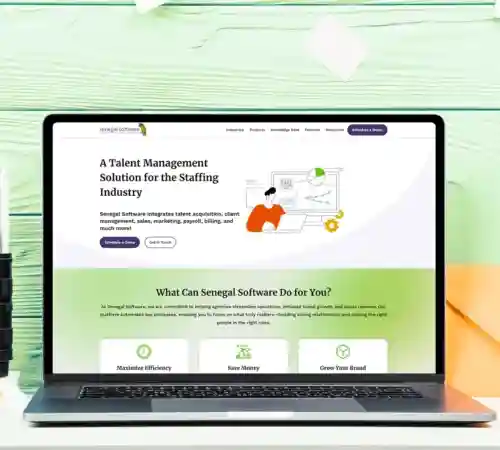
Developed a custom workforce and talent management CRM with functionalities for dynamic lead and client management, customizable agreements, interactive opportunity tracking, email integration, secure lead generation forms, advanced contact grouping, and automated workflows.
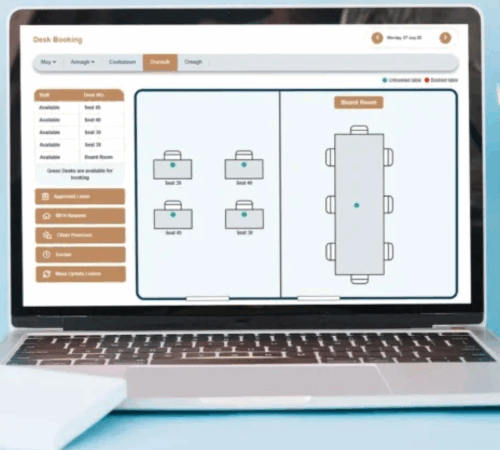
Designed and developed a custom CRM for the UK’s leading accountancy firm, featuring data accuracy tracking, workflow automation, Xero integration, role-based access control, a Trello-style WIP board, and a custom desk booking & time tracking system.
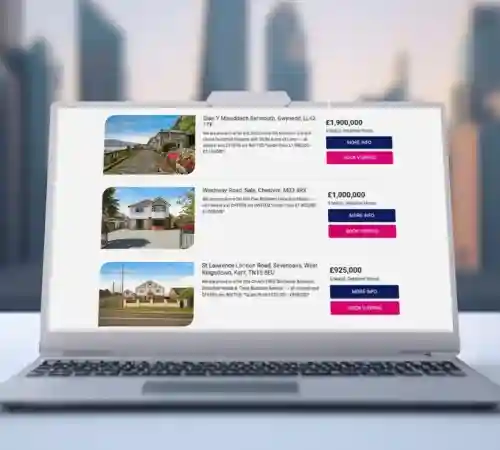
Designed and developed a powerful, custom real estate CRM featuring advanced search functionality and communication modules, real-time activity logs, Twilio-integrated calling, quick lead creation, bulk operations, cross-module reporting, calendar scheduling, SMS/email tools, and success story tracking.
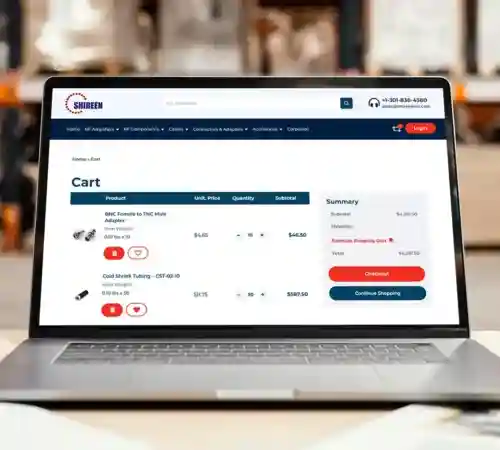
Developed and moved a leading US Electronics and Telecommunication Store from Magento to WordPress with WooCommerce, advanced filters, wishlist, shipping, discount functionality, and payment options — receiving 80k+ traffic.
What Clients Say About Our Real Estate CRM Development Solutions
The value of a custom CRM extends well beyond its initial launch. For many real estate businesses, it becomes a long-term operational asset that supports daily activities, team coordination, and business growth. Our team has partnered with a variety of organizations across the property sector, helping them implement CRM software designed around their own processes rather than generic platform limitations. Client satisfaction remains an important measure of every project we deliver. Explore what clients have shared about their experience with our real estate CRM software development solutions below.
Very hardworking and easy to communicate with. Can deliver quality work according to request. Had strong team support and a professional work experience with them. Will engage again for a new project.
Tom H.
United Kingdom
Fantastic work. I've used Elance for years, and they're the best by far. Another excellent job.
Josh H.
United Kingdom
As always, the project manager and his team knocked it out of the park! We had a crucial deadline to meet, so the project manager brought on an additional developer to help meet this goal. Not only did they meet the goal, but they surprised us and finished 2 days ahead of schedule, bug-free. It is a pleasure working with the PM and his professional team. I would recommend his services 100%. Quality, communication, and timeliness are major key highlights!
Frequently Asked Questions About Real Estate CRM Software Development
A real estate CRM system that is well-designed can have a lasting impact on how a business manages its operations, property data, leads, agents, and day-to-day activities. However, before investing in a custom platform, many real estate businesses want a clearer understanding of what the development process involves and what they can expect from the final solution. Taking the time to understand a few key considerations can help set realistic expectations and make the decision-making process easier. Below are answers to some of the questions commonly asked by real estate brokers, agencies, property developers, and property management companies exploring CRM development projects.
The cost of real estate CRM development depends on several factors, including the size of your business, the complexity of the required features, the number of users, integration requirements, and whether the platform will support multiple departments or branches. A CRM developed for a small brokerage will naturally differ from one designed for a large property developer or property management company. Features such as portal integrations, mobile applications, custom reporting, and workflow automation can also influence project scope. Once you share your requirements with us, we can provide a more accurate estimate based on your business needs.
While Salesforce and HubSpot are powerful platforms, they are designed to serve a wide range of industries rather than the specific needs of real estate businesses. As a result, agencies often rely on spreadsheets, third-party tools, or manual processes to manage listings, portal leads, compliance activities, and property data. On the other hand, a custom CRM can be customized to the way your business works, allowing workflows, integrations, reporting structures, and user experiences to reflect your day-to-day requirements instead of forcing teams to adapt to generic software processes.
Yes! Real estate CRM platforms can be integrated with major property portals such as Bayut, Dubizzle, and Property Finder. These integrations help keep listings, property information, and incoming leads connected with your internal CRM system. Rather than updating information across multiple platforms separately, teams can manage property data from a centralized environment. The exact integration approach may vary depending on business requirements, but portal connectivity is often a key consideration for agencies looking to improve visibility and reduce manual administrative work.
Yes, our CRM solutions are configured to support RERA-related processes and documentation requirements commonly used within Dubai's real estate sector. Depending on project requirements, this may include Form A, Form B, and Form F management, document storage, approval workflows, record keeping, and audit tracking capabilities. Since compliance requirements can vary between organizations, these workflows are typically personalized to existing business processes. This helps create a system that supports operational efficiency while assisting teams with day-to-day compliance-related activities.
Development timelines depend on project scope, business requirements, integrations, and overall platform complexity. Smaller CRM projects with essential functionality can often be completed within approximately 2–6 months. More advanced systems involving portal integrations, mobile applications, custom workflows, reporting modules, and multi-branch operations may require 6–9+ months. Every project is different, which is why timelines are usually determined after requirements have been reviewed.
In most cases, yes. Existing data can typically be migrated from spreadsheets, legacy software, or CRM platforms currently used within the business. This may include property records, lead information, client data, transaction histories, agent records, and other operational information. Before migration begins, data is usually reviewed to identify inconsistencies, duplicate entries, or outdated records that may affect the quality of the new system. The objective is to preserve valuable information while creating a cleaner and more organized foundation for future operations.
Absolutely! Mobile accessibility is an important requirement for real estate businesses because agents spend much of their time attending viewings, meeting clients, and working away from the office. Depending on project requirements, the CRM platform can be optimized for smartphones and tablets or supported through dedicated mobile applications. This allows agents to access property information, lead details, schedules, client records, and operational updates while on the move. Mobile access helps ensure important information remains available wherever it is needed.
Yes. Off-plan and secondary market transactions involve different processes, documentation requirements, sales stages, and reporting needs. A custom CRM can be configured to accommodate both workflows within the same platform while maintaining separate processes where necessary. This provides greater flexibility for agencies and property businesses operating across multiple market segments. Features, approval paths, lead management processes, and reporting structures can all be adapted to reflect the specific requirements associated with each type of real estate transaction.
Technologies & Tools We Use for Real Estate CRM Development
Real estate CRM systems are responsible for managing large volumes of property information, lead data, user activity, integrations, documents, and operational workflows, all within a single platform. Supporting these requirements reliably requires more than just good design, it also depends on the technology powering the system at the backend. At DynamoLogic Solutions, we use a carefully selected set of technologies, frameworks, and development tools to ensure performance, scalability, security, and long-term flexibility. Below are some of the technologies we use to develop real estate CRM solutions.
Enables the development of responsive CRM interfaces where brokers, agents, and property teams can manage listings, leads, client information, and operational activities through a fast and interactive user experience.
Next.js
React Framework
Helps create high-performance web applications that support real estate CRM portals, client dashboards, agent workspaces, and business management features while maintaining reliability and scalability as requirements evolve.
Tailwind CSS
CSS Framework
Used for designing clean, responsive, and consistent CRM interfaces. This helps create user-friendly environments where teams can easily access property records, lead information, reports, and operational tools.
Node.js
Backend Runtime Environment
Powers the backend functionality of real estate CRM systems, supporting workflows such as lead management, portal integrations, notifications, user management, and data processing across different business operations.
Django
Python Framework
Provides a secure and structured foundation for developing CRM functionality, making it well-suited for handling business logic, workflow management, reporting requirements, and administrative processes within real estate organizations.
PostgreSQL
Relational Database Management System
Stores and organizes critical CRM data, including property information, client records, transactions, lead histories, agent activities, and operational reports while maintaining data consistency and reliability.
React Native
Mobile Application Framework
Enables the development of mobile CRM applications that allow agents to access listings, schedules, client information, and lead updates while attending viewings and meeting clients.
AWS
Cloud Computing Platform
Provides the cloud infrastructure required to host, manage, and scale real estate platforms, helping support system performance, data security, availability, and future business growth.
Other Services in Dubai
Apart from real estate CRM development services, we offer a broad range of digital services that help organizations improve customer experiences, strengthen operations, and support long-term growth. Browse our full range of services below to identify the solutions that best match your current business requirements and objectives.


 Disconnected Property Data
 Our Solution:




Very hardworking and easy to communicate with. Can deliver quality work according to request. Had strong team support and a professional work experience with them. Will engage again for a new project.
Tom H.
United Kingdom