Choosing how to build software is one of the biggest decisions a business can make. Whether you want to build a web application, mobile app, SaaS platform, ERP system, or another custom solution, the team that builds your software plays a big role in its success.
Many businesses are unsure whether they should hire an in-house development team or outsource the project to a software development company. Both options have their own advantages, and the right choice depends on your budget, project size, timeline, and long-term business goals.
An in-house team gives you more control because your developers work inside your company. Outsourcing gives you access to experienced developers, specialized skills, and faster project delivery without the time and cost of hiring full-time employees.
In this guide, you will learn the difference between in-house development and software outsourcing, the advantages and challenges of each approach, how they compare in cost and flexibility, and how to choose the best option for your business.
What Is In-House Software Development?
In-house software development means building software using employees who work directly for your company. Instead of hiring an outside agency, you create your own development team that manages the entire project from planning to maintenance.
This particular approach gives businesses more control over the development process because the team works closely with other departments and understands the company’s goals, products, and customers. It is usually chosen by businesses that need continuous software development or plan to improve their products over many years.
In-House Development
An in-house development team is made up of full-time employees who work only for your company. They design, build, test, and maintain software based on your business needs.
Unlike outsourcing, where an external company develops the software, an in-house team becomes part of your organization. Since they work closely with different departments every day, they gain a deep understanding of your workflows, business processes, and long-term objectives.
How In-House Development Works
Building an in-house team usually starts with hiring developers and other technical professionals. The company is responsible for recruiting employees, providing training, purchasing equipment, and creating development processes.
Once the team is in place, they work together to plan features, write code, test the software, fix issues, and release updates. Since they are part of the business, communication with management and other departments is usually faster and more direct.
Although this approach offers greater control, it also requires a significant investment in hiring, salaries, office space, software tools, and employee development. Before building an internal team, businesses should also understand how to plan a successful software development project so they can define clear goals, timelines, and responsibilities.
Typical In-House Development Team Roles
A successful in-house software team usually includes professionals with different responsibilities.
- Product Manager: Defines the product vision, business goals, and feature priorities.
- Project Manager: Plans the project timeline, manages resources, and ensures work is completed on schedule.
- Software Developers: Build the application by writing, testing, and improving the code.
- UI/UX Designers: Design user-friendly interfaces and create a better experience for customers.
- QA Engineers: Test the software, find bugs, and make sure everything works correctly before release.
- DevOps Engineers: Manage deployment, cloud infrastructure, security, and system performance.
- Business Analysts: Gather business requirements, understand user needs, and help translate them into technical solutions.
What Is Software Development Outsourcing?
Software development outsourcing means hiring an external company or team to build your software instead of creating your own in-house development team. The outsourcing partner takes care of the development work while your business focuses on its main operations.
Many businesses choose outsourcing because it gives them access to experienced developers, faster project delivery, and lower hiring costs. It is a popular choice for startups, growing companies, and businesses that need specialized technical skills without hiring full-time employees.
What is Outsourcing?
Software outsourcing is the process of working with an external software development company to design, build, test, and maintain software. Depending on your business needs, you can outsource an entire project or hire dedicated developers to work alongside your internal team.
Companies can also choose between onshore, nearshore, or offshore development based on their budget, location, and communication preferences. If you are comparing different options, learning about offshore vs local development teams can help you understand the benefits and challenges of each approach.
Many businesses partner with providers that offer custom software development services because they gain access to experienced professionals without the cost of building an internal team.
How Outsourcing Works
Software outsourcing usually begins with a discovery phase where the business shares its goals, requirements, budget, and timeline.
After understanding the project, the software company assigns a team with the right skills. Most outsourcing companies follow Agile development, where the project is completed in small stages with regular updates, testing, and client feedback.
Common Outsourcing Engagement Models
Businesses can choose different outsourcing models depending on their project requirements.
- Fixed-Price Projects: Best for projects with clear requirements, a defined budget, and a fixed timeline.
- Time & Materials: Ideal for projects where requirements may change during development. You pay based on the actual time and resources used.
- Dedicated Development Teams: A team of developers works only on your project for an extended period. This is a good option for long-term development and growing products. It is also popular for businesses looking at how to hire dedicated developers for your startup without building a full in-house team.
- Staff Augmentation: You add experienced developers to your existing team to fill skill gaps or increase development capacity for a specific period. Businesses that need flexibility often choose staff augmentation services instead of hiring full-time employees.
In-House Development vs Outsourcing: Key Differences
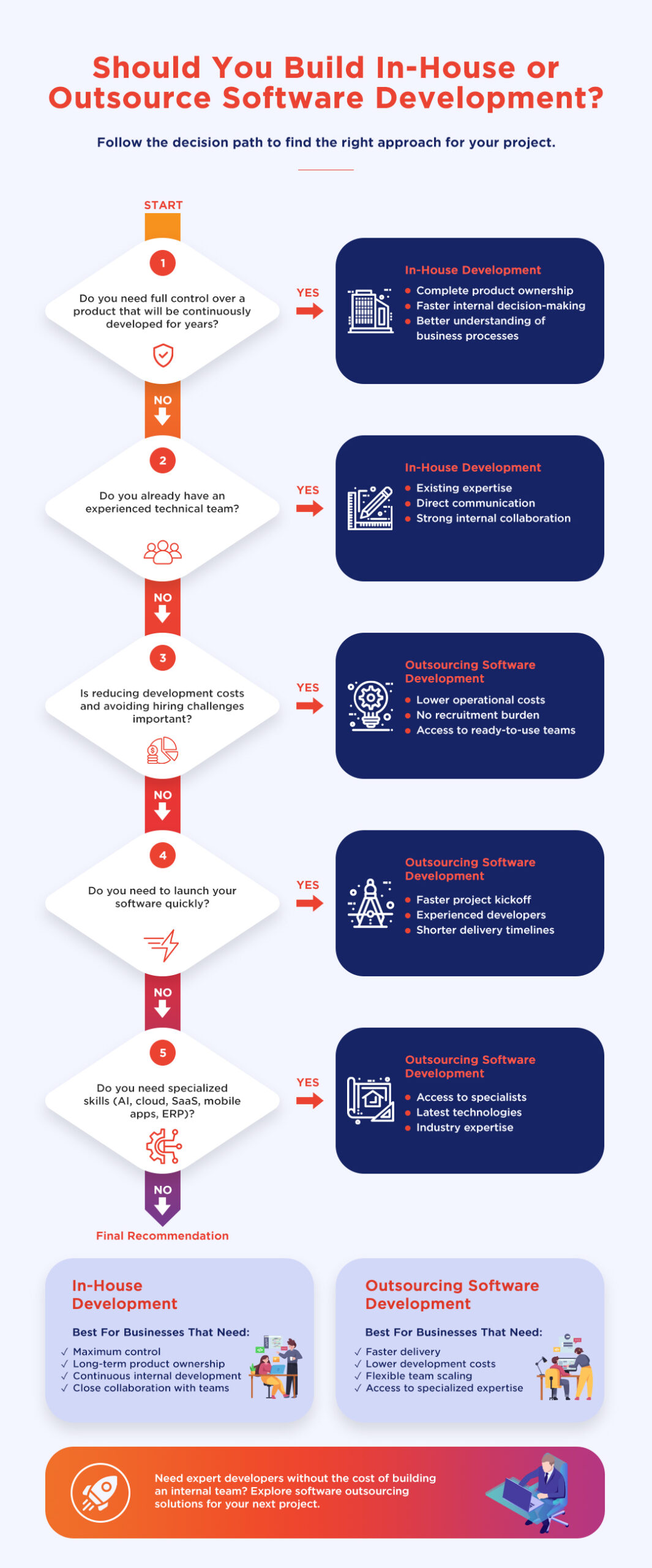
Both in-house development and outsourcing can help you build high-quality software. The best choice depends on your budget, project timeline, business goals, and the skills you already have.
| Features | In-House Development | Software Outsourcing |
|---|---|---|
| Cost | Higher due to salaries, benefits, office space, and tools | Lower because you pay only for the required services |
| Hiring Speed | Can take weeks or months to build a team | Experienced teams can often start within days |
| Time to Market | Usually slower because of recruitment and onboarding | Faster because the team is already in place |
| Access to Skills | Limited to your employees’ expertise | Access to specialists with different technologies and industries |
| Project Control | Complete day-to-day control | Shared control with regular client involvement |
| Flexibility & Scalability | Hiring or reducing staff takes time | Easy to scale the team up or down based on project needs |
| Communication | Direct communication with internal employees | Depends on the vendor’s communication process |
| Long-Term Maintenance | Managed by your internal team | Usually provided through a maintenance agreement with the outsourcing company |
Quick Answer
Choose in-house development if you need long-term control, continuous product development, and close collaboration with your internal teams.
Choose outsourcing if you want faster delivery, lower hiring costs, and access to specialized expertise.
Advantages of In-House Software Development
An in-house development team gives businesses more control over their software and keeps development closely connected to daily operations. Although building an internal team requires more time and investment, it can provide long-term benefits for companies that continuously develop and improve their products.
- Greater control over the project allows faster decisions and easier changes during development.
- Strong business knowledge because the team understands your products, customers, and internal processes.
- Easier collaboration with other departments through direct communication and quick feedback.
- Better cultural alignment since the developers share your company’s goals, values, and way of working.
- Long-term product ownership makes it easier to maintain, improve, and expand the software over time.
- Direct communication with developers reduces misunderstandings and helps projects move forward more efficiently.
Advantages of Outsourcing Software Development
Outsourcing software development helps businesses build high-quality software without the time and expense of creating an in-house team. It gives companies access to experienced developers, modern technologies, and flexible development models.
- Lower development costs by avoiding expenses such as recruitment, salaries, office space, and employee benefits.
- Access to global talent with experience in different technologies, industries, and software projects.
- Faster project delivery because experienced teams are already in place and can start work quickly.
- Easier team scaling by adding or reducing developers as project needs change. Businesses that need extra support without hiring full-time employees often choose staff augmentation services.
- Specialized technical expertise in areas such as AI, cloud computing, SaaS, mobile apps, ERP systems, and web application development services.
- Reduced hiring burden since the outsourcing partner handles recruitment, onboarding, and team management.
- Faster technology adoption because experienced software companies stay updated with the latest development tools, frameworks, and industry best practices.
Need Experienced Software Developers Without the Cost and Delays of Building an In-House Team?
Our software development experts help businesses build scalable web, mobile, SaaS, ERP, AI, and enterprise applications through flexible outsourcing and dedicated development team models.
Challenges of In-House Development
Building an in-house development team gives businesses more control, but it also comes with several challenges. Hiring skilled developers, managing employees, and maintaining the right resources require significant time, effort, and investment.
These challenges can slow down projects and increase long-term costs.
- High recruitment costs because finding and hiring experienced developers requires recruitment agencies, job advertisements, interviews, and onboarding.
- Longer hiring timelines, since it can take weeks or even months to build a complete development team before the project can begin.
- Employee retention can be difficult because skilled developers are in high demand and may leave for better opportunities, causing project delays and additional hiring costs.
- Infrastructure expenses such as office space, computers, software licenses, cloud services, and other development tools increase the overall cost of maintaining an internal team.
- Limited skill availability because one team may not have expertise in every technology. Businesses sometimes struggle to find specialists for AI, cloud platforms, cybersecurity, or other advanced technologies.
- Scaling difficulties since hiring new employees or reducing team size take time and can increase operational costs. Businesses should also avoid common software development mistakes businesses make, such as hiring too quickly.
Challenges of Software Outsourcing
Software outsourcing offers many benefits, but businesses should also understand the challenges before choosing an outsourcing partner. Most of these risks can be reduced by selecting the right software company, maintaining regular communication, and clearly defining project requirements from the beginning.
- Vendor selection is one of the biggest challenges. Choosing an experienced and reliable partner is essential for project success. Before making a decision, learn how to choose a software development company in Dubai and the questions to ask before hiring a software development agency.
- Communication across time zones can slow down discussions if the development team is located in a different country. Regular meetings and clear communication channels help keep everyone aligned.
- Knowledge transfer takes time because the external team needs to understand your business, goals, and project requirements before development begins.
- Data security concerns should always be addressed through confidentiality agreements, secure development practices, access controls, and strong security policies.
- Managing external teams requires regular progress reviews, clear milestones, and continuous feedback to ensure the project stays on schedule.
- Quality assurance depends on the experience and processes of the outsourcing company. Working with a trusted development partner that follows proper testing and quality standards helps ensure the software meets your expectations.
Cost Comparison: In-House vs Outsourcing
The total cost of software development is more than just paying developers. Businesses should also think about hiring, office expenses, software tools, employee training, and long-term maintenance. While an in-house team usually requires a larger ongoing investment, outsourcing can reduce many of these costs because the development company already has the people and resources in place.
1. Recruitment Costs
Building an in-house team starts with finding and hiring skilled developers. This process takes time and involves recruitment agencies, job advertisements, interviews, and onboarding. If the right candidates are difficult to find, hiring costs can increase even more.
With outsourcing, the software company already has experienced professionals, so businesses can start development without spending time or money on recruitment.
2. Salaries & Benefits
An in-house team requires ongoing salaries, employee benefits, bonuses, insurance, paid leave, and other employment costs. These expenses continue even when development work slows down.
With outsourcing, businesses pay for the agreed-upon development services instead of managing full-time employees. This gives better cost flexibility, especially for short-term or project-based work.
3. Office & Infrastructure
Internal development teams need office space, computers, internet, software licenses, cloud services, and other equipment to work efficiently. Maintaining this infrastructure adds to the overall development cost.
Outsourcing removes most of these expenses because the development company provides its own workspace, hardware, and technical environment.
4. Software Licenses & Tools
Developers use many paid tools for coding, testing, project management, design, and collaboration. Companies with in-house teams must purchase, renew, and manage these licenses themselves.
Outsourcing companies already invest in these tools, so businesses usually do not need to buy additional software for the development team.
5. Training & Employee Development
Technology changes quickly, so developers need regular training to keep their skills up to date.
For an in-house team, the company is responsible for providing learning opportunities and technical training. Outsourcing companies usually handle employee development internally, giving clients access to developers who already have current technical knowledge.
6. Outsourcing Costs
Outsourcing costs depend on factors such as project size, complexity, required technologies, and the engagement model you choose. A small project with fixed requirements will usually cost less than a large project that needs a dedicated team or long-term support.
Businesses also have the flexibility to choose models like dedicated teams or staff augmentation services, allowing them to control costs while accessing the skills they need.
7. Hidden Costs to Consider
Every development model has hidden costs that businesses should consider before making a decision.
With in-house development, hidden costs may include employee turnover, recruitment delays, training, equipment upgrades, and lower productivity while new employees are learning.
With outsourcing, businesses should carefully define project requirements, communication processes, and deliverables to avoid unexpected changes later. Choosing an experienced development partner and planning the project properly helps reduce these risks and keeps the budget under control.
Quick Answer
If reducing upfront costs and avoiding recruitment expenses is your priority, outsourcing is usually the more cost-effective option.
If software is a long-term strategic asset, investing in an in-house team may provide better long-term value.
Which Projects Are Best for In-House Development?
An in-house development team is a good choice when software is a core part of your business and needs continuous improvement. Since the team works closely with your company every day, they gain a deep understanding of your products, customers, and business goals.
1. Core Business Products
If your software is central to your business, an in-house team can provide better long-term support. Since the developers understand your products and customers, they can continuously improve features, respond to feedback, and align development with your business strategy.
2. Long-Term Internal Systems
Many businesses rely on internal software for daily operations, such as HR systems, finance platforms, inventory management, or employee portals. These systems require regular updates, maintenance, and improvements. Having an in-house team makes it easier to manage these changes over time.
3. Highly Confidential Applications
Some software handles sensitive business information, customer data, or confidential company processes. Businesses with strict security or compliance requirements may prefer an in-house team because they have greater control over data access, security policies, and development practices.
4. Products Requiring Continuous Innovation
Products that are updated regularly based on customer feedback or changing market needs often benefit from an in-house development team. Developers can quickly release new features, improve performance, and work closely with different departments to support continuous innovation.
However, before deciding whether to build an internal team or outsource, it is helpful to compare your business goals with other options such as SaaS vs custom software and low-code platforms vs custom development, especially if speed, budget, or scalability are important factors.
Quick Answer
The best choice depends on your project:
Long-term, business-critical software → In-house
MVPs, startups, and specialized projects → Outsourcing
Need extra developers temporarily → Staff augmentation
Which Projects Are Best for Outsourcing?
Software outsourcing is a great choice for businesses that want to launch projects quickly, reduce hiring costs, or access specialized technical skills. Instead of building a complete in-house team, companies can work with experienced developers who already have the knowledge and tools needed to deliver successful projects.
1. MVP Development
Startups and businesses often build a Minimum Viable Product (MVP) to test a new idea before making a larger investment.
Outsourcing helps launch an MVP faster because experienced teams can begin development immediately. It allows businesses to validate their product, collect customer feedback, and make improvements without spending months building an internal team.
2. Startup Products
Many startups have limited budgets and small teams. Outsourcing gives them access to skilled developers without the cost of hiring full-time employees. It also allows founders to focus on growing the business while the development team builds the product.
3. Short-Term Projects
Some software projects only require development for a few months.
Hiring full-time employees for temporary work is expensive and time-consuming. Outsourcing allows businesses to complete short-term projects without making long-term hiring commitments.
4. Legacy System Modernization
Many businesses still use old software that no longer meets their needs. An experienced outsourcing partner can upgrade legacy systems, improve performance, enhance security, and add modern features without disrupting daily business operations.
5. Mobile App Development
Building a mobile app requires experience with different platforms, frameworks, testing methods, and deployment processes. Outsourcing gives businesses access to developers who specialize in mobile app development, helping reduce development time while maintaining quality.
6. SaaS Development
Building a SaaS product often requires expertise in cloud platforms, security, scalability, subscriptions, and API integrations. Outsourcing companies usually have experience developing SaaS products, making them a good choice for businesses planning to launch cloud-based software.
7. AI & Emerging Technologies
Technologies such as artificial intelligence, machine learning, automation, and cloud computing require specialized knowledge that many in-house teams may not have.
Working with experienced outsourcing partners gives businesses access to these advanced skills. Whether you need a complete project or ongoing custom software development services, outsourcing can help deliver modern software solutions more efficiently.
Dedicated Development Teams vs Staff Augmentation vs Project Outsourcing
Businesses have different software development needs, so there is no single engagement model that works for everyone. Some need a long-term team, some only need extra developers for a short time, while others prefer to outsource the entire project.
Understanding these models helps you choose the option that best fits your goals, budget, and timeline.
Dedicated Development Teams
A dedicated development team works only on your project for an extended period. The team becomes familiar with your business, goals, and workflows while working closely with your company. This model is ideal for businesses building large software products that require continuous development, regular updates, and long-term collaboration.
Staff Augmentation
Staff augmentation allows businesses to add experienced developers to their existing team whenever extra support is needed. Rather than hiring full-time employees, companies can quickly fill skill gaps, increase development capacity, or bring in specialists for specific technologies.
Businesses looking for flexible resource management often choose staff augmentation company in Dubai because they can scale their teams without long recruitment processes.
Project Outsourcing
Project outsourcing means handing over the entire software project to an experienced development company. The outsourcing partner manages planning, development, testing, deployment, and delivery while keeping the client informed throughout the project.
This model works well for businesses that do not have an internal development team or want to focus on their core business while experienced professionals handle the software development.
How to Choose Between In-House Development and Outsourcing
The best development model depends on your business goals, budget, timeline, and available resources. Before making a decision, evaluate your current situation and think about what your project needs both now and in the future.
The checklist below can help you choose the right approach.
- Define your business objectives and decide what you want the software to achieve.
- Evaluate your internal expertise to see if your team has the skills needed to build and maintain the software.
- Assess your budget by considering not only development costs but also hiring, training, infrastructure, and long-term maintenance.
- Consider your project timeline. If you need to launch quickly, outsourcing may help reduce development time.
- Identify the technologies your project requires, such as AI, cloud computing, mobile apps, ERP, or web applications, and ensure the development team has experience in those areas.
- Evaluate long-term maintenance needs and decide whether you want an internal team to manage the software or an external partner to provide ongoing support.
- Review your security and compliance requirements, especially if your software handles sensitive business or customer data.
- Compare the total cost of ownership instead of focusing only on the initial development cost. Consider long-term expenses, future updates, and business growth before making your final decision.
Best Practices for Successful Software Outsourcing
Outsourcing can help businesses save time and reduce development costs, but success depends on good planning and strong collaboration. Following these best practices will help you build a productive relationship with your development partner and achieve better project results.
Choose the Right Development Partner
Take time to research different software companies before making a decision. Review their experience, portfolio, client feedback, and technical expertise. Learning how to choose a software development company in Dubai can help you select a reliable partner that matches your business needs.
Define Clear Requirements
Before development begins, clearly explain your business goals, project scope, features, budget, and timeline. Well-defined requirements reduce misunderstandings, improve planning, and help the development team deliver the right solution.
Use Agile Methodologies
Agile development divides the project into smaller stages, allowing businesses to review progress regularly and provide feedback throughout development. This makes it easier to make changes, improve the product continuously, and reduce project risks.
Establish Communication Channels
Regular communication keeps everyone aligned throughout the project. Schedule weekly meetings, use project management tools, and maintain clear communication so both teams stay updated on progress, challenges, and upcoming tasks.
Protect Intellectual Property
Always sign confidentiality agreements and clearly define who owns the software, source code, and project assets before development begins. A trusted software development partner will also follow secure development practices to protect your business data.
Track KPIs & Milestones
Monitor project progress using clear milestones and key performance indicators (KPIs) such as delivery timelines, completed features, software quality, bug resolution time, and customer feedback. Tracking these metrics helps identify issues early and keeps the project on schedule.
Plan Long-Term Support
Software development does not end after launch. Plan for ongoing maintenance, security updates, performance improvements, bug fixes, and future feature enhancements. A long-term support plan helps keep your software reliable, secure, and ready to grow with your business.
Looking for a Reliable Software Development Partner?
Choosing the right development model is only part of the decision. The success of your project also depends on working with an experienced team that understands your business goals and delivers high-quality software.
At DynamoLogic Solutions, we help startups, SMEs, and enterprises build reliable software through flexible engagement models that match their needs. Whether you want to outsource an entire project, hire a dedicated development team, or expand your existing team, we can provide the right solution.
Our services include:
- Custom software development services for web, mobile, and enterprise applications.
- Web application development for scalable business solutions.
- Mobile application developmentfor Android and iOS.
- SaaS product development and cloud applications.
- ERP and CRM software development.
- Dedicated development teams.
- Staff augmentation services for businesses that need experienced developers to support their internal team.
- Software modernization, maintenance, and long-term technical support.
Looking for a Reliable Software Development Partner?
At DynamoLogic Solutions, we deliver scalable, high-quality software through flexible engagement models, including dedicated teams, staff augmentation, and custom software development.
Frequently Asked Questions
What is the difference between in-house development and outsourcing?
In-house development means your own employees build and maintain the software. Outsourcing means hiring an external software development company to handle some or all of the project. The right choice depends on your budget, timeline, and business goals.
When should a business build an in-house development team?
An in-house team is a good choice when software is a core part of the business, requires continuous development, or involves highly confidential data. It is also suitable for companies that need long-term product ownership and daily collaboration between developers and other departments.
What types of projects are best for outsourcing?
Outsourcing works well for MVPs, startup products, mobile apps, SaaS platforms, web applications, legacy system modernization, and projects that require specialized technical skills or faster delivery.
What is staff augmentation?
Staff augmentation is a hiring model where businesses temporarily add experienced developers to their existing team. It helps fill skill gaps, increase development capacity, and speed up projects without hiring full-time employees.
How do I choose the right software development partner?
Look for a company with relevant industry experience, a strong portfolio, positive client reviews, clear communication, transparent pricing, and reliable post-launch support. It is also important to understand their development process and technical expertise before signing a contract.
Can I switch from an outsourced team to an in-house team later?
Yes. Many businesses begin with outsourcing to launch their software quickly and later build an in-house team as the business grows. A good development partner can also help with knowledge transfer to make the transition smooth.