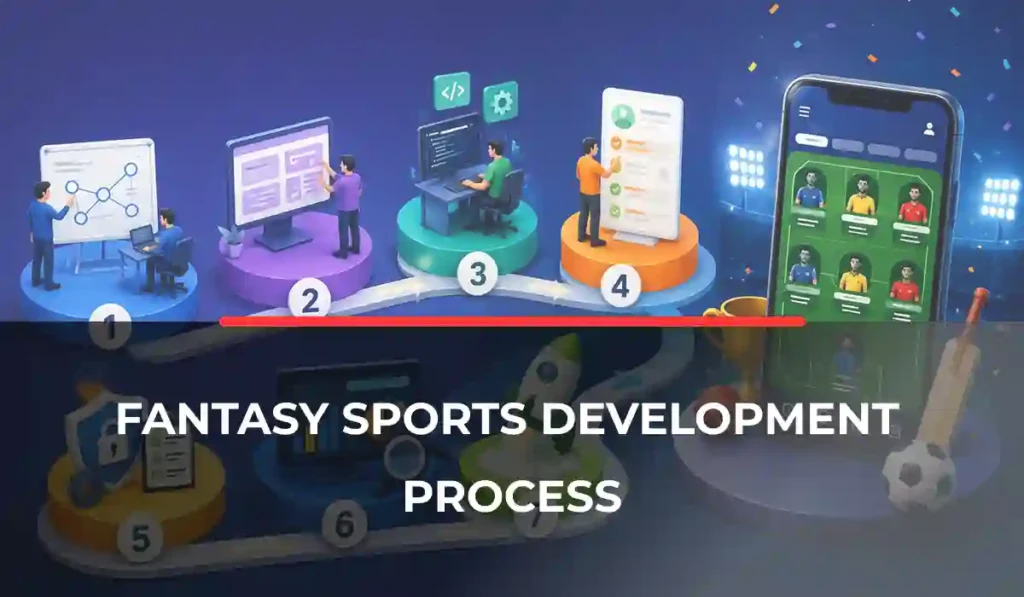
The fantasy sports industry continues to grow as more sports fans use mobile apps to create teams, join contests, and compete with other players. This growing demand has encouraged startups, sports organizations, and entrepreneurs to invest in fantasy sports app development and launch their own platforms.
Building a fantasy sports platform is not a single step. It is a complete process that begins with planning your idea and continues through design, development, testing, launch, and ongoing improvements. Following a structured fantasy sports development process helps reduce mistakes, keeps the project organized, and helps create a better experience for users.
In this guide, we will explain every stage of the development journey in simple terms. If you are planning to invest in fantasy sports software development, this article will help you understand what happens at each stage before your project begins.
What Is the Fantasy Sports Development Process?
The fantasy sports development process is a step-by-step approach used to build a fantasy sports platform from the initial idea to a successful product launch. Instead of developing everything at once, the project is divided into different stages, allowing each part to be planned, designed, developed, tested, and improved before moving to the next phase.
The process usually begins by understanding business goals, target users, and the sports your platform will support. Once the requirements are clear, the focus shifts to market research, feature planning, UI/UX design, development, testing, deployment, and post-launch support.
Following a structured development process also makes it easier to manage project timelines, improve collaboration between teams, and build a platform that can grow as your user base increases. Whether you are creating a simple MVP or a large-scale platform, a well-planned process helps you launch with greater confidence.
In the following sections, we will walk through each stage of the fantasy sports app development process and explain what happens before, during, and after development begins.
Why Following a Structured Development Process Matters
A fantasy sports platform is made up of many connected parts, from user registration and contest creation to live score updates and payments. Following a structured fantasy sports software development process helps organize every stage, reducing mistakes and making the project easier to manage.
1. Reduces Project Risks
Planning each stage before development begins helps identify possible challenges early. This reduces unexpected delays, avoids costly changes, and keeps the project moving in the right direction.
2. Improves Scalability
A well-planned development process creates a strong foundation for future growth. As your platform attracts more users, adds new sports, or introduces new features, it becomes easier to scale without rebuilding the entire system.
3. Controls Development Costs
Making important decisions during the planning stage helps avoid unnecessary development work later. Fixing problems early is usually faster and more affordable than making major changes after the platform is built.
4. Creates a Better User Experience
Each stage focuses on improving the user journey, from registration and team creation to joining contests and tracking results. A smooth experience keeps users engaged and encourages them to return.
5. Makes Maintenance Easier
Launching the platform is only the beginning. A structured process makes future updates, bug fixes, feature improvements, and performance optimization much easier because the project is built on a clear and organized foundation.
Step 1 – Discovery & Requirement Gathering
Every successful fantasy sports app development process begins with discovery and requirement gathering. This is the stage where the project team works with stakeholders to understand the business idea before any design or development begins. The goal is to create a clear roadmap that guides the entire project.
a. Define Business Goals
The first step is understanding what you want your platform to achieve. Some businesses focus on growing a large user base, while others prioritize revenue, user engagement, or expanding into multiple sports. Clear goals help shape every decision throughout the project.
b. Identify the Target Audience
Knowing who will use the platform is equally important. Your audience may include casual sports fans, experienced fantasy players, or users from a specific country or region. Understanding their needs helps create a better user experience.
c. Decide Which Sports to Support
The team also identifies which sports the platform will support. Some businesses launch with a single sport such as cricket or football, while others plan to support multiple sports over time.
d. Define Monetization Goals
Before development begins, it is important to decide how the platform will generate revenue. This may include subscriptions, advertising, or other monetization models. These decisions influence the platform’s planning and future growth.
e. Analyze the Competition
Studying existing fantasy sports platforms helps identify market expectations and opportunities. This stage focuses on understanding what users value and where your platform can offer a better experience.
f. Key Deliverables
By the end of the discovery stage, the project team typically has:
- Business requirement document
- Project scope and objectives
- Target audience profile
- List of supported sports
- Monetization plan
- High-level feature requirements
- Initial project roadmap
Step 2 – Market Research & Feature Planning
Once the project requirements are finalized, the next stage is market research and feature planning. The goal is to understand what users expect from a fantasy sports platform and decide which features should be included in the first release.
a. Study the Competition
Researching successful fantasy sports platforms provides valuable insights into user expectations and industry trends. During this stage, businesses often analyze platforms such as Dream11, ESPN Fantasy, Yahoo Fantasy Sports, and Sleeper. The purpose is not to copy their features but to understand what works well, identify common user expectations, and find opportunities to offer a better experience.
Areas commonly reviewed include:
- User registration and onboarding
- Contest creation and joining process
- Team selection experience
- Scoring and leaderboard updates
- Payment flow
- Overall user experience
Decide Between an MVP and an Enterprise Platform
After the research is complete, the team decides whether to launch a Minimum Viable Product (MVP) or build a full enterprise platform from the beginning.
| MVP Platform | Enterprise Platform |
|---|---|
| Launches with essential features only | Includes advanced features from the start |
| Faster to develop and launch | Requires a longer development timeline |
| Lower initial investment | Higher development effort |
| Ideal for validating a business idea | Suitable for established businesses with larger goals |
| Easy to improve based on user feedback | Designed for large user bases and long-term scalability |
Most startups begin with an MVP to test the market before expanding the platform. As user feedback grows, additional features and improvements can be added through future development phases.
By the end of this stage, the project team has a clear feature roadmap that guides the remaining fantasy sports app development stages and keeps the project focused on business priorities.
Step 3 – UI/UX Design
After the planning stage is complete, the next step is designing the user experience. During this stage, the project team creates the structure and layout of the platform before development begins. A good UI/UX design makes the platform easy to use.
a. Create Wireframes
The process usually starts with wireframes, which are simple layouts showing how each screen will be organized. They help define where buttons, menus, forms, and other elements will appear before visual design begins.
b. Plan User Journeys
The team maps out how users will move through the platform. This includes every important action, from creating an account to selecting players, joining contests, checking scores, and viewing results. A clear user journey helps reduce confusion and improves usability.
c. Focus on Mobile-First Design
A recent market research report claims that most fantasy sports users access platforms through their smartphones. Designing for mobile first ensures the platform is easy to navigate on smaller screens while also providing a consistent experience across tablets and desktops.
d. Design the Contest Flow
Joining a contest should be simple and intuitive. The design focuses on making it easy for users to browse contests, create their fantasy teams, confirm entries, and track their performance without unnecessary steps.
e. Simplify User Onboarding
A smooth onboarding process encourages new users to get started quickly. Registration, login, profile setup, and verification should be simple so users can begin playing without delays.
f. Build Easy-to-Understand Dashboards
Player dashboards should present important information in a clear and organized way. Contest details, team performance, points, rankings, and account information should be easy to access without overwhelming the user.
By the end of this stage, the project team usually has approved wireframes, design mockups, user flows, and a clickable prototype that developers can use during the next stage of the fantasy sports development process.
Step 4 – Architecture Planning
Once the design is approved, the next stage is architecture planning. This is where the development team decides how different parts of the fantasy sports platform will work together. The goal is to create a strong foundation that supports performance, security, and future growth without going into the actual coding stage.
a. Plan the Overall System
The team creates a high-level plan for how users, applications, databases, and external services will interact. A well-planned architecture helps the platform handle increasing traffic and makes future updates easier.
b. Plan Cloud Infrastructure
Cloud infrastructure is planned to ensure the platform remains available during periods of high user activity, such as major sports tournaments or live matches. This stage also considers storage, backups, and overall system reliability.
c. Organize the Database
The database structure is planned to store user accounts, contests, teams, player information, transactions, and other important data in an organized way. A well-designed database supports faster performance and easier management as the platform grows.
d. Plan API Connections
Most fantasy sports platforms rely on third-party APIs to receive live scores, player statistics, match schedules, and other real-time information. During this stage, the team identifies the required integrations and plans how these services will connect with the platform.
e. Define Backend Structure
The backend is planned to manage core business operations such as user accounts, contest management, scoring, payments, notifications, and administration. A clear backend structure helps developers build the platform more efficiently while supporting future improvements.
Architecture planning focuses on creating a reliable blueprint before development begins.
Step 5 – Development
After planning and design are complete, the actual development begins. During this stage, developers build the fantasy sports platform based on the approved designs, project requirements, and architecture plan.
a. Frontend Development
The frontend is the part of the platform that users interact with. Developers build screens for registration, login, contest browsing, team creation, leaderboards, user profiles, and other features. The goal is to deliver a smooth, fast, and easy-to-use experience across different devices.
b. Backend Development
The backend manages the platform’s core operations behind the scenes. It processes user requests, stores data, manages contests, calculates scores, sends notifications, and ensures everything works correctly as users interact with the platform.
c. Admin Panel Development
An admin panel is developed to help platform owners manage daily operations. It allows administrators to monitor users, manage contests, review transactions, publish announcements, and oversee platform activities from a single dashboard.
d. Payment Integration
If the platform includes subscriptions, premium features, or other applicable payment functionality, developers integrate the required payment providers and security measures. The payment process should be simple, reliable, and designed to provide users with a smooth transaction experience.
e. User Authentication
Authentication features help verify user identities and protect accounts. Registration, login, password recovery, and account verification are developed to provide secure access while making the onboarding process simple for new users.
f. Contest Engine
The contest engine is one of the most important parts of a fantasy sports platform. It manages contest creation, player selection rules, scoring calculations, rankings, and winner determination based on the platform’s contest format.
By the end of the development stage, the main modules of the platform are complete and ready to move into testing, where the team verifies that every feature works as expected before launch.
Planning to Build a Fantasy Sports Platform?
A successful fantasy sports platform starts with a clear development process. Proper planning, the right features, and a scalable architecture can help you reduce development risks and launch with confidence.
Step 6 – Sports API Integration
A fantasy sports platform depends on accurate and up-to-date sports data. During this stage, developers integrate sports APIs that provide real-time information to keep the platform running smoothly.
a. Live Scores
Live scores allow users to follow matches as they happen. As the game progresses, the platform receives score updates that help keep contests active and engaging.
b. Player Statistics
Fantasy platforms also rely on player statistics such as runs, goals, assists, wickets, rebounds, or other sport-specific performance data. This information is used to calculate fantasy points and update team performance during contests.
c. Match Fixtures
Upcoming match schedules and fixture information help users plan ahead, create teams before contests begin, and stay informed about future games available on the platform.
d. Odds and Match Data
Some fantasy sports platforms also integrate additional match information such as odds, team details, and other supporting data to improve the overall user experience. The exact data depends on the type of fantasy sports platform being developed.
Choosing the right sports API is an important part of the fantasy sports development process because the quality and speed of the data directly affect the user experience.
Step 7 – Testing & Quality Assurance
Before the platform is launched, every feature must be tested to make sure it works as expected. The testing and quality assurance (QA) stage helps identify and fix issues before users access the platform. A well-tested platform provides a better user experience, reduces technical problems, and improves reliability after launch.
a. Performance Testing
Performance testing checks how the platform behaves under different levels of user activity. This helps ensure the application remains fast and responsive, especially during major sporting events when thousands of users may be active at the same time.
b. Security Testing
Security testing helps identify weaknesses that could put user accounts or business data at risk. The goal is to protect sensitive information and provide users with a safe and secure platform.
c. Usability Testing
Usability testing evaluates how easy the platform is to use. Test users perform common tasks such as registering, creating teams, joining contests, and making payments to ensure the overall experience is simple and intuitive.
d. Load Testing
Fantasy sports platforms often experience heavy traffic during live matches. Load testing measures how the platform performs under high demand and helps identify any issues before the platform goes live.
e. API Testing
Since the platform depends on third-party sports data, API testing verifies that live scores, player statistics, fixtures, and other information are received accurately and without unnecessary delays.
By the end of the testing stage, the team has resolved major issues, confirmed that all core features are working correctly, and prepared the platform for a stable and successful launch.
Step 8 – Deployment
Once the platform has been tested and approved, it is ready for deployment. This stage involves making the fantasy sports platform available to users by moving it from the development environment to a live production environment. A well-planned deployment helps ensure a smooth launch with minimal disruption.
a. Cloud Deployment
The platform is deployed to a cloud environment where it can securely handle user traffic, store data, and support future growth. Proper deployment planning helps maintain performance and availability as the number of users increases.
b. App Store and Platform Release
If the project includes mobile applications, the Android and iOS apps are prepared for submission to their respective app stores, subject to applicable app-store policies and regulatory requirements. At the same time, the web platform is published so users can start creating accounts and joining contests.
c. Monitoring System Performance
After deployment, the development team closely monitors the platform to ensure everything is running smoothly. They watch for performance issues, unexpected errors, or system interruptions so they can respond quickly if needed.
d. Analytics & User Insights
Analytics tools are also configured to track user activity and platform performance. Information such as user registrations, contest participation, engagement, and retention helps businesses understand how the platform is performing and identify areas for future improvement.
Deployment is not simply about launching the platform. It is about ensuring users have a stable experience from day one while giving the business the tools needed to monitor performance and plan future updates.
Step 9 – Post-Launch Support
Launching a fantasy sports platform is only the beginning. After the platform goes live, regular support and maintenance are needed to keep everything running smoothly. As users join contests and provide feedback, the platform should continue improving through updates, performance optimization, and new features.
a. Bug Fixes
Even after thorough testing, minor issues may appear once real users start using the platform. Fixing these bugs quickly helps maintain a smooth user experience and builds trust with your audience.
b. Regular Maintenance
Routine maintenance keeps the platform stable and reliable. This includes monitoring system health, improving performance, updating software components, and ensuring all services continue to work correctly.
c. Feature Updates
User expectations change over time. Adding new features, improving existing functionality, and enhancing the user experience helps keep the platform competitive and encourages users to stay engaged.
d. Platform Scaling
As your user base grows, the platform must be able to handle higher traffic without affecting performance. Scaling may involve increasing system resources, optimizing performance, and preparing for busy sports seasons or major tournaments.
Post-launch support is an ongoing part of the fantasy sports software development lifecycle. Businesses that regularly maintain and improve their platforms are better positioned to retain users and support long-term growth.
Common Challenges During Fantasy Sports Development
Building a fantasy sports platform is not just about adding features. Developers also need to solve several technical and operational challenges to provide users with a reliable experience. Identifying these challenges early in the fantasy sports development process helps reduce risks and improves the chances of a successful launch.
Handling High User Traffic
Fantasy sports platforms often experience a large increase in users during major tournaments and live matches. If the platform is not prepared for this traffic, users may face slow loading times or service interruptions.
Managing Scoring Delays
Users expect fantasy points and leaderboards to update quickly. Any delay in processing match data can affect the user experience and reduce confidence in the platform.
Payment Processing Issues
Fantasy sports platforms may include payment functionality for subscriptions, premium features, or other applicable services. Payment failures, delayed transactions, or other issues can affect user trust, making reliable and secure payment processing essential.
API Downtime or Data Delays
Fantasy sports platforms rely on third-party APIs for live scores, player statistics, and match updates. If an API becomes unavailable or sends delayed data, it can affect contests and scoring. Choosing reliable data providers and planning for backup solutions can help reduce this risk.
Maintaining Performance as the Platform Grows
As more users join the platform, system performance becomes increasingly important. The platform should continue delivering a fast and stable experience even as contests, users, and sports are added over time.
How Long Does Fantasy Sports Development Take?
The time required to build a fantasy sports platform depends on the project’s size, feature requirements, and overall complexity. A simple MVP can usually be launched much faster than a full-scale enterprise platform with advanced functionality.
The time required to build a fantasy sports platform depends on the project’s size, feature requirements, and overall complexity.
A simple MVP can generally be developed faster than a full-scale platform with more advanced functionality. While the development process is organized into distinct stages, some activities may overlap depending on the project scope, team structure, and development approach.
Typical Development Timeline
| Development Stage | Estimated Timeline |
|---|---|
| Discovery & Requirement Gathering | 1–2 Weeks |
| Market Research & Feature Planning | 1–2 Weeks |
| UI/UX Design | 2–4 Weeks |
| Architecture Planning | 1 Week |
| Development | 8–16 Weeks |
| Testing & Quality Assurance | 2–4 Weeks |
| Deployment & Launch | 1 Week |
Development timelines also influence the overall project budget. Larger platforms with more advanced requirements typically take longer to build and require additional development effort. If you want to understand how project scope affects investment, explore our Fantasy Sports App Development Pricing guide for a detailed cost breakdown.
Choosing the Right Development Partner
The success of your fantasy sports platform depends not only on the idea but also on the team building it. An experienced fantasy sports development company can help you avoid common mistakes, reduce development risks, and deliver a platform that is ready for long-term growth.
When comparing development partners, look beyond pricing. Review their experience with fantasy sports projects, development process, technical expertise, communication, and post-launch support. A reliable company should also understand scalability, third-party integrations, security, and user experience.
It is equally important to ask for previous work, client references, and a clear project roadmap before making a decision. A transparent development process makes it easier to track progress and ensures everyone is working toward the same business goals.
If you are evaluating different vendors, our guide on choosing a fantasy sports development company explains the key features, capabilities, and qualities to look for before starting your project.
Conclusion
Building a successful fantasy sports platform is a step-by-step journey. From discovery and market research to design, development, testing, deployment, and post-launch support, every stage plays an important role in creating a platform that is reliable, scalable, and ready for long-term growth.
Whether you are building an MVP or a large enterprise platform, taking the time to plan each stage carefully can save both time and resources in the future.
Build Your Fantasy Sports Platform with Confidence
Our team helps businesses design and develop secure, scalable, and feature-rich fantasy sports applications tailored to their goals. From planning to post-launch support, we guide you through every stage of the development process.
FAQs
What is the Fantasy Sports Development Process?
The fantasy sports development process is the step-by-step journey of building a fantasy sports platform. It typically includes discovery, market research, UI/UX design, architecture planning, development, sports API integration, testing, deployment, and post-launch support.
What is the first step in fantasy sports software development?
The first step is discovery and requirement gathering. During this stage, the project team defines business goals, identifies the target audience, selects supported sports, plans monetization, and creates the initial project roadmap before development begins.
Which development methodology is best for fantasy sports apps?
There is no single method that fits every project. Many development teams use an agile approach because it allows features to be built, tested, and improved in smaller stages while adapting to changing business requirements. The outline identifies the development process as the focus but does not prescribe a specific methodology.
How do fantasy sports apps integrate live scores?
Fantasy sports platforms use third-party sports APIs to receive live scores, player statistics, fixtures, and other real-time match data. These APIs automatically update the platform so users can see the latest information during live contests.
What happens after a fantasy sports app is launched?
After launch, the platform requires ongoing support, including bug fixes, regular maintenance, feature updates, performance monitoring, and scaling as the user base grows. Continuous improvements help keep the platform stable and competitive.
How much planning is required before development begins?
Planning is one of the most important stages of the project. It includes defining business goals, researching competitors, identifying target users, selecting supported sports, planning monetization, and preparing a clear development roadmap. Good planning reduces risks and helps the project move forward smoothly.