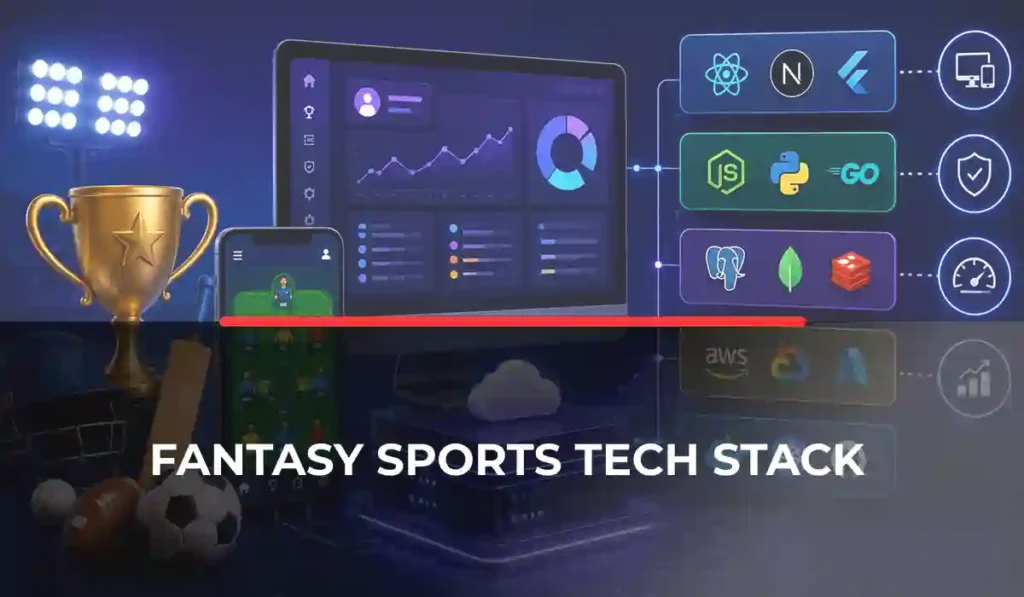
A successful fantasy sports platform is built on more than just great features. The technologies working behind the scenes determine how fast the platform performs, how securely it handles user data, and how well it can support thousands of users during live matches.
Choosing the right fantasy sports tech stack is an important business decision because it affects performance, scalability, maintenance, and long-term growth. Modern fantasy sports app development combines several technology layers, including frontend frameworks, backend technologies, databases, cloud infrastructure, and third-party integrations.
In this guide, you will learn the technologies commonly used in fantasy sports software development, why each layer matters, and what businesses should consider before selecting a technology stack.
What Is a Fantasy Sports Tech Stack?
A fantasy sports tech stack is the combination of technologies used to build, run, and maintain a fantasy sports platform. Rather than depending on a single technology, modern platforms use different technology layers that work together to deliver a fast, secure, and scalable user experience.
Every layer has a specific purpose. The frontend creates the user interface, the backend manages business operations, databases store information, cloud platforms host the application, and third-party integrations connect services such as live sports data and payment gateways.
Main Components of a Fantasy Sports Tech Stack
| Technology Layer | Purpose | Common Examples |
|---|---|---|
| Frontend | Creates the user interface | React, Next.js, Angular, Flutter |
| Backend | Manages business logic and platform operations | Node.js, .NET, Java, Python, Laravel |
| Database | Stores users, contests, transactions, and match data | PostgreSQL, MySQL, MongoDB |
| Cloud Infrastructure | Hosts and scales the platform | AWS, Microsoft Azure, Google Cloud |
| Third-Party Integrations | Connects external services | Sports APIs, payment gateways, authentication, analytics |
Choosing the right fantasy sports tech stack affects much more than development. It influences platform performance, user experience, future scalability, security, maintenance, and even the overall fantasy sports development cost.
Technology selection is only one part of building a successful fantasy sports platform. Once the stack is finalized, it becomes the foundation for the fantasy sports development process, where these technologies are used to design, develop, test, and launch the platform.
Likewise, external services such as sports data APIs are another important layer of the stack.
Why Your Tech Stack Matters
The technologies you choose today will affect how your fantasy sports platform performs tomorrow. A well-planned fantasy sports tech stack helps deliver a better user experience, supports business growth, and reduces long-term maintenance challenges. Choosing technologies based only on current trends can lead to performance issues and higher costs as your platform expands.
1. Better Performance
A reliable tech stack helps the platform load quickly, process live match data efficiently, and provide a smooth experience even during high-traffic events.
2. Easier Scalability
As your user base grows, your platform should be able to support more contests, sports, and simultaneous users. This becomes especially important during major tournaments and live events.
3. Improved User Experience
Users expect fast navigation, live score updates, secure payments, and responsive dashboards. The right technologies help deliver a seamless experience across both web and mobile platforms.
4. Simpler Maintenance
Modern technologies make it easier to release updates, fix bugs, improve performance, and add new features over time.
5. Stronger Security
Technology choices also affect platform security. Features such as secure authentication, encrypted communication, and protected user data should be considered from the beginning rather than added later.
6. Faster Development
Using proven technologies allows development teams to work more efficiently, reducing delays and making it easier to launch new features without affecting platform stability.
7. Better Cost Efficiency
The right technology stack helps control both development and maintenance expenses. Some technologies require fewer resources to maintain, while others make future upgrades simpler and more affordable. These decisions can directly influence your fantasy sports app development pricing, so it is important to evaluate long-term value.
Frontend Technologies
The frontend is the part of a fantasy sports platform that users interact with every day. It includes everything users see on the screen, such as registration, team creation, contest listings, leaderboards, wallets, and player profiles. A well-designed frontend helps users navigate the platform easily and enjoy a smooth experience across different devices.
Different businesses choose different frontend technologies based on their project goals, budget, and target audience. There is no single technology that is right for every platform.
React
React is one of the most widely used frontend technologies for modern web applications. It helps build fast, interactive, and responsive user interfaces, making it a popular choice for fantasy sports platforms with frequent live updates.
Next.js
Next.js extends React with additional features that improve performance and page loading speed. It is commonly used for platforms that want a fast website experience while also supporting search engine visibility.
Angular
Angular is often chosen for large enterprise applications that require a structured framework and long-term scalability. It is suitable for businesses managing complex workflows and extensive administrative features.
Flutter
Flutter allows developers to build Android and iOS applications from a single codebase. This can reduce development time while delivering a consistent experience across multiple mobile devices.
React Native
React Native is another popular option for cross-platform mobile app development. It enables businesses to launch mobile applications for both Android and iOS while sharing much of the same code, helping reduce development effort.
What Makes a Good Frontend?
Regardless of the technology you choose, the frontend should deliver:
- Fast page loading
- Responsive design for all screen sizes
- Smooth navigation
- Real-time score and leaderboard updates
- Consistent user experience across web and mobile devices
The frontend works closely with the backend, databases, and sports data APIs to deliver live information to users. While frontend technologies control what users see, fantasy sports API integration ensures that live scores, player statistics, and match updates appear in real time. Together, these technologies create the complete fantasy sports experience.
As your platform grows, the frontend should also support new features. User-facing capabilities such as wallets, contest creation, social features, and notifications are equally important.
Backend Technologies
While the frontend is what users see, the backend is the engine that keeps a fantasy sports platform running. It (along with dedicated scoring services) manages business logic, processes user requests, stores information, calculates fantasy points, and connects different parts of the platform. A reliable backend is essential for delivering a fast, secure, and scalable user experience.
The right backend technology depends on your business requirements, expected user traffic, development timeline, and future growth plans.
Node.js
Node.js is widely used for applications that require real-time updates and high performance. It is commonly chosen for fantasy sports platforms because it can efficiently handle live scores, notifications, and frequent user activity.
.NET
.NET is often selected for enterprise-grade platforms that require strong security, stability, and long-term scalability. It is commonly used by businesses with complex workflows and large user bases.
Java
Java is known for its reliability and performance. Many large-scale business applications use Java to manage high transaction volumes and support platforms that continue growing over time.
Python
Python is frequently used when platforms include data analysis, automation, or AI-powered features. Businesses planning predictive analytics or intelligent recommendations often choose Python as part of their technology stack.
Laravel
Laravel is a popular PHP framework used to build secure and scalable web applications. It is often selected for startups and mid-sized projects that require faster development without compromising reliability.
What Does the Backend Manage?
A fantasy sports backend is responsible for many core platform functions, including:
- User registration and authentication
- Contest creation and management
- Fantasy point calculation
- Wallet and transaction management
- Payment processing
- Notifications and alerts
- Admin panel operations
- Integration with sports data APIs
Many of these functions rely on real-time data. For example, fantasy point calculations and leaderboard updates depend on fantasy sports API integration, where live scores and player statistics are received from external data providers and processed by the backend.
The backend also works closely with the database and cloud infrastructure to ensure the platform remains stable as more users join. After the technology stack is selected, these components are implemented during the fantasy sports development process, where the complete platform is built, tested, and prepared for launch.
Database Technologies
A database is where a fantasy sports platform stores and manages its information. Every user account, contest entry, wallet transaction, match result, and fantasy point calculation depends on the database working efficiently. Choosing the right database helps improve performance, support future growth, and deliver a better user experience.
Different databases are designed for different types of workloads, so the right choice depends on your platform’s requirements rather than a single “best” option.
SQL Databases
SQL databases organize information into structured tables, which makes them ideal for data that requires accuracy and consistency. They are commonly used to manage user accounts, contest registrations, wallet balances, transactions, and payment records.
Popular SQL databases include:
- PostgreSQL
- MySQL
NoSQL Databases
NoSQL databases are designed to handle large volumes of flexible and rapidly changing data. They are often used for storing activity logs, user preferences, notifications, and other information that may not follow a fixed structure.
One of the most widely used NoSQL databases is:
- MongoDB
Redis
Redis is an in-memory data store that can be used for caching, fast data access, and other real-time workloads. In fantasy sports platforms, it can help improve response times by temporarily storing live information such as leaderboards or frequently requested match data. Technologies like Redis are only one part of building a high-performance platform, while the overall cloud architecture for fantasy sports apps determines how these components work together at scale.
Choosing the Right Database
The ideal database depends on the type of information your platform handles. Many successful fantasy sports platforms use a combination of SQL and NoSQL databases to balance performance, flexibility, and reliability.
A well-planned database strategy also makes future maintenance and platform expansion much easier. As your platform grows to support more users, sports, and contests, the database should continue delivering fast and reliable performance without affecting the overall user experience.
Build a Real-Time Fantasy Sports Platform
Integrate live sports data, automated scoring, leaderboards, and user notifications into your fantasy sports platform.
Cloud Infrastructure
Cloud infrastructure provides the foundation that keeps a fantasy sports platform running. It allows the application to handle user traffic, store data securely, and remain available during live matches. As the platform grows, cloud services make it easier to increase resources without rebuilding the entire system.
Most modern fantasy sports software development projects use cloud platforms because they offer flexibility, reliability, and support for long-term growth.
Amazon Web Services (AWS)
AWS is one of the most widely used cloud platforms for building scalable applications. It offers a broad range of services that help businesses host, manage, and expand their fantasy sports platforms as user demand increases.
Microsoft Azure
Microsoft Azure is a popular choice for businesses that already use Microsoft technologies. It provides secure cloud services and supports applications of all sizes, from startups to large enterprises.
Google Cloud
Google Cloud is known for its high-performance infrastructure and data capabilities. It is often chosen by businesses that require reliable cloud hosting and advanced data processing.
Why Cloud Infrastructure Matters
A cloud platform helps fantasy sports applications:
- Handle high traffic during live matches
- Improve platform reliability
- Scale resources as the user base grows
- Reduce downtime
- Support users from different locations
While choosing the right cloud provider is important, designing the infrastructure is equally critical. Topics such as scalability, availability, deployment strategies, and performance optimization go far beyond choosing AWS, Azure, or Google Cloud.
Third-Party Integrations
A modern fantasy sports platform relies on more than its core technologies. Third-party integrations connect the platform with external services that improve functionality, automate processes, and deliver a better user experience. Choosing reliable integrations is just as important as selecting the right fantasy sports tech stack.
Sports APIs
Sports APIs provide live scores, player statistics, match schedules, team information, and other real-time data. They are a core data source for many fantasy sports platforms, ensuring contests, leaderboards, and fantasy points update accurately as matches progress.
Selecting the right sports data APIs depends on factors such as accuracy, update speed, coverage, and reliability. We discuss these considerations in detail in our Fantasy Sports API Integration guide.
Payment Gateways
Payment gateways can be integrated where a platform requires supported transactions, such as subscriptions or other permitted payments. Choosing a trusted payment solution helps build user confidence while ensuring smooth financial operations.
Authentication Services
Authentication services simplify user registration and login while improving account security. Many platforms support email, mobile number, or social login options to provide a faster onboarding experience.
Push Notifications
Push notification services keep users informed about important events, including contest reminders, match updates, lineup deadlines, leaderboard changes, and promotional offers. Timely notifications help improve user engagement and encourage repeat participation.
Analytics Tools
Analytics platforms provide insights into user behavior, platform performance, and marketing campaigns. Businesses use this information to understand user preferences, measure engagement, and make better product decisions.
CRM & Marketing Tools
CRM systems help manage customer relationships, while marketing automation tools support email campaigns, user segmentation, and personalized communication. These integrations improve customer retention and create more targeted marketing strategies.
Third-party integrations should be selected based on your business goals rather than simply adding more tools. Every integration should improve the platform’s functionality, user experience, or operational efficiency. As your platform grows, choosing solutions that integrate smoothly with your technology stack will make future expansion much easier.
Security Technologies
Security is an essential part of every fantasy sports tech stack. A fantasy sports platform manages sensitive information such as user accounts, personal details, payment transactions, and wallet balances. Choosing the right security technologies helps protect this data while building trust with users.
TLS Encryption
TLS encrypts data transmitted between users and the platform, helping protect sensitive information such as login credentials and payment details during transmission.
Secure Authentication
Strong authentication methods help ensure that only authorized users can access their accounts. Features such as secure login systems and multi-factor authentication (MFA) add an extra layer of protection against unauthorized access.
Data Encryption
Encryption protects sensitive information stored within the platform, making it much more difficult for unauthorized users to access valuable business or customer data.
Firewalls and Threat Protection
Firewalls help monitor incoming and outgoing network traffic, reducing the risk of cyberattacks and unauthorized access. Combined with continuous security monitoring, they help maintain a safer platform environment.
Security should be considered throughout the entire fantasy sports development process, not added after the platform is launched. As your business grows, regular security reviews and updates become just as important as adding new features.
The Fantasy Football Market
| $31.5B
Market Size Annual Fantasy Sports Revenue |
15.2%
Growth Rate Year-over-Year Market Expansion |
350M
User Base Projected Players Worldwide |
Choosing the Right Tech Stack
There is no single fantasy sports tech stack that works for every business. The right combination of technologies depends on your goals, budget, expected user base, and long-term growth plans.
Define Your Business Goals
Start by identifying what you want to build. A startup launching its first fantasy sports app may have different technology requirements than an established business expanding into multiple sports or international markets.
Consider Your Budget
Technology choices influence both development and long-term maintenance costs. Some solutions require a larger initial investment, while others reduce operational expenses over time. Understanding these trade-offs will help you plan realistic fantasy sports app development pricing and avoid unexpected costs as your platform grows.
Think About Scalability
Your platform should be able to support more users, contests, and sports without requiring a complete rebuild. Choosing scalable technologies from the beginning makes future expansion much easier.
Evaluate Team Expertise
Working with experienced developers who understand fantasy sports software development helps ensure technologies are implemented correctly. A skilled team can also recommend the best combination of technologies based on your business objectives rather than simply following industry trends.
Prioritize Long-Term Maintenance
Launching the platform is only the beginning. Regular updates, feature enhancements, security improvements, and performance optimization should all be considered when selecting a technology stack. Technologies that are easier to maintain can reduce operational challenges in the future.
Plan for Future Integrations
As your business grows, you may need to integrate additional sports data APIs, payment gateways, analytics platforms, or new services. Selecting flexible technologies today makes it easier to add these capabilities later without disrupting your platform.
Choosing the right technology stack is closely connected to choosing the right fantasy sports development company. An experienced development partner can recommend technologies that align with your business goals, expected growth, and budget while avoiding unnecessary complexity. The technology itself is important, but the expertise behind its implementation often has an even greater impact on the success of your project.
Common Tech Stack Mistakes
Selecting the right technologies is important, but avoiding the wrong decisions is equally important. Many businesses focus only on launching quickly and overlook factors that affect long-term performance, maintenance, and scalability. Avoiding these common mistakes can save both time and development costs.
1. Choosing Technologies Based on Trends
A technology may be popular today, but that does not mean it is the right fit for your project. The best fantasy sports tech stack should support your business goals, user requirements, and future growth rather than simply following industry trends.
2. Ignoring Scalability
Many startups build platforms that work well with a small number of users but struggle during major sporting events. Planning for growth from the beginning helps avoid expensive upgrades later.
3. Overlooking Long-Term Maintenance
A platform needs continuous updates, bug fixes, security improvements, and feature enhancements after launch. Choosing technologies that are difficult to maintain can increase operational costs and slow future development.
4. Poor Integration Planning
A fantasy sports platform depends on multiple external services, including sports data APIs, payment gateways, authentication providers, and analytics tools. Choosing technologies that do not integrate well with these services can create unnecessary complexity and limit future expansion.
5. Underestimating Documentation
Well-documented technologies are easier to develop, maintain, and upgrade. Strong documentation also helps new developers understand the platform faster, reducing development time and minimizing future risks.
6. Focusing Only on Initial Costs
Selecting the lowest-cost technologies may reduce your upfront investment, but it can lead to higher maintenance expenses and costly rebuilds as your platform grows. Building a successful platform is not about choosing the newest technologies or the cheapest solutions. It is about selecting a fantasy sports tech stack that supports your current business needs while providing the flexibility to grow and evolve in the future.
Conclusion
Choosing the right fantasy sports tech stack is about building a platform that can support your business today while preparing for future growth. Every technology layer, from the frontend and backend to databases, cloud infrastructure, and third-party integrations, plays an important role in delivering a fast, secure, and reliable user experience.
There is no one-size-fits-all solution. The ideal technology stack depends on your business goals, target audience, budget, scalability requirements, and long-term vision. Making informed technology decisions early can improve platform performance, simplify maintenance, reduce the overall fantasy sports development cost, and make it easier to introduce new features as your business expands.
Technology selection is only one part of building a successful platform. A complete fantasy sports software development strategy also includes planning, UI/UX design, API integration, testing, deployment, and ongoing support.
Ready to Build Your Fantasy Sports Platform?
From sports API integration and live score updates to scalable platform development, DynamoLogic Solutions can help you build a fantasy sports platform tailored to your business goals.
FAQs
What is a fantasy sports tech stack?
A fantasy sports tech stack is the combination of technologies used to build and operate a fantasy sports platform. It typically includes frontend frameworks, backend technologies, databases, cloud infrastructure, and third-party integrations such as sports APIs and payment gateways.
Which frontend technologies are commonly used for fantasy sports apps?
Popular frontend technologies include React, Next.js, Angular, Flutter, and React Native. The right choice depends on your business goals, target devices, performance requirements, and development timeline.
Which backend technology is commonly used for fantasy sports software?
Technologies such as Node.js, .NET, Java, Python, and Laravel are commonly used for fantasy sports software development. Each offers different advantages depending on the platform’s complexity, expected traffic, and business requirements.
Which database is suitable for fantasy sports platforms?
Many platforms use SQL databases like PostgreSQL or MySQL for structured data, while NoSQL databases such as MongoDB handle flexible datasets. Some platforms also use Redis to improve application performance by speeding up access to frequently requested data.
How do I choose the right technology stack for my fantasy sports platform?
Start by evaluating your business goals, budget, expected user growth, required integrations, and long-term plans. Working with an experienced fantasy sports development company can help you select technologies that align with your objectives while supporting future expansion.