Building a SaaS product is a great way to create a scalable business, but it also requires careful budgeting. One of the first questions startups ask is, “How much does SaaS development cost?”
In the UAE, startup SaaS development typically costs between AED 60,000 and AED 300,000+, depending on the product’s complexity, features, technology stack, and the software development company you choose.
Many businesses underestimate these costs, which can lead to delays or budget overruns. This guide explains the main factors that affect SaaS development costs, typical pricing ranges, hidden expenses, and practical ways to reduce costs while building a secure and scalable SaaS product.
What Is SaaS Development?
SaaS (Software as a Service) development is the process of building cloud-based applications that users can access over the internet. Unlike traditional software that is installed on individual devices, SaaS applications are hosted in the cloud, allowing businesses to deliver regular updates, scale easily, and provide access from anywhere.
What Is a SaaS Application?
A SaaS application is software that runs on cloud servers and is typically offered through a monthly or annual subscription. Most SaaS products use a multi-tenant architecture, meaning multiple customers share the same application while their data remains separate and secure. Users can access the software through a web browser or mobile app without installing or maintaining it themselves.
Common examples of SaaS applications include:
- Customer Relationship Management (CRM) software
- HR and payroll software
- Project management platforms
- Accounting and finance software
How SaaS Development Differs from Traditional Software
Unlike traditional software, SaaS applications are built on cloud infrastructure and are designed to serve many users simultaneously. They support recurring subscription billing, frequent feature updates, and automatic deployment without requiring users to install new versions. SaaS products must also be highly scalable, secure, and reliable to handle growing user bases and protect sensitive business data.
Why Development Costs Vary So Much
There is no fixed cost for SaaS development because every product has different requirements. The final budget depends on factors such as the number of features, overall product complexity, development team size, third-party integrations, security and compliance needs, cloud infrastructure, and the project timeline. Understanding these cost drivers helps startups plan a realistic budget and avoid unexpected expenses.
Average SaaS Development Cost in 2026
The cost of SaaS development depends on your product’s scope, features, and technical requirements. In the UAE, startups can expect to invest anywhere from AED 80,000 for a basic MVP to AED 1,200,000+ for an enterprise-grade SaaS platform.
Projects with AI capabilities, complex integrations, and compliance requirements typically fall at the higher end of the range.
MVP SaaS Development Cost
A Minimum Viable Product (MVP) is the most cost-effective way for startups to validate their idea before investing in a full-scale product. An MVP typically includes core functionality such as user authentication, a basic dashboard, user management, and the primary feature that solves the customer’s problem.
Estimated Cost: AED 80,000–250,000
Typical Timeline: 2 to 4 months
Medium-Complexity SaaS Platform
As your product grows, additional features such as advanced dashboards, subscription billing, notifications, analytics, admin panels, and third-party integrations increase both development time and cost. These platforms are designed for growing businesses that need greater automation and scalability.
Estimated Cost: AED 250,000–600,000
Typical Timeline: 4 to 8 months
Enterprise SaaS Development Cost
Enterprise SaaS platforms support large user bases and complex business operations. They often include AI-powered features, workflow automation, advanced permission systems, enterprise integrations, high-availability architecture, and strict security and compliance standards.
Estimated Cost: AED 600,000–1,200,000+
Typical Timeline: 8 to 14+ months
| SaaS Complexity | Estimated Cost | Typical Timeline | Common Features |
|---|---|---|---|
| MVP SaaS | AED
80,000 – 250,000 |
2 to 4 months | ● Authentication
● User management ● Dashboard ● Core functionality |
| Medium-Complexity SaaS | AED
250,000 – 600,000 |
4 to 8 months | ● Billing
● Notifications ● Admin panel ● Analytics ● API integrations |
| Enterprise SaaS | AED
600,000 – 1,200,000+ |
8 to 14+ months | ● AI features
● Workflow automation ● Enterprise integrations ● Advanced security ● High availability |
Factors That Affect SaaS Development Cost
Several factors influence the total cost of building a SaaS application. Understanding these cost drivers helps startups estimate their budget more accurately and prioritize the features that deliver the most value.
Product Complexity
The more complex your SaaS product is, the higher the development cost. Applications with multiple modules, advanced business logic, custom workflows, and multi-role user systems require more development time, testing, and ongoing maintenance. For example, a simple appointment booking platform costs significantly less than an enterprise CRM with role-based access and workflow automation.
Feature Requirements
Every feature you add increases development time and cost. Basic features like user authentication and dashboards are essential for most SaaS products, while advanced capabilities require additional effort.
Common cost-driving features include:
- User authentication and password recovery
- Dashboards and user profiles
- Search functionality
- File uploads and document management
- Real-time messaging
- Email, SMS, and push notifications
- Reporting and analytics
- API integrations with external services
Prioritizing only the most important features for your MVP can significantly reduce your initial investment.
UI/UX Design
A well-designed user experience improves customer satisfaction but also affects development costs. Custom UI designs, responsive layouts for different devices, user research, interactive prototypes, and scalable design systems all require additional design and testing time. While these investments increase upfront costs, they often lead to better user adoption and lower redesign costs later.
Technology Stack
The technologies used to build your SaaS application also influence the overall budget. This includes the frontend and backend frameworks, database architecture, cloud hosting platform, and DevOps tools used for deployment and monitoring. Choosing a modern, scalable technology stack may have a higher initial cost but can reduce maintenance expenses and support future growth.
Third-Party Integrations
Many SaaS products rely on external services to provide additional functionality. Integrating payment gateways, communication tools, or business applications increases development effort and may also introduce recurring subscription or API usage costs.
Common integrations include:
- Stripe and PayPal for payments
- Google Workspace for productivity
- Slack for team communication
- Salesforce for CRM
- Zoom for video meetings
- Twilio for SMS and voice services
The number and complexity of these integrations directly impact development time and ongoing operational costs.
Security & Compliance
Security should be built into a SaaS application from the beginning, especially if it handles customer or financial data. Implementing SSL certificates, data encryption, multi-factor authentication (MFA), audit logs, and regular security testing adds to development costs.
Businesses operating in regulated industries may also need to comply with standards such as GDPR, HIPAA, or SOC 2, which require additional development, documentation, and compliance efforts. Investing in security early helps reduce the risk of data breaches, legal issues, and costly fixes after launch.
SaaS Development Cost Breakdown by Development Phase
Building a SaaS product involves several development phases, each contributing to the overall budget. Understanding where your investment goes can help you plan more effectively and avoid unexpected costs.
| Development Phase | Typical Share of Total Budget |
|---|---|
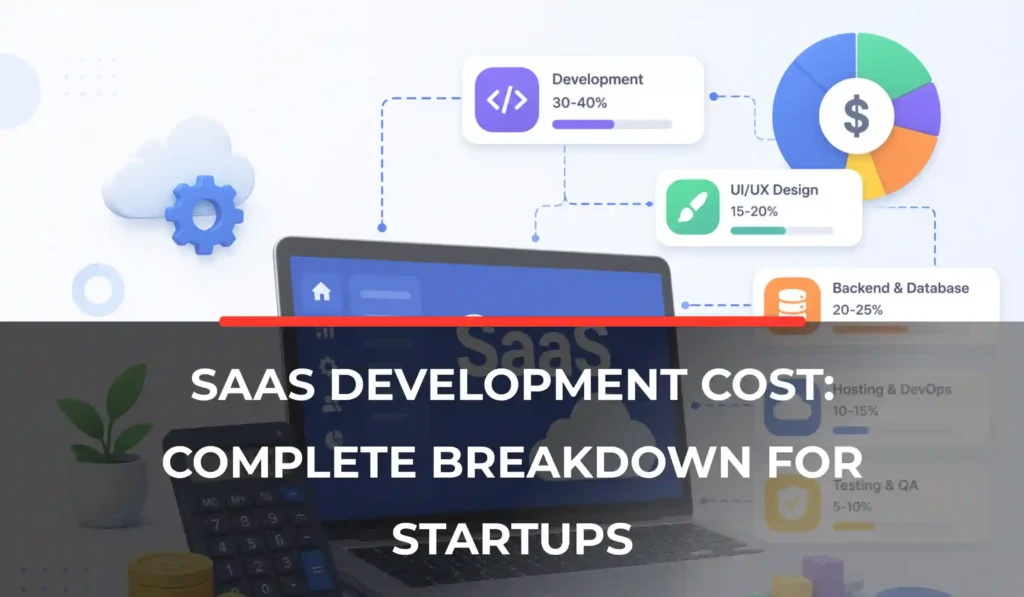
| Discovery & Planning | 5–10% |
| UI/UX Design | 10–15% |
| Frontend Development | 20–25% |
| Backend Development | 30–40% |
| Testing & QA | 10–15% |
| Deployment | 5–10% |
Planning Your SaaS Product but Unsure About The Budget?
Our SaaS development experts can estimate your project cost based on your business goals, required features, scalability needs, and launch timeline.
Cost Breakdown by SaaS Features
The features you include have a major impact on your overall SaaS development budget. Basic functionality requires less development time, while advanced features with custom workflows, integrations, and complex business logic significantly increase costs.
User Authentication
User authentication is one of the essential but lower-cost features in most SaaS applications. Basic login, password recovery, and user registration are relatively straightforward to implement. However, adding social login, multi-factor authentication (MFA), single sign-on (SSO), or role-based access control requires additional development and security measures, increasing the overall cost.
Subscription & Billing
Subscription and billing features are generally more expensive than basic authentication because they involve recurring payments, invoicing, coupon management, payment gateway integrations, and secure financial transactions. Supporting multiple pricing plans or currencies can further increase development complexity.
User Dashboard
A basic user dashboard displaying account information and recent activity is relatively affordable. Costs increase when dashboards include custom analytics, interactive charts, real-time data, personalized widgets, and advanced reporting capabilities.
Admin Panel
Admin panels typically require moderate to high development effort. Simple user management and settings are straightforward, while role-based permissions, reporting, workflow management, and system-wide controls require more backend development and testing.
Notifications
Basic email notifications are usually inexpensive to implement. Costs increase when the application supports SMS, push notifications, in-app alerts, automated workflows, and integrations with third-party messaging services.
Reporting & Analytics
Reporting features vary widely in cost. Standard reports and charts are relatively simple, while custom dashboards, business intelligence tools, data exports, predictive analytics, and real-time reporting require significantly more development and infrastructure.
How Team Structure Impacts SaaS Development Cost
The team you choose to build your SaaS product has a major impact on both development costs and project success. Each option offers different advantages, limitations, and pricing, making it important to choose the one that best fits your budget and business goals.
Freelancers
Hiring freelancers is often the most affordable option for startups with a limited budget or small MVP projects. They usually have lower hourly rates and offer flexibility, but managing multiple freelancers can be challenging. Quality, availability, and communication may also vary, especially for larger projects.
Pros
- Lower development costs
- Flexible hiring
- Suitable for small projects
Cons
- Limited expertise across multiple disciplines
- Higher project management effort
- Potential delays if a freelancer becomes unavailable
Best for: Simple MVPs, prototypes, or projects with a limited scope.
In-House Development Team
An in-house team gives you full control over the development process and enables close collaboration. However, it is also the most expensive option due to recruitment, salaries, employee benefits, office space, software licenses, and ongoing training. Building a complete SaaS team can take several months before development even begins.
Advantages
- Full control over the project
- Strong collaboration and communication
- Long-term product ownership
Challenges
- High hiring and operational costs
- Longer recruitment process
- Ongoing employee management and retention
Software Development Agency
Working with a software development agency gives startups access to experienced designers, developers, QA engineers, and project managers without the overhead of building an internal team. Agencies also follow established development processes, helping reduce risks and speed up delivery. For many startups, this offers the best balance between cost, quality, and time to market.
Benefits
- Access to experienced specialists
- Faster project delivery
- Lower hiring and management overhead
- Proven development processes and quality assurance
- Ongoing maintenance and technical support
Offshore vs. Nearshore vs. Onshore Development
Development costs also vary depending on where your team is located. Offshore teams generally offer the lowest rates, while onshore teams provide easier communication but at a higher cost.
SaaS Development Cost by Region
Developer rates vary significantly by region, making location one of the biggest factors affecting your SaaS development budget. While regions with higher labor costs typically charge more, lower-cost regions can provide excellent value when working with experienced development teams.
Choosing the right location should balance cost, expertise, communication, and project requirements, not just hourly rates.
| Region | Average Developer Rate (USD/Hour) | Approx. Rate (AED/Hour) |
|---|---|---|
| North America | $100–250+ | AED 367–918+ |
| Western Europe | $70–180 | AED 257–661 |
| Eastern Europe | $35–80 | AED 129–294 |
| Asia | $20–60 | AED 73–220 |
| Pakistan | $20–50 | AED 73–184 |
| Latin America | $30–80 | AED 110–294 |
Hidden Costs of SaaS Development
Many startups focus only on the initial development cost and overlook the ongoing expenses of running a SaaS product. These hidden costs can have a significant impact on your long-term budget, so it’s important to account for them from the start.
Cloud Hosting
SaaS applications rely on cloud infrastructure to store data and serve users. As your user base grows, cloud hosting costs increase due to higher storage, bandwidth, and computing requirements. Providers such as AWS, Microsoft Azure, and Google Cloud typically charge based on usage, making hosting an ongoing operational expense.
API Usage Fees
Many SaaS products integrate with third-party APIs for payments, maps, AI, messaging, or authentication. While some APIs offer free usage limits, higher volumes often require paid plans or usage-based pricing, which should be included in your long-term budget.
Third-Party Licenses
Your SaaS platform may depend on licensed software and services, including payment gateways, analytics tools, email platforms, customer support software, and monitoring solutions. Most of these services charge monthly or annual subscription fees.
Maintenance
After launch, your SaaS product requires regular maintenance to fix bugs, improve performance, and keep the platform compatible with new technologies. Industry estimates suggest that annual software maintenance typically costs 15–25% of the initial development investment, depending on the product’s complexity and release frequency.
Security Updates
Cybersecurity is an ongoing responsibility for every SaaS business. Regular security patches, vulnerability assessments, compliance updates, and penetration testing help protect customer data and reduce the risk of costly security incidents.
Performance Optimization
As your user base grows, your application may require database optimization, caching, infrastructure scaling, and code improvements to maintain fast performance. Investing in performance optimization helps deliver a better user experience and reduces downtime.
Customer Support
Supporting customers after launch involves responding to inquiries, resolving technical issues, maintaining help documentation, and managing support channels. As your customer base expands, support costs typically increase and may require dedicated staff or support software.
Marketing & User Acquisition
Building a great SaaS product is only part of the investment. Attracting and retaining customers often requires spending on SEO, content marketing, paid advertising, email campaigns, and sales initiatives. These ongoing marketing costs are essential for sustainable growth and should be included in your financial planning.
Considering these hidden expenses early allows startups to create a more realistic budget and avoid unexpected financial challenges after launch. A well-planned SaaS budget should cover not only development but also the ongoing costs of maintaining, securing, and growing the product over time.
How Startups Can Reduce SaaS Development Costs
Reducing SaaS development costs doesn’t mean compromising on quality. By making smart planning and technology decisions, startups can control their budget while building a reliable and scalable product.
Build an MVP First
Start with a Minimum Viable Product (MVP) that includes only the essential features needed to solve your users’ core problem. This approach reduces initial development costs, speeds up time to market, and allows you to gather real customer feedback before investing in additional functionality.
Prioritize Core Features
Avoid trying to build every feature in the first release. Focus on the functionality that delivers the most value to users and postpone less critical features for future updates. It helps keep both development time and costs under control.
Use Agile Development
Agile development breaks the project into smaller phases, allowing teams to release features incrementally. This approach helps identify issues early, adapt to changing requirements, and avoid the costly rework often associated with traditional development methods.
Leverage Cloud Services
Using cloud platforms such as AWS, Microsoft Azure, or Google Cloud eliminates the need to invest in expensive on-premises infrastructure. Cloud services also allow you to scale resources as your user base grows, helping reduce upfront costs.
Choose the Right Technology Stack
Selecting modern, scalable technologies from the beginning can lower development and maintenance costs over time. A well-chosen technology stack improves performance, simplifies future updates, and makes it easier to hire experienced developers.
Reuse Existing APIs
Instead of building every feature from scratch, integrate trusted third-party APIs for services like payments, authentication, email, messaging, and maps. Reusing proven solutions reduces development time, lowers costs, and speeds up product delivery.
Outsource to Experienced Teams
Partnering with an experienced software development company can be more cost-effective than building an in-house team. Established development teams already have the expertise, processes, and resources needed to deliver high-quality SaaS products efficiently, reducing hiring costs, project delays, and expensive rework.
Common SaaS Budgeting Mistakes
Many startups exceed their SaaS development budget because they overlook key planning decisions. Avoiding these common mistakes can help you control costs, reduce project risks, and build a successful product without unnecessary expenses.
- Complex features, testing, and revisions often take longer than expected, increasing the overall project cost.
- Ongoing expenses for updates, bug fixes, hosting, and security should be included in your long-term budget.
- Trying to build every feature in the first release increases costs and delays your product launch.
- Low-cost developers may save money upfront, but this can lead to poor quality, delays, and expensive rework later.
- Failing to define requirements early often results in scope changes, budget overruns, and missed deadlines.
- Delaying security measures or compliance requirements can lead to costly fixes, legal risks, and data breaches after launch.
Is Custom SaaS Development Worth the Investment?
Custom SaaS development requires a higher upfront investment but delivers greater long-term ROI than off-the-shelf software. It gives businesses full ownership, better scalability, a more tailored user experience, and flexible integrations. For startups with unique requirements or long-term growth plans, investing in a custom SaaS solution can reduce future limitations and support sustainable business growth.
Why Choosing the Right Development Partner Matters
The success of your SaaS product depends not only on your idea but also on the team that builds it. An experienced SaaS development company can help you control costs, reduce risks, and deliver a high-quality product that supports long-term growth.
Accurate Cost Estimation
An experienced team provides realistic budgets and timelines, which help you avoid unexpected costs and project delays.
Faster Time to Market
Established development processes and skilled specialists enable faster delivery without compromising quality.
Better Product Quality
Experienced developers follow best practices for architecture, security, testing, and scalability, resulting in a more reliable SaaS application.
Lower Long-Term Costs
Building the product correctly from the start minimizes technical debt, reduces expensive rework, and lowers ongoing maintenance costs.
Ongoing Technical Support
A trusted development partner continues to support your product after launch with updates, performance improvements, security patches, and feature enhancements as your business grows.
If you’re looking for a reliable SaaS development company, DynamoLogic Solutions helps startups and businesses turn ideas into secure, scalable SaaS products. From MVP planning and cost estimation to full-cycle development and ongoing support, our team works closely with you to maximize your investment and accelerate your time to market.
Build Your SaaS Product with a Budget You Can Trust
Our SaaS development experts help startups estimate costs, prioritize features, and build secure, scalable SaaS platforms that are designed for long-term success.
We’ll discuss your project, understand your requirements, and provide a tailored development roadmap with a realistic budget and timeline.
Frequently Asked Questions
How much does it cost to build a SaaS application?
The cost of building a SaaS application typically ranges from AED 80,000 to AED 1,200,000+, depending on the product’s complexity, features, integrations, security requirements, and the development team you choose. A basic MVP costs significantly less than a large enterprise SaaS platform.
What factors affect SaaS development cost?
The main factors include product complexity, feature requirements, UI/UX design, technology stack, third-party integrations, security and compliance needs, cloud infrastructure, development timeline, and team structure.
How much does it cost to build a SaaS MVP?
A startup-friendly SaaS MVP generally costs between AED 80,000 and AED 250,000. The final cost depends on the core functionality, user authentication, dashboards, integrations, and the level of customization required.
How long does SaaS development take?
Most SaaS MVPs take 2 – 4 months to develop, while medium-complexity platforms typically require 4 – 8 months. Enterprise SaaS applications with advanced features and integrations can take 8 – 14 months or longer.
Is SaaS development more expensive than traditional software?
Yes. SaaS development often requires additional investment in cloud infrastructure, multi-tenant architecture, subscription management, security, scalability, and continuous updates, making it more expensive to build and maintain than traditional desktop software.
What are the ongoing maintenance costs for SaaS products?
SaaS maintenance generally costs 15–25% of the initial development cost per year. This covers bug fixes, security updates, cloud hosting, infrastructure scaling, performance optimization, and ongoing feature enhancements.
How can startups reduce SaaS development costs?
Startups can reduce costs by building an MVP first, prioritizing essential features, using Agile development, leveraging cloud services, integrating existing APIs, choosing the right technology stack, and partnering with an experienced SaaS development company.
Should startups hire freelancers, an agency, or an in-house team for SaaS development?
The best choice depends on your budget and project goals. Freelancers are suitable for small MVPs; in-house teams provide greater control but involve higher costs, while a software development agency offers experienced specialists, faster delivery, and lower hiring overhead, making it the preferred option for many startups.